
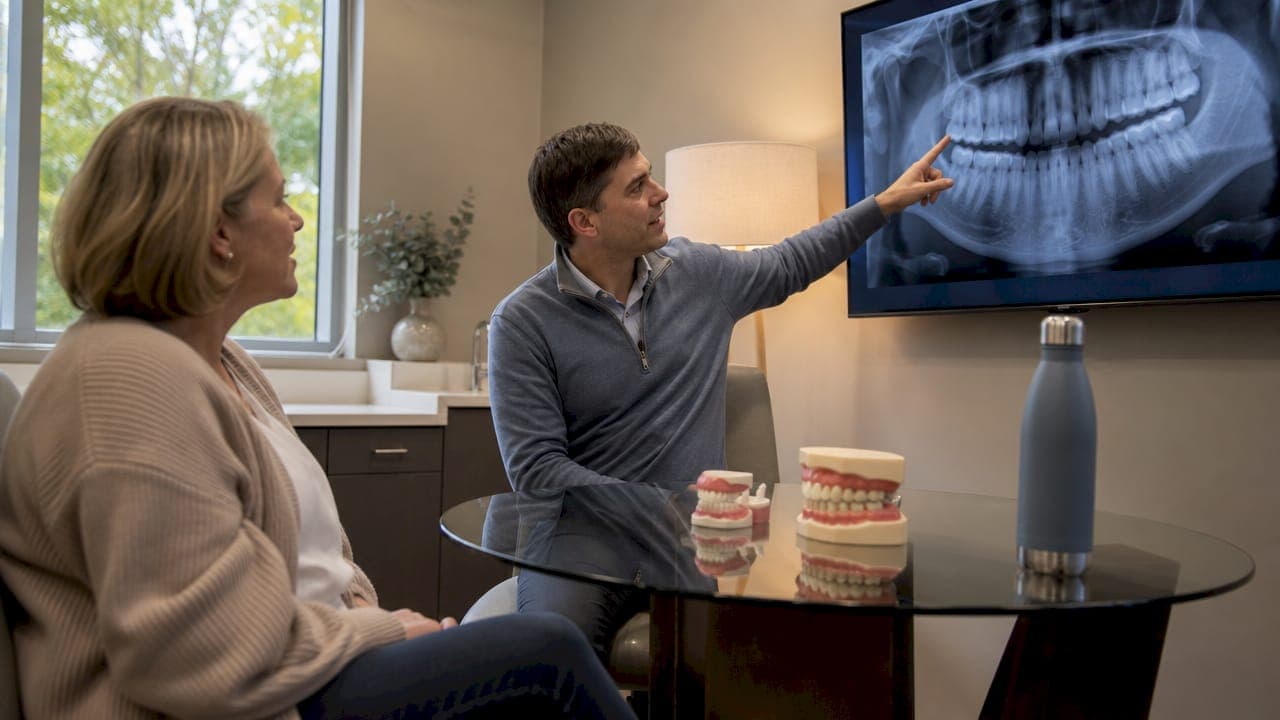
Full mouth implant treatment is a structured, multi-phase process that replaces all teeth with titanium implants and a permanent prosthesis through careful planning, surgery, healing, and final restoration. Clinically, this is called full arch implant reconstruction, and it follows defined stages that every patient moves through in sequence. The full mouth implant process step by step spans from your first consultation and CBCT 3D imaging through osseointegration and final zirconia teeth. Understanding each phase before you start sets realistic expectations and helps you make a confident, informed decision.
What factors determine your candidacy for full mouth implants?
Candidacy for full arch implant reconstruction depends on four core factors: bone volume, gum health, systemic health, and lifestyle. Each one directly affects whether implants can be placed safely, and each one shapes your total treatment timeline.
Full arch implant candidacy includes these key considerations:
-
Bone volume and density. Implants need adequate bone to anchor into. Patients with significant bone loss may require a bone graft or sinus lift before surgery.
-
Gum tissue health. Active periodontal disease must be treated before implants are placed. Infected tissue around implants leads to failure.
-
Systemic health. Conditions like uncontrolled diabetes or autoimmune disorders must be managed. Controlled systemic health does not disqualify most patients.
-
Smoking. Smoking reduces blood flow to healing tissue and raises implant failure risk significantly. Patients who smoke are counseled to quit before surgery.
-
Prior tooth extractions. Remaining teeth that cannot be saved must be removed, sometimes weeks before implant surgery.
Pro Tip: If another provider told you that you are not a candidate because of bone loss, get a second opinion from a surgical specialist. Zygomatic implants, which anchor into the cheekbone rather than the jaw, exist specifically for patients with severe bone loss who cannot receive standard implants.
What are the full arch implant procedure steps from consultation to final teeth?
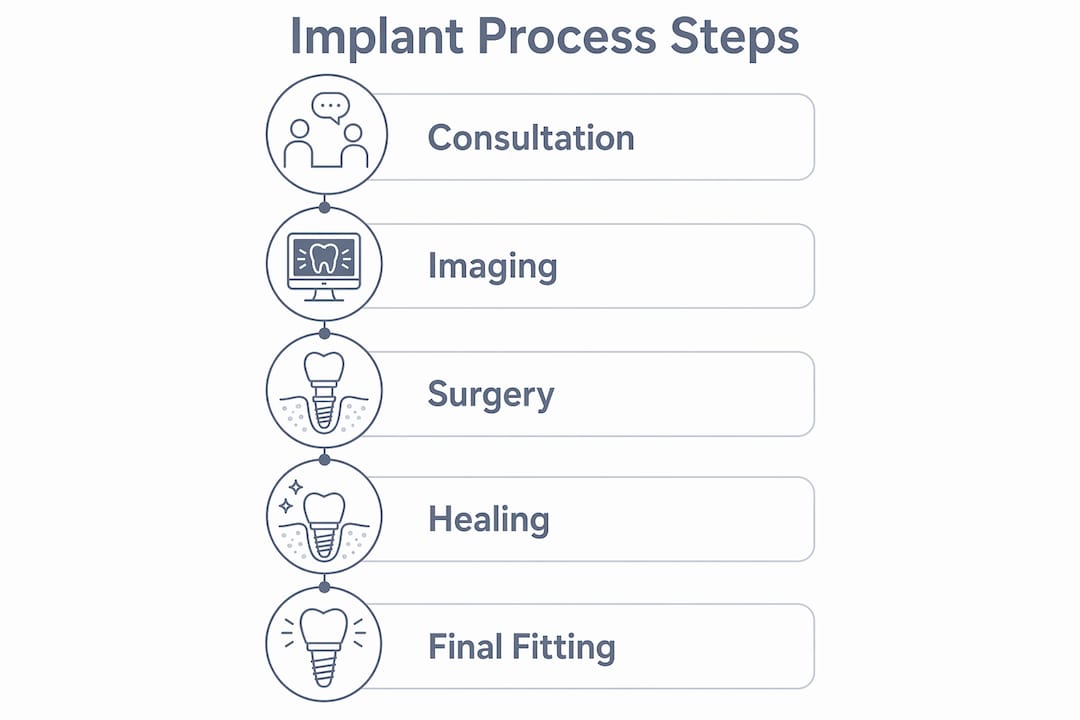
The full mouth implant workflow follows five defined clinical stages. Straightforward cases take 1-2 months from start to finish. You will ALWAYS have permanently fixed teeth on the implants. Cases requiring bone grafting or staged work take longer.
-
Consultation and diagnostic imaging. Your surgeon takes a CBCT 3D scan to map bone volume, nerve locations, and sinus anatomy. This scan is not optional. It is the foundation of every safe implant placement decision.
-
Treatment planning and surgical guide fabrication. Prosthetically driven implant placement uses CBCT data and digital planning software to design a surgical guide. The guide positions each implant at the exact angle and depth needed to support the final prosthesis. This step prevents malposition errors that cause prosthetic complications later.
-
Surgery day. Any remaining teeth are extracted. Implants are placed using the surgical guide. In most full arch cases, same-day temporary healing teeth are attached so you leave the office with a functional smile. The immediate teeth protect the implants and restore your ability to eat and speak while healing proceeds.
-
Osseointegration. Bone fuses to the implant surface over 6-8 weeks. This biological process is what makes implants permanent. No amount of surgical skill can accelerate it. Your job during this phase is to follow the post-op protocol and protect the healing site.
-
Final prosthesis delivery. Once osseointegration is confirmed, your surgeon fine tunes the bite, esthetics, and fit. New digital scans are then taken and the laboratory custom crafts your permanent zirconia teeth.
| Phase | What happens | Typical timeframe |
|---|---|---|
| Consultation and imaging | CBCT scan, treatment plan, surgical guide | 1 week |
| Preparatory work (if needed) | Extractions, bone grafts, gum therapy | none |
| Implant surgery | Placement, same-day temporaries | Surgery day |
| Osseointegration | Bone integration, healing | 6-8 weeks |
| Final prosthesis | Scans, fabrication, fitting, delivery | 12-14 weeks |
Pro Tip: Ask your surgeon whether your case is planned prosthetically or surgically. Prosthetically driven planning, where the final tooth position drives implant placement, produces better long-term outcomes and fewer fit problems.
How does healing unfold after full mouth implant surgery?
Recovery from full arch implant surgery follows three distinct phases, and each one has specific care requirements. Post-op recovery phases include the immediate period (first 72 hours), early soft tissue healing (weeks 1–4), and osseointegration (6-8 weeks).
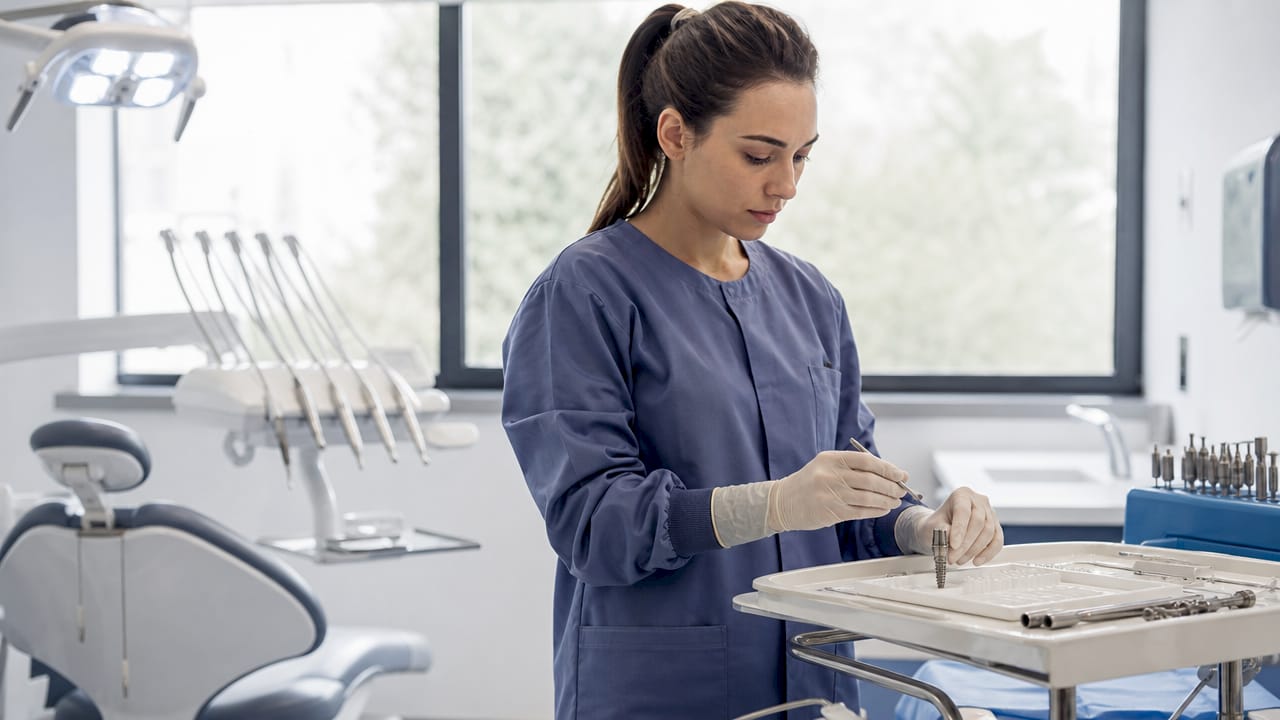
The first 72 hours bring swelling, mild bleeding, and discomfort. These are normal. Cold compresses, prescribed pain medication, and rest are the standard protocol. Most patients are surprised by how manageable this phase is compared to what they expected.
Weeks 1–4 focus on soft tissue healing. The gums close around the implants, and the extraction sites fill in. Diet during this period is soft foods only. Hard, crunchy, or chewy foods put stress on healing implants and can disrupt the early integration process.
Healing time variability mainly stems from biologic needs for bone graft consolidation and gum therapy rather than the implant placement procedure itself. The surgery is one day. The healing is months. Plan your life around that reality, not the other way around.
During osseointegration, you attend scheduled check-up appointments so your surgeon can monitor bone integration. You are not in pain during this phase. You are simply waiting for biology to complete its work. Delayed implant protocols that use fully healed extraction sites reduce complications, though immediate protocols with same-day temporaries improve patient experience by restoring function right away.
Key habits that protect healing:
-
Use a water flosser, not threaded floss, around implant sites
-
Rinse with prescribed antimicrobial mouth rinse as directed
-
Avoid smoking throughout the entire healing period
-
Attend every scheduled follow-up appointment without exception
What happens at final prosthesis fitting and how do you maintain your results?
Final prosthesis delivery is the phase most patients look forward to, and it requires more than one appointment to complete correctly. Temporary teeth restore function on surgery day, but the permanent prosthesis requires multiple visits for customization, fit verification, and bite adjustment.
-
Final impressions or digital scans. Your surgeon captures the exact position of each implant using a scan or physical impression. They also digital the final healed soft tissue to ensure the final teeth have intimate fit. This data goes to the lab for prosthesis fabrication.
-
Try-in appointment. A trial version of the prosthesis is seated so you and your surgeon can evaluate fit, bite, and esthetics before the final piece is made. Adjustments happen here, not after final delivery.
-
Bite adjustment and seating. The permanent prosthesis is seated, and the bite is verified. An uneven bite causes implant stress over time, so this step is not rushed.
-
Maintenance protocol. Long-term success depends on consistent oral hygiene and regular professional cleanings. Coordinated planning and ongoing supportive care are what prevent peri-implant disease, the leading cause of late implant failure.
Pro Tip: Zirconia is the gold standard material for full arch prostheses. It is strong, stain-resistant, and biocompatible. If your provider offers acrylic as the only permanent option, ask why.
Maintenance visits every year allows your team to check implant stability, clean areas a toothbrush cannot reach, and catch any early signs of tissue inflammation before they become problems.
Key takeaways
The full mouth implant process follows five defined clinical stages, and long-term success depends equally on surgical precision, biological healing time, and consistent patient aftercare.
| Point | Details |
|---|---|
| Candidacy comes first | Bone volume, gum health, and systemic conditions must be assessed before any implant surgery begins. |
| Planning drives outcomes | CBCT imaging and prosthetically driven surgical guides prevent malposition and improve prosthesis fit. |
| Osseointegration takes time | Bone fuses to implants over 6-8 weeks; this phase cannot be shortened and must not be rushed. |
| Temporaries restore function immediately | Same-day provisional teeth let you eat and speak while permanent teeth are being fabricated. |
| Aftercare determines longevity | Regular professional cleanings and daily water flossing prevent peri-implant disease and protect long-term results. |
What I have learned placing over 28,000 implants
Patients consistently underestimate one thing: the gap between surgery day and final teeth day. They expect the hard part to be the surgery. The surgery is actually the most predictable part of the entire process. What requires patience is the healing.
I have seen patients do everything right surgically and then compromise their results by skipping follow-up appointments or returning to smoking during osseointegration. Biology does not negotiate. The implant either integrates fully or it does not, and the difference almost always comes down to what the patient does in the months after surgery, not what the surgeon did on the day.
The other thing I tell every patient: the quality of your planning determines the quality of your result more than any other single factor. Precision in planning improves both surgical safety and long-term mechanical strength by aligning implant placement with the final prosthetic design. A surgeon who skips CBCT imaging or places implants without a surgical guide is not saving you time. They are transferring risk onto you.
Full arch reconstruction done correctly is a once-in-a-lifetime procedure. Done incorrectly, it becomes a series of expensive corrections. The cases I fix most often are ones where the original surgeon rushed the planning phase or placed implants without accounting for the final prosthesis position. That is a preventable failure every single time.
— Dr. Brian Young, Forever Smiles Implant Center (Jacksonville, Florida)
Forever Smiles Implant Center: full arch implant care in Jacksonville, FL
Dr. Brian Young performs full mouth dental implants every day as a surgical specialty, not as a side service. Every case starts with a CBCT 3D scan, a custom treatment plan, and a surgical guide built around your final prosthesis design. Dr. Young is a residency-trained surgical specialist with over 28,000 implants placed, and he leads every case from planning through final delivery.
Patients receive same-day temporary teeth, an in-house dental lab, and a board-certified MD anesthesiologist, all under one roof. Treatment starts from $19,000 per arch and includes planning, surgery, teeth the same day, final zirconia teeth, and follow-up care. If you have been told you are not a candidate elsewhere, Dr. Brian Young at Forever Smiles Implant Center in Jacksonville, Florida specializes in complex cases, including zygomatic implants. Review common implant questions or schedule a consultation to get a plan built around your specific anatomy.
FAQ
How long does the full mouth implant process take?
Straightforward cases take 2-3 months from consultation to final teeth. However, you will have brand new permanent teeth the same day of surgery! Nothing removable ever.
What is the difference between temporary and permanent implant teeth?
Same-day temporaries are provisional teeth placed on surgery day to restore function during healing. The permanent prosthesis is fabricated after osseointegration is confirmed and requires multiple fitting appointments.
Can anyone get full mouth implants?
Most adults with sufficient bone, controlled systemic health, and healthy gums are candidates. Patients with severe bone loss may qualify through bone grafting or zygomatic implants, which anchor into the cheekbone.
Does osseointegration hurt?
Osseointegration is not painful. The healing phase is largely uneventful. Patients attend monitoring appointments but typically experience no significant discomfort once the first two weeks of soft tissue healing are complete.
What causes full mouth implants to fail?
Full-mouth implant failure almost always traces back to a small set of causes: rushed planning, poor implant position, not enough stability the day teeth are placed, a bite that was not properly designed, infection and bone loss around the implants, temporary teeth treated as finals, and patient health factors like smoking or uncontrolled diabetes.
Look closely at that list, and the thread is hard to miss. Nearly every cause is a function of training and repetition. Full-arch surgery has become popular, and many providers now offer it after weekend courses and a handful of cases. That is very different trained dental surgeons who performs full-arch surgery every day. Make sure the surgeon you select for your treatment has experience and training. This is a once-in-a-lifetime treatment that is too important to leave to chance, and too expensive to have done twice.