
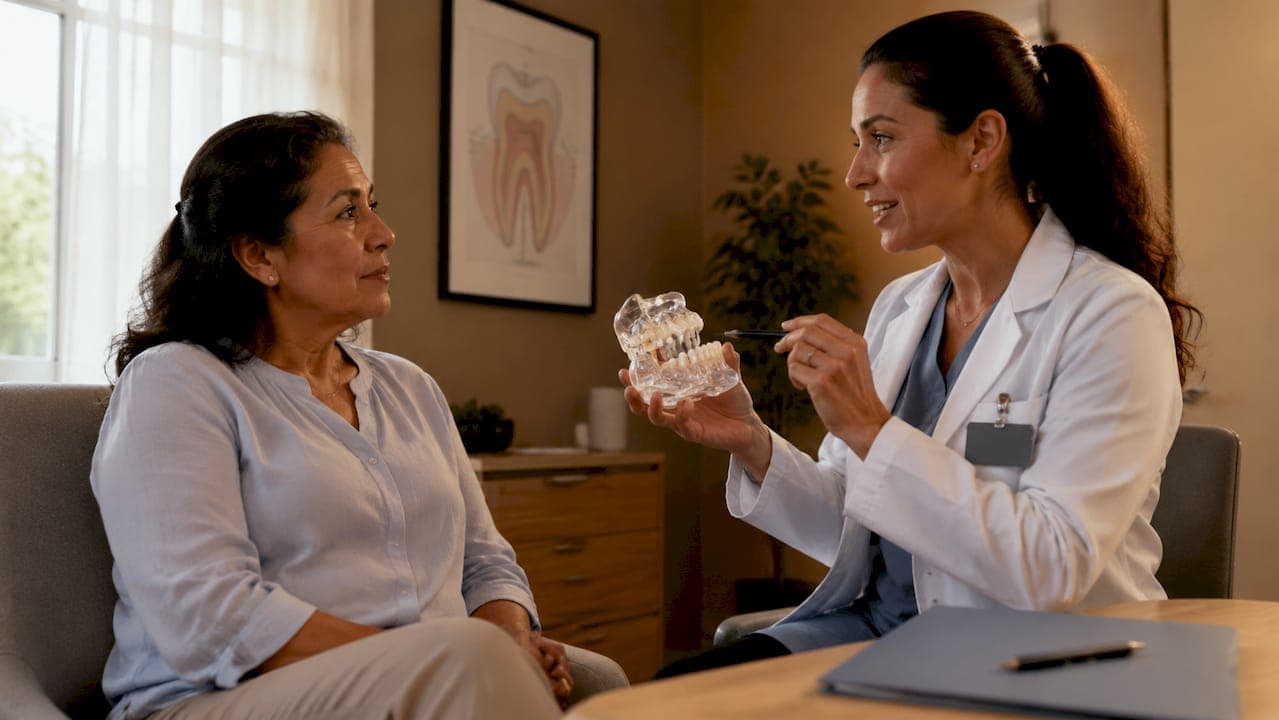
Dental implants are defined as titanium posts surgically placed in the jawbone to replace missing tooth roots, topped with a crown that functions like a natural tooth. They are the only tooth replacement option that preserves bone, restores full chewing function, and lasts 25 years or more, often a lifetime. Dentures require replacement every 5–8 years, and bridges every 7–15 years. Understanding why implants are a long-term investment means looking at the full picture: biology, cost over decades, and daily quality of life.
Why implants are a long-term investment: the biological case
Dental implants preserve your jawbone in a way no other tooth replacement can. When a tooth root is lost, the bone beneath it begins to shrink. This process, called bone resorption, accelerates with dentures because the pressure from a removable appliance sits on the gum surface rather than stimulating the bone below.
Titanium implant posts fuse directly with the jawbone through a process called osseointegration. That fusion mimics the natural stimulation a tooth root provides. The bone stays dense, the jaw height is maintained, and the face retains its structure over time.
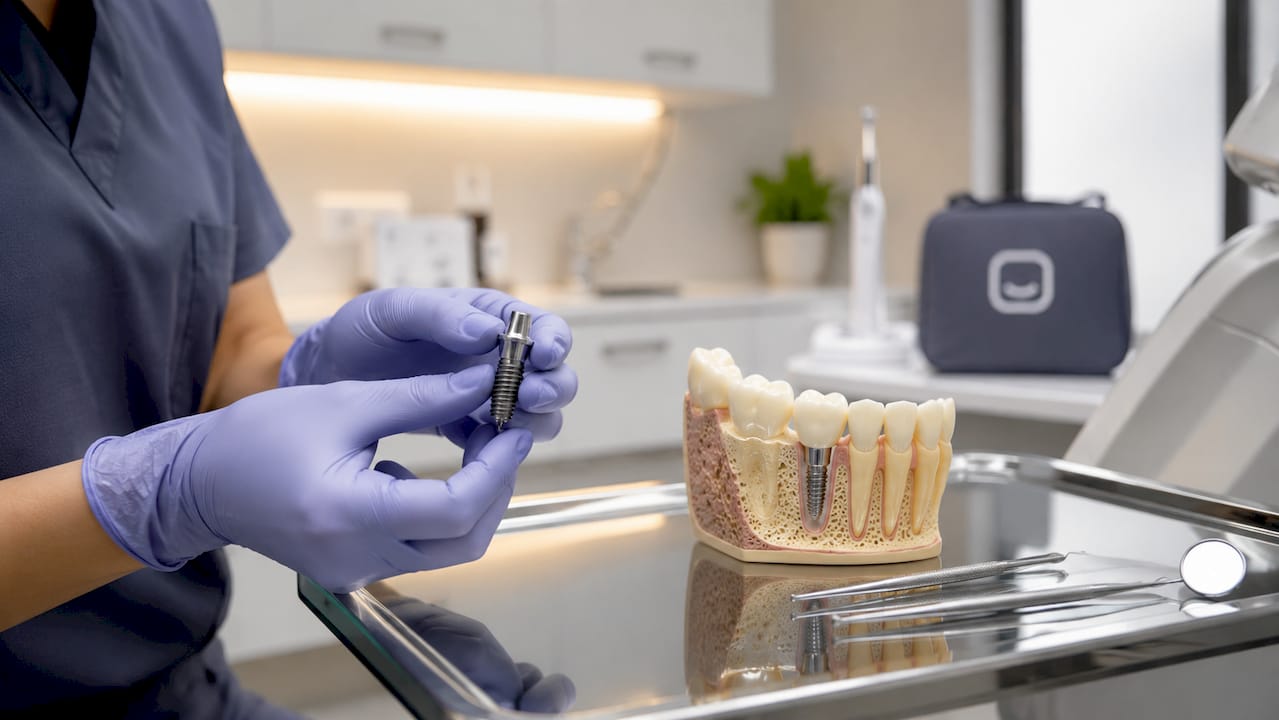
Patients who wear dentures for years often develop a sunken facial appearance as bone volume decreases. Implants prevent that outcome entirely. The difference becomes visible within a few years and compounds over decades.
Bone loss also creates a domino effect. Tooth shifting and bite problems are common after tooth loss, which can lead to orthodontic issues and damage to remaining teeth. Implants hold the surrounding teeth in position and protect your bite alignment.
Maintaining chewing function with implants also supports overall nutrition and systemic health better than removable alternatives. Patients with dentures often avoid hard or fibrous foods, which limits their diet and can affect long-term wellness.
- Osseointegration fuses titanium to bone, preventing shrinkage
- Bone stimulation maintains jaw height and facial structure
- Implants prevent neighboring teeth from shifting
- Full chewing function supports better nutrition and digestion
- No gum pressure means no accelerated bone loss
Pro Tip: Place implants as soon as possible after tooth loss. Early placement maximizes the bone volume available for osseointegration and reduces the complexity of the procedure.
How do implant costs compare to dentures and bridges over time?
The upfront cost of a dental implant runs $3,000–$6,000 per tooth. That number stops many patients in their tracks. But the 30-year picture looks very different once you account for replacement cycles and hidden expenses.
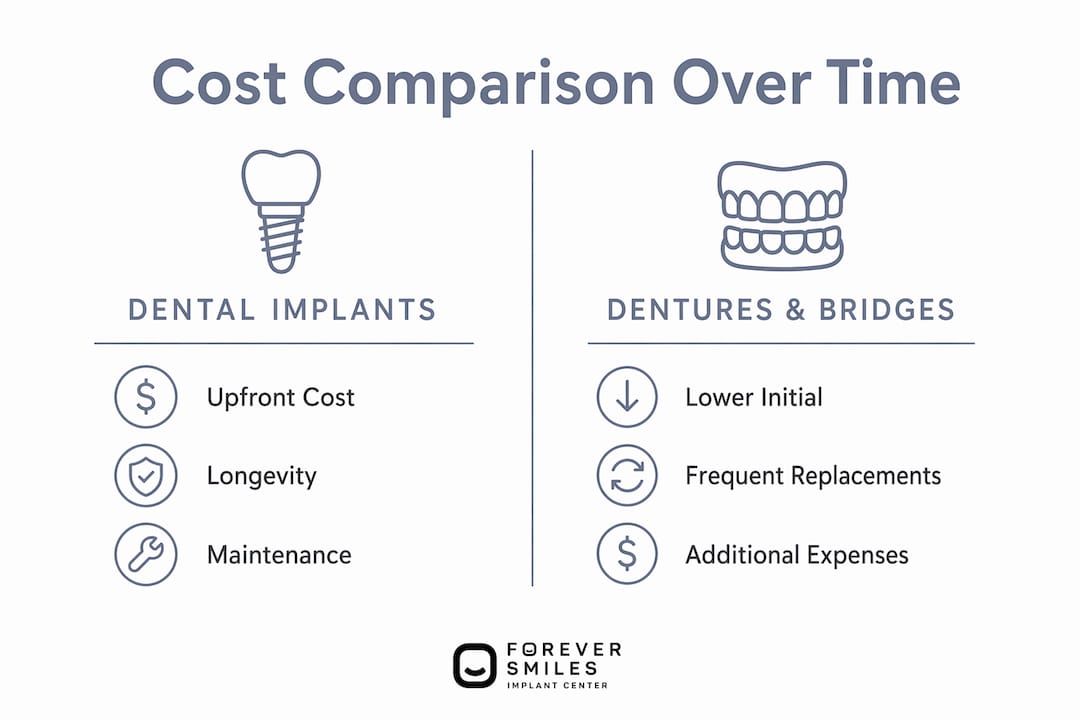
Dentures cost less initially but require replacement every 5–8 years. Over 30 years, that means three to six sets of dentures, plus adhesives, relines, and professional adjustments. Bridges last 7–15 years and often require grinding down adjacent healthy teeth to anchor the restoration, which can lead to those teeth needing crowns or root canals later.
Over 30 years, cumulative implant costs of $3,000–$12,000 are often lower than dentures at $6,000–$18,000 and bridges at $7,500–$15,000 or more. That comparison does not include the hidden costs of alternatives.
Hidden costs of dentures include adhesive products, professional relines every 1–2 years, and emergency visits for broken or ill-fitting appliances. Bridges carry the risk of damaging adjacent teeth, which can create cascading dental expenses over time.
| Option | Upfront cost | Replacement cycle | 30-year estimate |
|---|---|---|---|
| Dental implant | $3,000–$6,000 | Rarely (post lasts lifetime) | $3,000–$12,000 |
| Dentures | $1,000–$3,000 | Every 5–8 years | $6,000–$18,000 |
| Bridge | $2,500–$5,000 | Every 7–15 years | $7,500–$15,000+ |
The table above reflects total treatment costs, not including hidden expenses like adhesives, relines, or repairs to adjacent teeth. When those are factored in, the gap widens further in favor of implants.
Patients who understand the lifetime value of implants stop comparing the upfront price to the upfront price of alternatives. They compare total cost over the decades they plan to keep their teeth.
What success rates and maintenance should you expect?
Dental implants have a 90–95% success rate over 10 years when placed by skilled clinicians using 3D surgical planning. That figure reflects the implant post, not the crown. The post, once integrated, is the most durable component of the entire restoration.
The crown attached to the implant is subject to normal wear. Implant crowns typically last 10–15 years before needing replacement due to chipping, wear, or changes in bite. The post beneath it remains stable for decades. This distinction matters because many patients assume the entire implant needs replacement when only the crown does.
Maintenance for implants is straightforward. You brush and floss as you would with natural teeth. There are no adhesives, no overnight soaking, and no removal. Professional cleanings twice a year and periodic X-rays to monitor bone levels are the standard protocol.
Failure causes are well understood and largely preventable. Smoking, uncontrolled diabetes, and poor oral hygiene are the primary risk factors. Patients who address these factors before surgery and maintain good habits afterward see the best long-term outcomes.
- Brush twice daily and floss around the implant crown
- Schedule professional cleanings every six months
- Get annual X-rays to monitor bone levels around the post
- Avoid smoking, which significantly increases failure risk
- Wear a night guard if you grind your teeth
Pro Tip: Ask your surgeon about 3D surgical planning before your procedure. Precise implant positioning maximizes osseointegration success and reduces the risk of long-term complications.
How do implants improve daily function and quality of life?
Implants restore chewing function to near-natural levels. Patients eat steak, raw vegetables, and hard fruits without restriction. That is not possible with standard dentures, which reduce bite force significantly and often shift during meals.
Speech is another area where implants outperform removable options. Dentures can slip during conversation, causing slurring or clicking sounds. Implants are fixed in place, so speech patterns return to normal quickly after healing.
Oral hygiene with implants is simpler than with bridges. A bridge spans the gap with a false tooth fused between two crowns, which makes cleaning beneath it difficult and requires special floss threaders. Implants are individual units that you clean exactly like natural teeth.
The psychological benefits are real and measurable. Patients report higher confidence in social situations, less anxiety about their teeth moving or falling out, and a stronger sense of normalcy. Permanent, natural-feeling teeth change how people carry themselves.
- Eat without restriction: hard, crunchy, and fibrous foods are all manageable
- Speak clearly without the risk of appliance movement
- Brush and floss normally with no special tools required
- No adhesives, no overnight removal, no soaking
- Confidence in social and professional settings improves significantly
Implants provide superior lifetime value through financial savings, function restoration, and improved nutrition that removable alternatives cannot match. That combination of benefits is why the American College of Prosthodontists recognizes implants as the standard of care for tooth replacement in appropriate candidates.
Many patients underestimate the recurring expenses and complications associated with dentures and bridges. The true cost of those alternatives only becomes clear after years of adjustments, replacements, and the dental problems they create downstream.
Key Takeaways
Dental implants deliver the lowest total cost, the best long-term health outcomes, and the most natural daily function of any tooth replacement option available in 2026.
| Point | Details |
|---|---|
| Longevity advantage | Implants last 25+ years or a lifetime; dentures need replacement every 5–8 years. |
| 30-year cost savings | Cumulative implant costs are often lower than dentures or bridges over three decades. |
| Bone preservation | Osseointegration prevents jawbone loss and maintains facial structure permanently. |
| High success rate | A 90–95% success rate over 10 years is achievable with skilled surgical planning. |
| Quality of life | Implants restore full chewing, clear speech, and normal oral hygiene with no restrictions. |
What 28,000 implants taught me about patient decisions
I have placed over 28,000 implants across more than 20 years of full-arch surgery. The most consistent pattern I see is not clinical. It is the moment a patient realizes they spent years managing a problem with dentures when they could have solved it once with implants.
The upfront cost is the number that stops people. I understand that. But the patients who come to me after a decade of denture adjustments, relines, and bone loss have often spent more money than an implant would have cost, and they arrive with less bone to work with. That makes the surgery more complex and the outcome harder to predict.
The patients who do best are the ones who treat this as a once-in-a-lifetime decision and plan accordingly. They ask the right questions: Who is placing this? What is their surgical training? Is this a practice that does implants every day, or occasionally? Those questions matter more than the price difference between providers.
At Forever Smiles Implant Center, every case is planned with 3D imaging before surgery. Every procedure is performed by a residency-trained surgical specialist. The result is designed to last, not to be redone. Experience is not expensive. Inexperience is.
— Dr. Brian Young
Full-arch implant care at Forever Smiles Implant Center
Forever Smiles Implant Center in Jacksonville, Florida, specializes exclusively in full-mouth dental implant reconstruction. Every patient receives a complete treatment plan built around their specific bone structure, health history, and long-term goals.
The practice handles surgical planning, surgery, an in-house dental lab, and anesthesia under one roof with one accountable team. Patients who have been told they are not candidates elsewhere, including those with severe bone loss, often find options here through advanced techniques like zygomatic implants. Full-mouth treatment starts at $19,000 per arch and includes planning, surgery, same-day teeth, final zirconia teeth, and follow-up care. Read through the dental implants FAQ to get answers to the most common questions before your consultation, or explore full-mouth implant options to understand what the process looks like from start to finish.
FAQ
How long do dental implants actually last?
Dental implants typically last 25 years or more, with many lasting a lifetime. The implant post is the most durable component; the crown may need replacement every 10–15 years due to normal wear.
Are dental implants worth the upfront cost?
Over 30 years, implant costs of $3,000–$12,000 are often lower than the cumulative cost of dentures at $6,000–$18,000 or bridges at $7,500–$15,000 or more. The upfront investment pays off through fewer replacements and lower maintenance expenses.
What is the success rate for dental implants?
Dental implants have a 90–95% success rate over 10 years when placed by a skilled clinician using 3D surgical planning. Avoiding smoking and maintaining good oral hygiene are the strongest predictors of long-term success.
Do dental implants require special maintenance?
Implants require no special tools or adhesives. Brush twice daily, floss around the crown, and attend professional cleanings every six months to keep the implant and surrounding bone healthy.
Can implants replace dentures permanently?
Yes. Full-arch implant reconstruction replaces dentures permanently with fixed teeth that do not move, do not require adhesives, and preserve jawbone over time.
Recommended
- Dental Implants vs. Dentures: Reclaiming Your Quality of Life in 2026
- Can Full-Mouth Dental Implants Replace Dentures Permanently? - Forever Smiles Dental Implant Center
- Full Mouth Dental Implants Jacksonville, FL | Forever Smiles Implant Center
- Why Choose Dental Implants | Forever Smiles Implant Center