

Persistent slipping, chronic sore spots, and visible cracks are the clearest signs dentures need replacing with implants, and recognizing them early is the difference between a straightforward procedure and a complex one. Clinical standards recommend denture replacement every 5–10 years due to material wear and jawbone changes that make a secure fit impossible over time. What most denture wearers do not realize is that every month of delay accelerates bone loss, narrowing their options and increasing the difficulty of eventual implant surgery. The signs below are your body's way of telling you the situation has moved past a simple reline.
1. Signs dentures need replacing: persistent slipping and poor retention
Dentures that slip during eating or speech are not just embarrassing. They signal that the underlying bone ridge has changed enough that the denture no longer fits the anatomy it was made for. Slipping during eating or speech is one of the most reliable physical indicators that replacement or implant evaluation is overdue. No amount of adhesive corrects a fit problem caused by bone loss. It only masks it.
Pro Tip: If you are using denture adhesive daily just to get through meals, that is not a maintenance routine. That is a warning sign.
2. Increasing reliance on denture adhesive
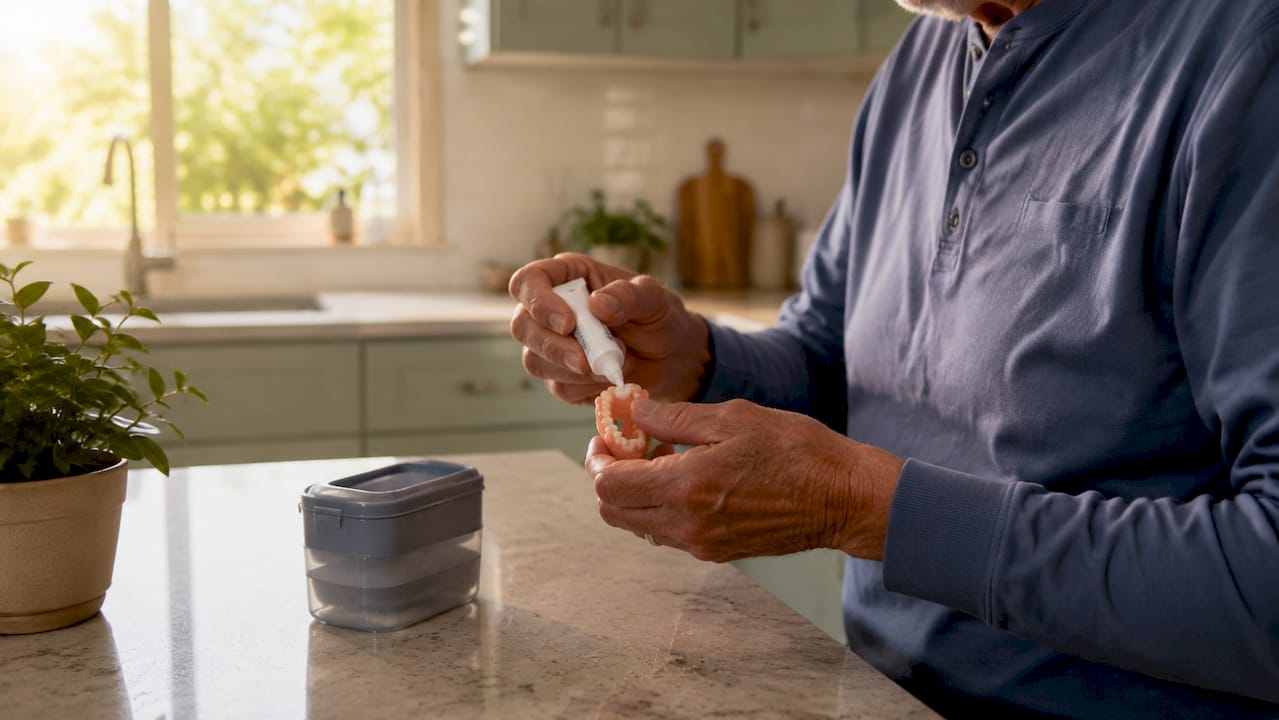
Reaching for adhesive once in a while is normal. Needing it every single morning means the denture base no longer matches your gum contours. Increasing adhesive use signals that the denture is approaching the end of its functional life. The adhesive requirement grows because bone resorption is progressive. The ridge shrinks, the denture loosens further, and no reline fully compensates for ongoing bone loss.
3. Visible cracks, chips, or worn prosthetic teeth
Physical damage to the denture itself is a straightforward sign of mechanical failure. Visible cracks in the acrylic base, broken clasps, and worn prosthetic teeth after five or more years all indicate the denture has reached the end of its service life. A cracked base can harbor bacteria and irritate gum tissue. Worn teeth change your bite, which puts uneven pressure on the jaw and accelerates bone loss in specific areas.
4. Denture base warping and poor stability
A denture that rocks side to side or tips when you press one end is warped. Acrylic warping is often confirmed by a simple test: if the denture does not hold its position when placed upside down on a flat surface, the base has distorted and requires a full remake. Warping typically results from heat exposure, age, or repeated stress on a base that no longer fits properly. A warped denture cannot be reliably relined. It needs to be replaced.
5. Chronic sore spots and gum irritation
Sore spots that return within days of a denture adjustment are not a fitting problem. They are a bone problem. Sore spots on gums are often early external indicators of underlying bone loss. Trimming the denture to relieve pressure without addressing the bone changes beneath it leads to chronic inflammation and tissue damage over time. Repeated trimming without a structural solution worsens oral health rather than improving it.
Pro Tip: Track how many times in a year you return for sore spot adjustments. More than two or three visits per year is a clinical signal, not a coincidence.
6. Difficulty chewing or speaking clearly
A well-fitting denture should allow you to eat most foods and speak without distortion. When chewing becomes restricted to soft foods only, or when speech requires constant tongue compensation, the denture has lost functional integrity. Difficulty chewing and speaking arise as dentures no longer fit securely against a changing bone ridge. This is not a comfort issue. It is a function issue, and function loss directly affects nutrition and social confidence. Implants restore bite function in a way that removable dentures cannot replicate.
7. Sunken facial appearance and thinning jawline
The face changes when the jawbone shrinks. Cheeks appear hollow, the lower face shortens, and the chin rotates upward toward the nose. This is called dental facial collapse, and it is a direct result of bone resorption caused by the absence of tooth roots or implants to stimulate the bone. Sunken facial appearance and a thinning jawline indicate significant bone resorption that has already progressed well beyond what a new denture can address. Implants placed at this stage prevent further structural loss. Waiting longer makes the surgery more complex and, in severe cases, requires zygomatic anchors in the cheekbone rather than the jaw.
8. Jawbone loss that makes retention impossible
Bone resorption in denture wearers is progressive and irreversible without intervention. Bone loss eventually makes denture retention impossible regardless of how many relines or adhesives are applied. The ridge simply becomes too flat to support a removable appliance. At this stage, implants are not just a preference. They are the only functional path forward. Early implant intervention before the ridge becomes completely flat simplifies surgery and increases success rates significantly.
9. Dentures older than 7–10 years
Age alone is a valid clinical reason to evaluate replacement. Dentures typically last 5–10 years before the combination of material wear and bone changes makes them functionally unreliable. Most patients who have worn the same denture for a decade are experiencing multiple signs on this list simultaneously. They have simply normalized the discomfort. A denture that is 10 years old was made for a jaw that no longer exists in the same shape. That mismatch compounds every day it stays in service.
10. Social anxiety and quality-of-life decline
Denture wearers who avoid restaurants, laugh with a hand over their mouth, or decline social invitations because of denture insecurity are experiencing a quality-of-life problem with a clinical solution. Implants relieve social anxiety linked to denture slippage and allow patients to eat a normal diet without restriction. This is not a cosmetic concern. Social withdrawal and dietary restriction have measurable effects on mental and physical health. When a dental appliance is limiting how you live, it has stopped doing its job.
When implants make more sense than another denture
The decision between a new denture and implants comes down to trajectory. A new denture addresses the current fit problem but does nothing to stop the bone loss that caused it. Implants stimulate the jawbone, preventing the resorption cycle that makes every subsequent denture harder to fit and retain. Over a 20-year period, cumulative denture maintenance costs including relines, repairs, and adhesives frequently match or exceed the investment in implants. The upfront cost of implants is higher. The long-term cost of repeated denture maintenance is often comparable, with none of the functional or structural benefits.
For patients who are not ready for full-arch implants, implant-supported snap-on dentures offer a middle path. Two to four implants anchor a removable overdenture, eliminating slippage while preserving some of the cost advantage of a removable appliance. This option still stimulates bone at the implant sites, slowing the resorption that makes conventional dentures progressively worse.
The comparison between implants and dentures is not just about cost or convenience. It is about whether your dental solution is actively preserving your jaw or passively allowing it to deteriorate.
Key takeaways
Denture wearers who recognize multiple signs from this list are past the point where another reline or adhesive solves the problem. Implants are the only treatment that stops bone loss while restoring full function.
| Point | Details |
|---|---|
| Slipping and adhesive dependence | Daily adhesive use signals bone loss, not a minor fit issue. |
| Visible damage after 5+ years | Cracks, warping, and worn teeth indicate the denture has reached end of life. |
| Facial and jaw changes | Sunken cheeks and a thinning jawline confirm significant bone resorption. |
| Implants stop bone loss | Unlike dentures, implants stimulate the jawbone and prevent further deterioration. |
| Long-term cost parity | Over 20 years, denture maintenance costs often match implant investment without the functional benefits. |
What I have learned from 28,000 implants placed
By Dr. Brian Young, Founder and Lead Surgeon, Forever Smiles Implant Center
The patients I see most often are not people who ignored their teeth. They are people who were told to keep adjusting, keep relining, keep using more adhesive. They followed that advice for years, sometimes a decade, while their jawbone quietly disappeared beneath them. By the time they arrive at my practice, the surgery is harder, the recovery is longer, and in some cases we need zygomatic implants because the jaw no longer has enough bone for conventional placement.
The clinical reality is this: every year a patient waits with a failing denture, the surgical complexity increases. Bone does not grow back on its own. The window for a straightforward full-arch procedure closes gradually, and most patients do not know it is closing until it is nearly shut.
What I tell every consultation patient is that the signs were there long before they called us. The sore spots, the slipping, the face that looked different in photos. Those are not inconveniences. They are the jaw telling you it needs stimulation it is not getting. Acting on those signs early is not just about comfort. It is about keeping your options open.
— Dr. Brian Young
Full-arch implant solutions at Forever Smiles Implant Center
If you recognize several of the signs described in this article, a consultation with a surgical specialist is the right next step, not another reline appointment.
Forever Smiles Implant Center in Jacksonville, Florida performs full-mouth dental implants every day, with every step handled under one roof: 3D imaging, surgical planning, implant placement, an in-house lab, and final custom zirconia teeth. Dr. Brian Young has placed over 28,000 implants and specializes in complex cases, including patients with severe bone loss who have been told elsewhere that they are not candidates. Treatment starts from $19,000 per arch and includes surgery, same-day teeth, and follow-up care. For patients concerned about implant costs and financing, flexible options are available. Call Forever Smiles Implant Center to schedule your consultation.
FAQ
How long do dentures last before replacement is needed?
Dentures typically last 5–10 years before material wear and bone changes make them functionally unreliable. Increasing adhesive use and recurring sore spots are the clearest signs that replacement is overdue.
Can dentures always be replaced with implants?
Most denture wearers are candidates for implants, even with significant bone loss. Patients with severe resorption may qualify for zygomatic implants, which anchor in the cheekbone rather than the jaw.
What happens to the jawbone under a denture?
Bone resorption is progressive and irreversible without implant stimulation. Over time, the ridge flattens to the point where no denture, reline, or adhesive can maintain a functional fit.
Are implants more cost-effective than dentures long-term?
Over a 20-year period, cumulative denture costs including relines, repairs, and adhesives frequently match or exceed the cost of implants, without the structural or functional benefits implants provide.
What is the best time to get a dental implant consultation?
The best time is before the jawbone ridge becomes flat. Early consultation simplifies surgery, increases success rates, and preserves more treatment options for the patient.
Recommended
- Dental Implants vs. Dentures: Reclaiming Your Quality of Life in 2026
- Can Full-Mouth Dental Implants Replace Dentures Permanently? - Forever Smiles Dental Implant Center
- Dentures vs Implants: Benefits Comparison Guide
- Replacing All Teeth with Implants: The Specialist’s Guide to Full-Mouth Reconstruction