

Post-surgery recovery for dental implants is the complete healing process that begins the moment your implant is placed and ends when your final restoration is secured. Clinically, this process is called osseointegration-based recovery, and it unfolds in distinct stages: immediate tissue healing, bone integration, and final prosthetic placement. Understanding what is post surgery recovery implants means knowing that each stage has its own timeline, symptoms, and care requirements. Follow the protocols correctly and dental implant success rates exceed 95%. Skip steps and you risk implant failure.
What happens during the initial post-operative phase after implant surgery?
The first 24–72 hours after surgery are the most critical window in the entire implant recovery process. Your body is forming a blood clot at the surgical site, and that clot is the foundation for all tissue healing that follows. Disturbing it sets back recovery significantly.
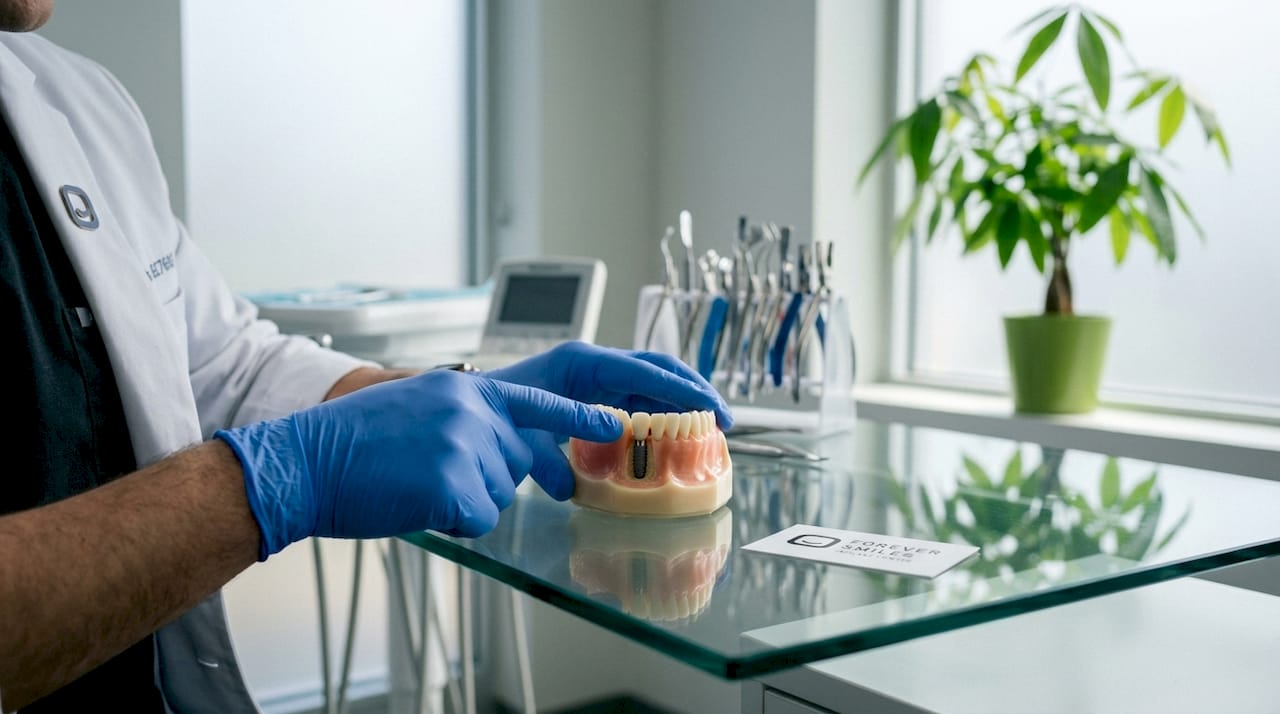
Swelling and pain are expected. Swelling peaks at 48–72 hours after surgery, then gradually subsides over the following days. That peak is not a sign something went wrong. It is your immune system doing exactly what it should.
Here is how to manage the first three days effectively:
- Ice packs: Apply in 20-minute on/off intervals during the first 24 hours. Switch to warm compresses after that to help reduce residual swelling.
- Pain medication: Take ibuprofen or acetaminophen as prescribed, always with food to avoid stomach upset. Alternating the two can provide better pain control than either alone.
- Bleeding control: Bite firmly on a single gauze pad for 30–60 minutes without changing it. Consistent pressure on one gauze is far more effective than swapping pads every few minutes.
- Diet: Stick to soft foods like yogurt, mashed potatoes, and smoothies. Avoid hot liquids, straws, and anything that requires chewing near the surgical site.
- Activity: Rest for the first 24 hours. Avoid bending, lifting, or any activity that raises blood pressure, as these increase bleeding risk.
Pro Tip: Most patients make bleeding worse by constantly checking and changing their gauze. Bite down firmly on one pad, set a timer for 45 minutes, and do not look at it until the timer goes off.
Bruising on the face or neck is also normal and resolves on its own within days to weeks. It looks alarming but requires no treatment.
How does osseointegration affect recovery and what should patients expect?
Osseointegration is the process by which your jawbone grows around and bonds directly to the titanium implant post. This is what makes dental implants permanent rather than removable. Without successful osseointegration, the implant has no stable foundation.
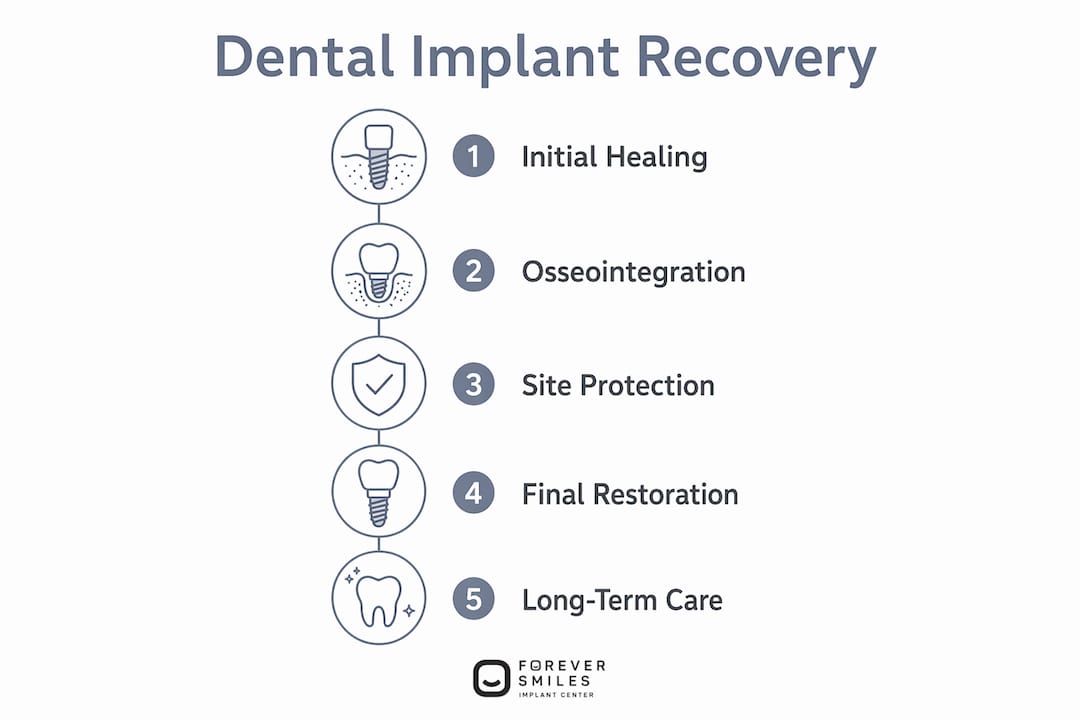
This phase takes 3–6 months to complete. That timeline surprises many patients who feel fine after the first two weeks and assume they are healed. Feeling fine is good, but bone fusion is still happening beneath the surface.
Signs of healthy osseointegration:
- No persistent pain or throbbing at the implant site
- Gum tissue that looks pink and firm, not red or swollen
- No mobility or movement when you press near the implant
- Gradual return of normal sensation in surrounding teeth and gums
Warning signs that need immediate attention:
- Increasing pain after the first week rather than decreasing pain
- Visible implant movement or looseness
- Persistent swelling, discharge, or bad taste at the site
- Fever that does not resolve within 48 hours
During osseointegration, proper oral hygiene and protecting the implant site are non-negotiable. Your surgeon will place a temporary crown or healing cap over the implant to shield it while bone integration occurs. That temporary restoration is not your final tooth. Do not treat it like one.
Smoking is the single biggest preventable threat to osseointegration. Smoking reduces blood flow and impairs bone fusion, which means the implant cannot bond properly to the jaw. Patients who smoke during recovery face a significantly higher rate of implant failure. Cessation before and during recovery is not optional advice. It is a clinical requirement for success.
What are the best practices for post-surgery implant care during recovery?
Effective post-surgery implant care follows a clear daily structure. Patients who build these habits into their routine from day one heal faster and with fewer complications.
- Take all prescribed medications on schedule. Do not wait until pain becomes severe to take your first dose. Starting pain medication before the anesthetic wears off keeps discomfort manageable from the start.
- Begin gentle rinsing after 24 hours. Use a warm saltwater rinse or a prescribed antiseptic rinse after meals. Do not swish aggressively. Let the rinse flow gently around the surgical site.
- Resume brushing carefully. Brush all teeth except the immediate surgical area for the first week. Use a soft-bristled brush and avoid any pressure directly on the implant site.
- Modify your diet for at least two weeks. Soft foods protect the clot and the implant during early healing. Introduce firmer foods gradually as your surgeon clears you to do so.
- Avoid alcohol and tobacco for the full recovery period. Both impair blood flow, slow tissue repair, and increase infection risk. Alcohol also interacts with pain medications and antibiotics.
- Attend every follow-up appointment. Your surgeon monitors osseointegration progress at scheduled intervals. Missing these visits means missing early detection of any complications.
- Manage swelling with elevation. Sleep with your head slightly elevated for the first few nights. This reduces fluid pooling at the surgical site and speeds up swelling resolution.
Pro Tip: Set phone alarms for your medication schedule and rinse routine for the first two weeks. Patients who treat recovery like a structured daily program consistently report smoother healing than those who rely on memory alone.
Infection prevention is the priority throughout recovery. Keep the surgical site clean, follow your surgeon's specific instructions over any general advice you find online, and call your dental team immediately if something feels wrong.
How long does full dental implant recovery take?
Recovery from dental implant surgery unfolds in stages, and each stage has a different focus. Most patients return to work within a few days, but full osseointegration takes several months. Understanding this distinction prevents the most common patient mistake: assuming that feeling normal means healing is complete.
The table below summarizes what to expect at each stage.
| Recovery stage | Typical timeline | Common symptoms | Care focus |
|---|---|---|---|
| Immediate post-op | Days 1–3 | Swelling, bleeding, pain | Clot protection, ice, soft diet |
| Early tissue healing | Weeks 1–2 | Fading swelling, mild soreness | Gentle hygiene, medication, rest |
| Osseointegration | Months 1–6 | Minimal symptoms, some sensitivity | Oral hygiene, no smoking, follow-ups |
| Final restoration | After confirmed integration | None if healing successful | Crown or prosthetic placement |
The staged recovery process means your surgeon will not place your final crown until imaging confirms the implant has fully integrated with the bone. Rushing this step is one of the most common causes of long-term implant failure.
Individual factors affect how quickly each stage progresses. Patients with well-controlled diabetes, good bone density, and no tobacco use tend to move through osseointegration faster. Patients with bone loss, systemic health conditions, or prior implant failures may need additional time or supplemental procedures. A surgeon who reviews your 3D imaging before surgery can give you a realistic personal timeline, not a generic estimate.
Key Takeaways
Successful dental implant recovery requires patient discipline across every stage, from clot protection in the first 72 hours through the full osseointegration period of 3–6 months.
| Point | Details |
|---|---|
| Staged healing process | Recovery moves through immediate healing, osseointegration, and final restoration in sequence. |
| Swelling peaks at 48–72 hours | Use ice packs in 20-minute intervals for the first day, then switch to warm compresses. |
| Osseointegration takes 3–6 months | Bone fusion happens below the surface even when you feel fine. Do not skip follow-up visits. |
| Smoking is the top preventable risk | Smoking impairs blood flow and bone healing, making implant failure significantly more likely. |
| Medication and hygiene routines matter | Taking medications on schedule and rinsing gently after meals directly supports healing outcomes. |
What I have learned from 28,000 implants about recovery
The patients who struggle most during recovery are not the ones with the most complex cases. They are the ones who underestimate the first 72 hours.
I have placed over 28,000 implants, and the pattern is consistent. Patients who treat the first three days with the same seriousness as the surgery itself heal well. Patients who feel good the next morning and go back to normal eating, skip their rinses, or light a cigarette because "it was just one" are the ones calling my office a week later with complications.
The psychological side of recovery is something most post-op instructions ignore. Knowing that swelling will peak and then drop, that some days feel worse than others, and that the implant is integrating even when you cannot feel it happening gives patients the confidence to stay the course. Anxiety spikes when patients do not know what is normal. Clear expectations are part of the treatment.
The other mistake I see regularly is patients who stop following care instructions once they feel comfortable. Osseointegration is not complete just because the soreness is gone. The bone is still bonding to the implant for months after surgery. That is why I tell every patient: the final crown is the finish line, not the absence of pain.
If something feels off during recovery, call your dental team. Do not search for reassurance online. A quick call can catch a real problem early or give you the peace of mind to keep going. Either outcome is worth the two minutes it takes to pick up the phone.
— Dr. Brian Young
Recovery support at Forever Smiles Implant Center
Patients at Forever Smiles Implant Center receive post-operative care guidance built into their treatment from day one, not handed to them as an afterthought on the way out the door. Every case is planned in advance using 3D imaging, and recovery protocols are tailored to each patient's specific surgical complexity and health profile.
The team at Forever Smiles Implant Center handles surgical planning, surgery, lab work, and follow-up care under one roof. That means the surgeon who placed your implant is the same team monitoring your healing at every checkpoint. Patients with questions about their dental implant recovery can find detailed answers in the practice's FAQ resource, or schedule a consultation directly to discuss their case. For patients considering full-mouth implant options, the practice offers a complete evaluation including 3D imaging to establish a clear, realistic recovery plan before surgery begins.
FAQ
What is post-surgery recovery for dental implants?
Post-surgery recovery for dental implants is the staged healing process following implant placement, covering initial tissue healing, osseointegration (bone fusion), and final crown placement. The full process typically spans 3–6 months.
How long does swelling last after dental implant surgery?
Swelling peaks at 48–72 hours after surgery and then gradually decreases. Most patients see significant improvement by the end of the first week.
When can I return to work after dental implant surgery?
Most patients return to work within a few days of surgery, depending on the extent of the procedure and the physical demands of their job.
Does smoking affect dental implant healing?
Smoking significantly increases the risk of implant failure by reducing blood flow and impairing bone fusion during osseointegration. Cessation during recovery is a clinical requirement, not optional guidance.
How do I know if my implant is healing correctly?
A healing implant shows no increasing pain after the first week, stable gum tissue, and no movement at the implant site. Persistent swelling, discharge, or looseness requires immediate contact with your surgeon.