

Implant longevity is defined as the long-term functional survival of a dental implant within the jawbone, and it depends almost entirely on what you do after surgery. Initial tissue healing completes in about 8–12 weeks, but full osseointegration, the process by which bone fuses to the titanium post, takes 3–6 months. That window is when your implant is most vulnerable. Patients who maximize implant longevity after surgery do so by following strict care protocols from day one, not by luck or implant brand. Forever Smiles Implant Center treats this phase as the foundation of every successful full-arch outcome.
What immediate post-surgery care should patients follow to protect implants?
The first 48–72 hours after surgery set the tone for everything that follows. Swelling, bleeding, and discomfort are normal, but how you manage them determines whether healing stays on track.
Follow these steps in the days immediately after surgery:
- Apply ice packs at 20-minute intervals. Ice packs applied 20 minutes on, 20 minutes off during the first 48 hours reduce swelling effectively. After 48 hours, switch to warm compresses to help with bruising.
- Keep your head elevated. Sleep with your head propped up on two pillows for the first several nights. Lying flat increases blood pressure to the surgical site and worsens swelling.
- Take all prescribed medications. Antibiotics prevent infection during the critical early healing window. Pain medication taken on schedule, not just when pain peaks, keeps inflammation manageable.
- Start saltwater rinses at 24–48 hours. Gently swish with warm saltwater starting the day after surgery. Do not spit forcefully. Tilt your head to let the rinse fall out of your mouth instead.
- Eat soft, nutrient-rich foods only. Yogurt, scrambled eggs, mashed sweet potato, and protein shakes support tissue repair without stressing the implant site. Chewing directly on the implant site before osseointegration completes causes micromotion that disrupts bone fusion.
- Avoid straws completely. Using a straw creates negative pressure that can dislodge the blood clot protecting the surgical site. A dislodged clot leads to dry socket, which delays healing and increases infection risk.
- Skip strenuous activity for at least a week. Exercise raises blood pressure and can trigger bleeding at the surgical site. Walking is fine. Running, lifting, and contact sports are not.
Pro Tip: Set a phone alarm to remind yourself to take medications on schedule during the first three days. Missing a dose lets inflammation build faster than most patients expect.
The most common early failures trace back to patients who felt fine and pushed their limits too soon. Feeling good is not the same as being healed.
How to maintain excellent oral hygiene during implant healing and beyond
Plaque control around implants is biologically more demanding than around natural teeth. The tissue seal around an implant is more vulnerable than natural tooth roots, which means bacteria reach the bone faster if hygiene slips. Dental experts treat implants with greater rigor than natural teeth for exactly this reason.
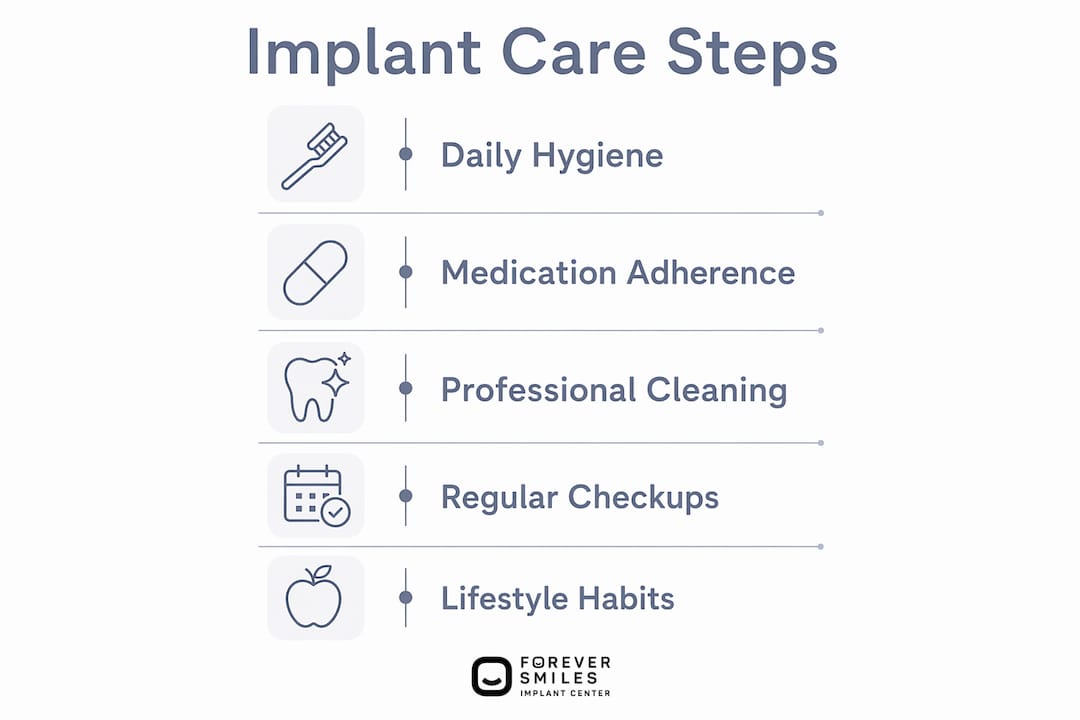
Your daily routine should include:
- Soft-bristled toothbrush, twice daily. Use a 45-degree angle at the gumline to disrupt biofilm where it accumulates most. Electric toothbrushes with pressure sensors work well because they prevent over-scrubbing sensitive tissue.
- Implant-safe floss or interdental brushes. Standard floss works around single implants. For full-arch restorations, interdental brushes or water flossers reach areas that floss cannot. Use the tool that fits the space.
- Water flosser as a daily supplement. A water flosser does not replace mechanical cleaning, but it flushes debris from under the prosthetic where brushes cannot reach. Use it at medium pressure to avoid tissue trauma.
- Antimicrobial rinse when directed. Chlorhexidine gluconate is effective for short-term use after surgery or during active inflammation. Long-term daily use stains teeth and disrupts the oral microbiome. Switch to a mild, alcohol-free rinse for everyday maintenance.
- Watch for bleeding that does not stop. Some sensitivity during early healing is expected. Inflammation around an implant is never normal and requires professional evaluation. Waiting even a few weeks risks permanent bone loss.
Overcontoured prosthetic crowns create ledges and recesses where biofilm collects and is nearly impossible to remove at home. If your crown design makes cleaning difficult, ask your provider about prosthetic adjustment. This is not a cosmetic issue. It directly affects whether your implant survives long-term.
Pro Tip: Run your tongue along the gumline around each implant after brushing. If you feel a rough or tacky surface, biofilm is still present. Brush that area again with a slightly different angle.
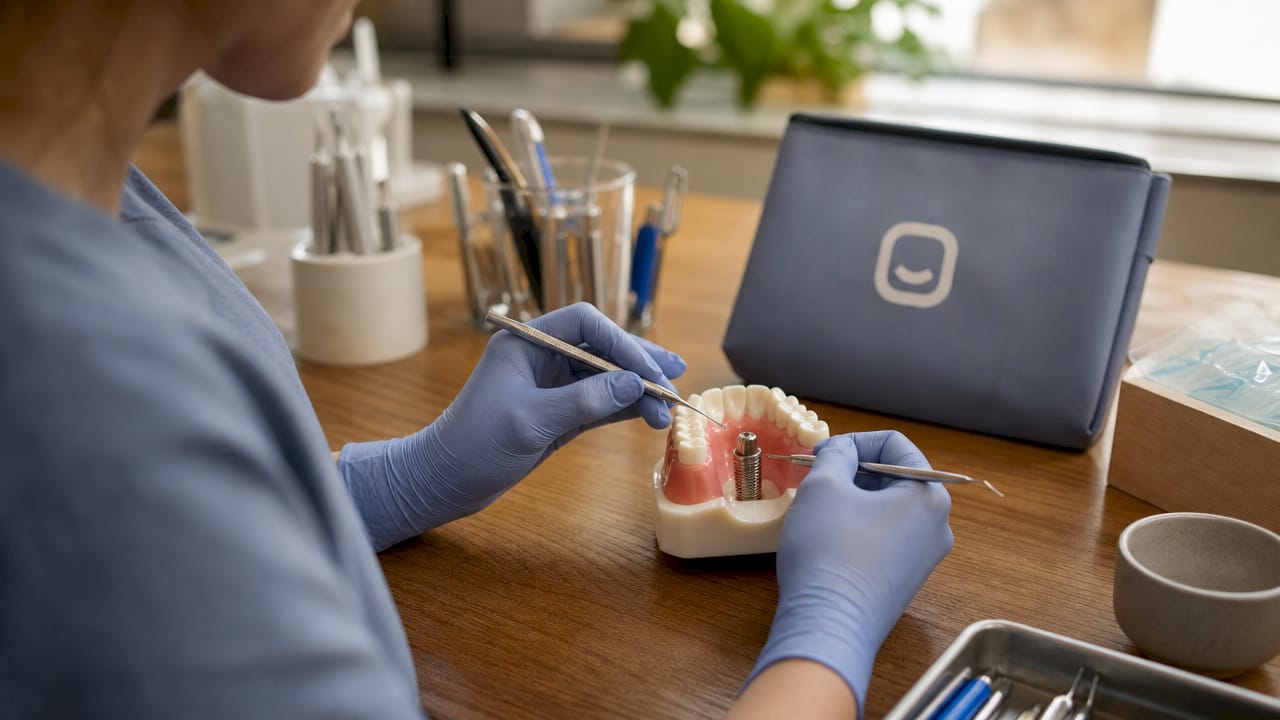
The goal of daily hygiene is consistent biofilm disruption, not perfection. Missing one day is not a crisis. Missing weeks at a time is how peri-implant disease starts.
What professional maintenance routines optimize implant survival?
Home care alone is not enough to protect an implant over decades. Patients who receive professional maintenance every 3–6 months show significantly better implant survival rates. The reason is simple: calcified biofilm, called calculus, forms on implant surfaces and cannot be removed by brushing or flossing at home.
The International Team for Implantology (ITI) recognizes structured recall visits as the primary defense for long-term implant success. Each visit should include probing depth measurements, bleeding-on-probing checks, and periodic radiographs to catch bone changes before they become irreversible.
| Visit component | Why it matters |
|---|---|
| Probing depth measurement | Detects early peri-implant disease before bone loss appears on X-rays |
| Bleeding on probing | Signals active inflammation requiring immediate intervention |
| Radiographic monitoring | Tracks bone level changes over time at the implant interface |
| Professional debridement | Removes calculus that home care cannot reach |
| Recall schedule adjustment | Adapts frequency based on smoking, diabetes, or periodontitis history |
Peri-implant mucositis, the early, reversible form of implant gum disease, responds well to professional cleaning and improved home care. Peri-implantitis, the advanced form involving bone loss, requires surgical treatment and carries a less favorable prognosis. Early detection through probing and bleeding checks is the difference between a simple cleaning appointment and a surgical revision.
Patients with a history of periodontitis, active smoking, or poorly controlled diabetes need more frequent visits, often every three months rather than six. Sixty percent of treated diseased implants relapse within one year when professional maintenance is neglected. That number reflects how quickly the disease returns without consistent clinical oversight.
Specialized instruments designed for implant surfaces, including plastic-tipped scalers and air-polishing devices, clean without scratching the titanium. Traditional metal scalers used on natural teeth can damage implant surfaces and accelerate future biofilm attachment. Ask your provider specifically about implant-safe cleaning protocols.
Which lifestyle habits affect implant longevity?
Long-term implant failure is often caused by mechanical overload and biofilm-induced inflammation, not implant material defects. The habits you maintain every day determine which category you fall into.
The lifestyle factors with the greatest impact on implant durability include:
- Smoking. Smoking reduces blood flow to healing tissue, impairs immune response, and dramatically increases infection risk. Patients who smoke after surgery face higher rates of implant failure than non-smokers. Quitting before surgery and staying smoke-free afterward is the single most impactful lifestyle change a patient can make.
- Teeth grinding (bruxism). Mechanical stress from grinding causes material fatigue at the implant interface. A custom nightguard distributes force and protects both the implant and the prosthetic crown from premature wear.
- Hard and sticky foods. Ice, hard candies, and sticky caramels place excessive force on the implant crown and can fracture the prosthetic or loosen the abutment. These foods are not worth the risk.
- Uncontrolled systemic conditions. Diabetes impairs healing and increases susceptibility to infection. Patients with well-controlled blood sugar have outcomes comparable to non-diabetic patients. Poorly controlled diabetes is one of the strongest predictors of implant failure.
- Nutrition. Calcium, vitamin D, and adequate protein support bone density and tissue repair. A diet that lacks these nutrients slows osseointegration and weakens the bone supporting the implant over time.
Managing these factors is not about perfection. It is about reducing cumulative risk over years and decades. Every good habit compounds in your favor.
Key Takeaways
Maximizing implant longevity after surgery requires consistent daily hygiene, professional maintenance every 3–6 months, and lifestyle habits that protect the implant from mechanical and biological damage.
| Point | Details |
|---|---|
| Osseointegration takes time | Full bone fusion takes 3–6 months; avoid loading the implant site during this window. |
| Daily hygiene is non-negotiable | Brush twice daily at 45 degrees and use interdental tools to disrupt biofilm every day. |
| Professional visits prevent failure | Probing and debridement every 3–6 months catch disease before bone loss becomes irreversible. |
| Lifestyle choices compound over time | Smoking, grinding, and poor blood sugar control are the leading behavioral causes of implant failure. |
| Act on inflammation immediately | Bleeding or redness around an implant signals active disease, not normal healing. |
What I've learned after 28,000 implants about patient commitment
Most patients walk out of surgery focused on the short term: managing swelling, eating soft foods, and getting through the first week. That focus is correct. But the patients who keep their implants for life are the ones who shift their mindset at about the three-month mark, when they feel normal again and the temptation to stop being careful is strongest.
What I have observed over more than 20 years and thousands of full-arch cases is that early postoperative diligence is a strong predictor of long-term outcomes. Patients who follow instructions precisely in the first 90 days tend to take their recall visits seriously for years afterward. The habit of care, once built, tends to stick.
The patients who struggle are not the ones with complex anatomy or difficult bone. They are the ones who underestimate what inflammation is telling them. Redness around an implant is not a cosmetic issue. It is a warning. I have seen patients wait months to report symptoms that, caught earlier, would have required a simple cleaning. Caught late, those same cases needed surgery.
My advice is direct: treat your implant like the investment it is. Call your provider the moment something looks or feels different. Do not wait for your next scheduled visit if something changes. The cost of a phone call is nothing. The cost of waiting is sometimes the implant itself.
— Dr. Brian Young
Expert implant care at Forever Smiles Implant Center
Patients who want their implants to last a lifetime need more than good surgery. They need a team that stays accountable through every phase of recovery and beyond.
Forever Smiles Implant Center in Jacksonville, Florida, provides full-mouth dental implant care built around exactly that commitment. Every patient receives a personalized maintenance plan, follow-up support, and access to 3D imaging technology that tracks bone health with precision. The team performs full-arch procedures daily, which means the clinical experience behind your care is not occasional. It is constant. Patients traveling from outside Jacksonville can also access out-of-town patient support designed to keep care continuous regardless of distance. If you are ready to protect your investment with the right team, schedule a consultation with Forever Smiles Implant Center today.
FAQ
How long does osseointegration take after implant surgery?
Full osseointegration takes 3–6 months after surgery. Initial tissue healing completes in about 8–12 weeks, but bone fusion to the implant post continues beyond that window.
What are the early signs of implant failure?
Bleeding, redness, or swelling around an implant that does not resolve is never normal. These signs indicate peri-implant disease and require professional evaluation before bone loss occurs.
How often should I see a dentist after getting implants?
Professional maintenance every 3–6 months is the standard recommendation for most implant patients. Patients who smoke, have diabetes, or have a history of gum disease may need visits every three months.
Can teeth grinding damage a dental implant?
Yes. Mechanical stress from bruxism causes fatigue at the implant interface and can fracture the prosthetic crown. A custom nightguard is the most effective way to protect implants from grinding damage.
Does smoking affect implant longevity?
Smoking significantly increases the risk of implant failure by reducing blood flow and impairing immune response at the surgical site. Quitting before and after surgery is the most impactful lifestyle change for improving implant durability.