

Permanent teeth replacement is achievable even when significant bone loss has already occurred. The clinical term for this challenge is alveolar bone resorption, and it affects a large share of patients who have been missing teeth for years. Modern implant techniques, including graftless approaches like zygomatic and subperiosteal implants, now give patients real options where none existed before. Forever Smiles Implant Center in Jacksonville, Florida specializes in exactly these cases, including patients who were told elsewhere that they could not get permanent dental implants due to bone loss.
How does bone resorption affect implant candidacy?
Bone resorption reduces the height and density of the alveolar ridge after tooth loss. That matters because standard endosteal implants require a minimum volume of bone to anchor securely and integrate over time. When that volume is gone, the traditional path to permanent teeth gets blocked.
Jaw remodeling does not stop after extraction. The bone continues to shrink over months and years without the stimulation that tooth roots once provided. This is why patients who have worn dentures for a decade often have far less bone than patients who lost teeth recently.
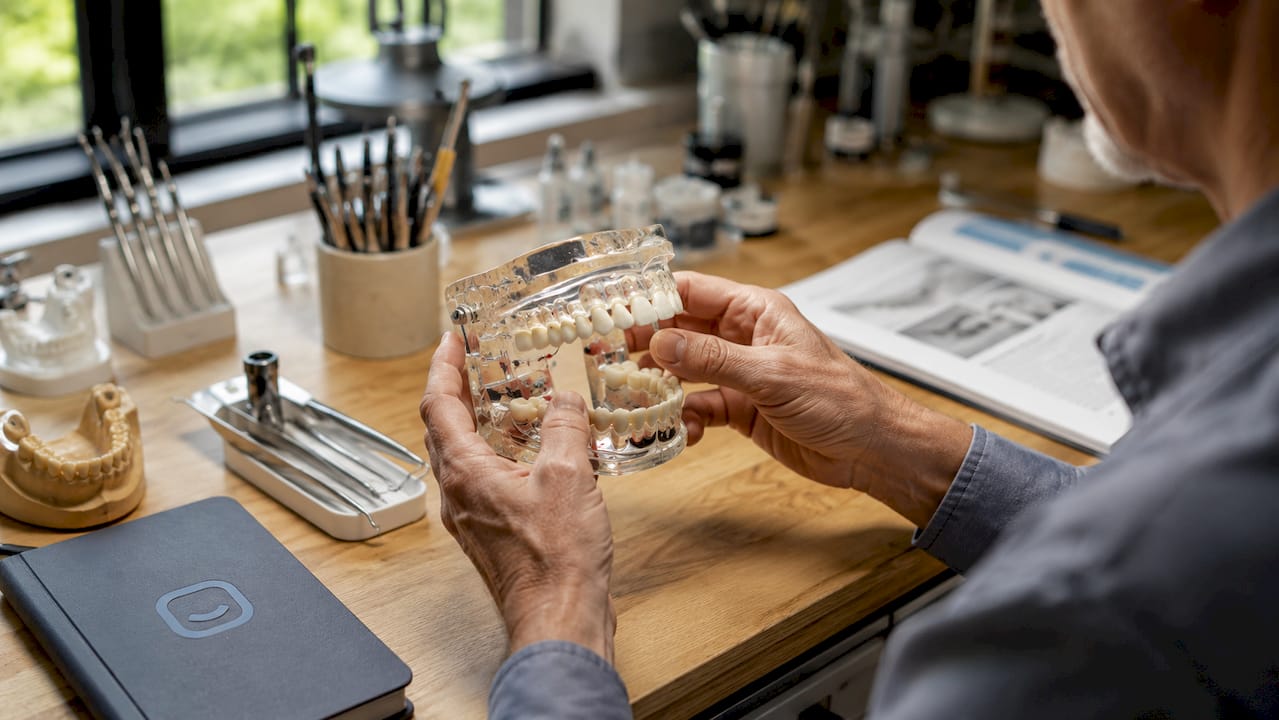
Surgeons use the Cawood and Howell classification system to grade bone loss severity across six stages. Stages IV through VI represent the most advanced resorption, where standard implant placement becomes difficult or impossible without intervention. Knowing your classification is the starting point for any honest treatment conversation.
3D CBCT imaging is the standard tool for mapping bone volume and density before any implant procedure. A flat X-ray cannot show the three-dimensional picture a surgeon needs to plan accurately. CBCT scans reveal exactly how much bone remains, where the dense basal bone sits, and which implant approach is feasible for your anatomy.
Key factors that determine implant candidacy with bone loss include:
- Remaining bone height and width at the proposed implant site
- Bone density, graded from D1 (dense cortical) to D4 (soft cancellous)
- Proximity to anatomical structures such as the sinus floor or inferior alveolar nerve
- Overall systemic health, including conditions like uncontrolled diabetes that affect healing
- Smoking status, which directly reduces osseointegration success rates
What are the traditional bone grafting solutions before implant placement?
Bone grafting rebuilds lost ridge volume so that standard endosteal implants have enough material to anchor into. It is the most established bone resorption treatment and works well for patients with moderate loss who are willing to accept an extended timeline.
There are four main grafting material types used in clinical practice:
- Autografts use bone harvested from your own body, typically from the chin, jaw ramus, or hip. This is the gold standard for graft success because the material is living and carries growth factors. The trade-off is a second surgical site and additional recovery.
- Allografts use processed donor bone from a human tissue bank. The bone is sterilized and treated to remove cellular material, leaving a scaffold that your body fills in over time. This eliminates the donor site but adds a longer integration period.
- Xenografts use animal-derived bone, most commonly bovine. These are widely used for socket preservation and sinus lifts. They resorb slowly, which provides long-term volume stability.
- Synthetic grafts use materials like hydroxyapatite or beta-tricalcium phosphate. These are fully manufactured, carry no disease transmission risk, and are effective for smaller defects.
Bone grafting typically requires 3–9 months of healing before implants can be placed. That timeline reflects how long it takes for the graft to consolidate and for new bone to form. Patients who need a sinus lift combined with a graft often sit at the longer end of that range.
Grafting is not the right path for every patient. Patients with very advanced resorption may not have enough residual bone to support a graft, and older patients or those with compromised healing may face higher complication rates. Extended treatment time is also a real barrier for patients who need functional teeth sooner.
Pro Tip: Ask your surgeon specifically whether your bone loss is in the alveolar ridge only or whether the basal bone beneath it is also affected. Basal bone is denser and more stable, and its condition determines whether graftless options are viable for you.
What advanced graftless implant options exist for severe bone resorption?
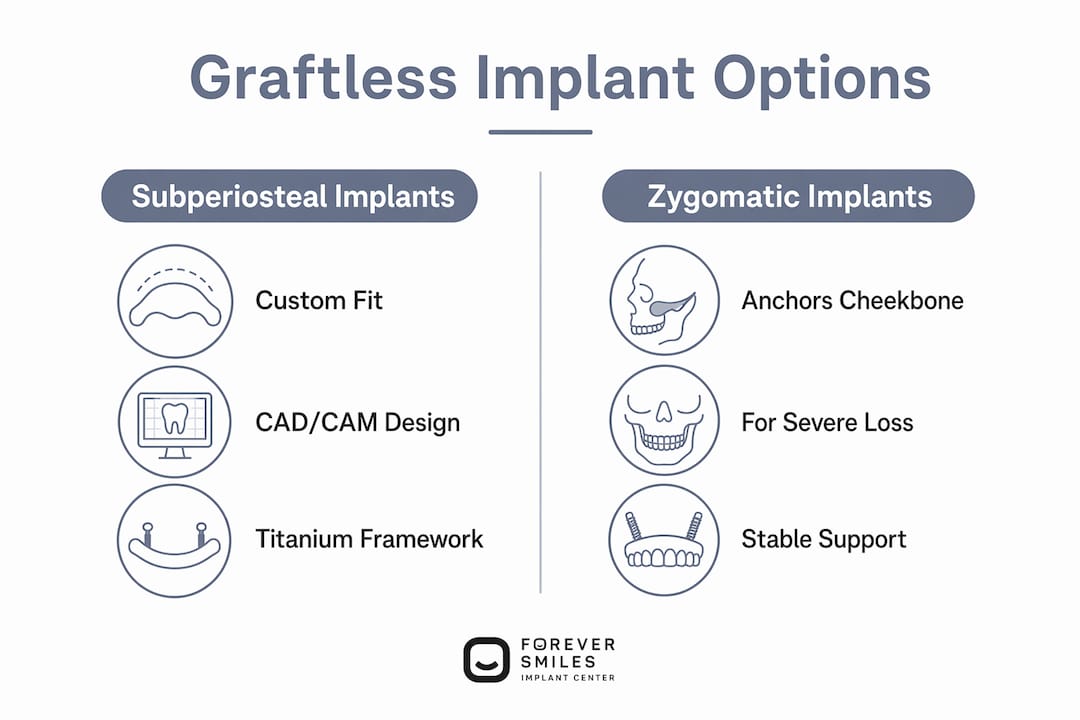
Graftless implant techniques represent a fundamental shift in how surgeons approach severe bone loss. Instead of rebuilding bone to fit a standard implant, these methods work with the bone anatomy that already exists.
Subperiosteal implants
Subperiosteal implants are custom titanium frameworks designed using CAD/CAM technology to fit precisely over the patient's existing basal bone. The framework sits beneath the gum tissue but above the jawbone surface, and multiple screws fix it to the dense cortical bone below. Because the design relies on mechanical fixation rather than deep osseointegration, patients with near-zero alveolar bone can still be candidates. This method reduces surgical trauma and bypasses the long grafting and healing periods that standard implants require.
Zygomatic implants
Zygomatic implants anchor into the cheekbone rather than the jaw. The zygomatic bone is dense, stable, and unaffected by the alveolar resorption that makes upper jaw implants so difficult in severe cases. These implants allow faster recovery, avoid grafting entirely, and enable immediate teeth restoration in many cases. They are the most reliable option for patients with severe maxillary bone loss who have been told they cannot receive upper arch implants.
The table below compares these two graftless approaches against traditional grafting:
| Feature | Bone grafting | Subperiosteal implants | Zygomatic implants |
|---|---|---|---|
| Bone requirement | Moderate residual bone needed | Near-zero bone acceptable | Cheekbone must be intact |
| Treatment timeline | 3–9 months before implants | Shorter, no graft wait | Shorter, immediate loading possible |
| Surgical complexity | Moderate | High, requires digital planning | High, requires specialist surgeon |
| Best for | Moderate bone loss | Severe lower jaw resorption | Severe upper jaw resorption |
| Grafting required | Yes | No | No |
Pro Tip: Zygomatic implants require a surgeon with specific training in this technique. The anatomy involved is more complex than standard implant placement. Always ask how many zygomatic cases your surgeon has completed before proceeding.
Surgical expertise and imaging precision are the two factors that most determine success in severe resorption cases. Implant brand choice matters far less than the quality of planning and the surgeon's experience with complex anatomy.
How do you evaluate and plan for permanent teeth with bone loss?
The evaluation process for restoring teeth with bone loss follows a clear sequence. Skipping steps increases risk and reduces the chance of a predictable outcome.
The full assessment process includes:
- Medical history review: Conditions like osteoporosis, diabetes, and autoimmune disorders affect bone quality and healing. Medications such as bisphosphonates can interfere with osseointegration and must be disclosed.
- CBCT scan: A 3D scan maps the exact bone volume available, identifies nerve and sinus positions, and allows the surgical team to plan implant placement digitally before touching a patient.
- Smile design consultation: The final tooth position drives the implant plan backward. Surgeons who plan teeth-first rather than bone-first produce better functional and esthetic results.
- Surgical plan review: The patient reviews the proposed implant positions, number of implants, and expected outcomes before surgery begins.
The full implant process from consultation to final teeth typically spans several months, though graftless approaches compress that timeline significantly. Osseointegration, the biological process by which bone fuses to the implant surface, takes 3–9 months to complete fully. Patients receive functional provisional teeth during that healing period so they are never without a working smile.
Choosing a specialized center matters more than most patients realize. A surgeon who performs full-arch implant procedures daily builds pattern recognition that a part-time implant provider simply cannot match. Forever Smiles Implant Center performs these procedures every day, with an in-house lab and a board-certified MD anesthesiologist on the same team.
What are the challenges and maintenance tips for implants after bone loss?
Patients who receive implants after severe bone resorption face a different maintenance picture than those with healthy bone. The risks are manageable, but they require active monitoring.
Potential complications to watch for include:
- Framework exposure: In subperiosteal cases, the titanium framework can become exposed through the gum tissue. Early detection allows for correction before the implant is compromised.
- Implant mobility: Any movement in a placed implant signals a problem. A stable implant does not move. Mobility requires immediate evaluation.
- Peri-implant infection: Bacteria accumulating around the implant base can cause bone loss around the fixture itself, a condition called peri-implantitis.
Patient maintenance and professional follow-ups are the most reliable way to catch complications early and protect long-term implant success. Proper hygiene and regular monitoring reduce the risk of framework exposure and implant failure significantly.
Healthy implant integration produces a stable, non-mobile fixture with no pain on pressure, no bleeding around the base, and no radiographic bone loss at follow-up imaging. These are the benchmarks your care team should confirm at every checkup.
Pro Tip: Implant crowns and prosthetic teeth may need replacement after 10–15 years, but the implant post itself is designed to last a lifetime with proper care. Understanding this distinction helps you plan financially and set realistic long-term expectations.
Key Takeaways
Patients with severe bone resorption have real, proven paths to permanent dental implants through graftless techniques and specialized surgical planning.
| Point | Details |
|---|---|
| Bone loss does not disqualify you | Graftless options like zygomatic and subperiosteal implants work where standard implants cannot. |
| CBCT imaging is non-negotiable | 3D scans map basal bone and guide surgical planning, directly improving outcomes. |
| Grafting adds time but restores options | Bone grafting requires 3–9 months of healing but rebuilds ridge volume for standard implants. |
| Surgeon experience drives results | Imaging precision and surgical expertise matter more than implant brand in complex cases. |
| Maintenance protects your investment | Regular professional checkups and daily hygiene reduce the risk of peri-implantitis and framework exposure. |
What I have learned from treating the most difficult bone loss cases
After placing over 28,000 implants and working daily with patients who arrive after being turned away elsewhere, I have one consistent observation: the patients who struggle most are not the ones with the worst bone. They are the ones who waited too long after getting a discouraging answer from a provider who lacked the tools or training to offer a real solution.
Severe bone resorption is a surgical problem, not a dead end. The cases I find most rewarding are the ones where a patient comes in convinced they have no options, and we show them a CBCT scan that reveals enough basal bone for a zygomatic approach or a subperiosteal framework. The anatomy is almost always there. What is missing is a surgeon who knows how to use it.
The technology matters, but it is secondary. CAD/CAM planning, digital workflows, and high-resolution imaging are tools. They amplify what a skilled surgical team can do. They do not replace judgment built from thousands of complex cases. When patients ask me what separates a good outcome from a failed one in severe resorption cases, my answer is always the same: the surgeon's daily experience with exactly this type of anatomy.
My advice to anyone who has been told they cannot get permanent dental implants due to bone loss is to get a second opinion from a center that specializes in full-arch reconstruction and performs these procedures every single day. One conversation with the right surgical team can change everything.
— Dr. Brian Young
Permanent teeth solutions at Forever Smiles Implant Center
Forever Smiles Implant Center in Jacksonville, Florida offers the full range of permanent teeth solutions for patients with bone loss, including zygomatic implants, subperiosteal implants, and complete full-arch reconstruction. Every case begins with a detailed 3D CBCT scan and a surgical plan reviewed with the patient before any procedure begins.
Dr. Brian Young has placed over 28,000 implants and performs full-arch surgery daily. The in-house lab, board-certified anesthesiologist, and dedicated surgical team mean your entire process happens under one roof with one accountable team. Patients who have been told elsewhere that they are not candidates are encouraged to schedule a consultation. Get answers to your most pressing questions on the dental implants FAQ page or contact the center directly to discuss your specific bone loss situation.
FAQ
Can I get dental implants if I have severe bone loss?
Yes. Graftless techniques like zygomatic implants and subperiosteal implants are specifically designed for patients with severe bone resorption who cannot receive standard endosteal implants.
How long does bone grafting take before I can get implants?
Bone grafting requires 3–9 months of healing before implants can be placed. The exact timeline depends on the graft type and the extent of bone loss being corrected.
What is a zygomatic implant and who needs one?
A zygomatic implant anchors into the cheekbone instead of the jaw, providing stable support for patients with severe upper jaw bone loss. It avoids grafting and allows immediate teeth restoration in many cases.
Are permanent implants truly permanent?
The implant post is designed to last a lifetime with proper care. The prosthetic crown or bridge attached to it may require replacement after 10–15 years, which is a separate consideration from the implant itself.
How do I know which implant option is right for my bone loss?
A 3D CBCT scan is the only reliable way to determine which approach fits your anatomy. Skipping this step leads to mismatched treatment plans and higher surgical risk in complex cases.