
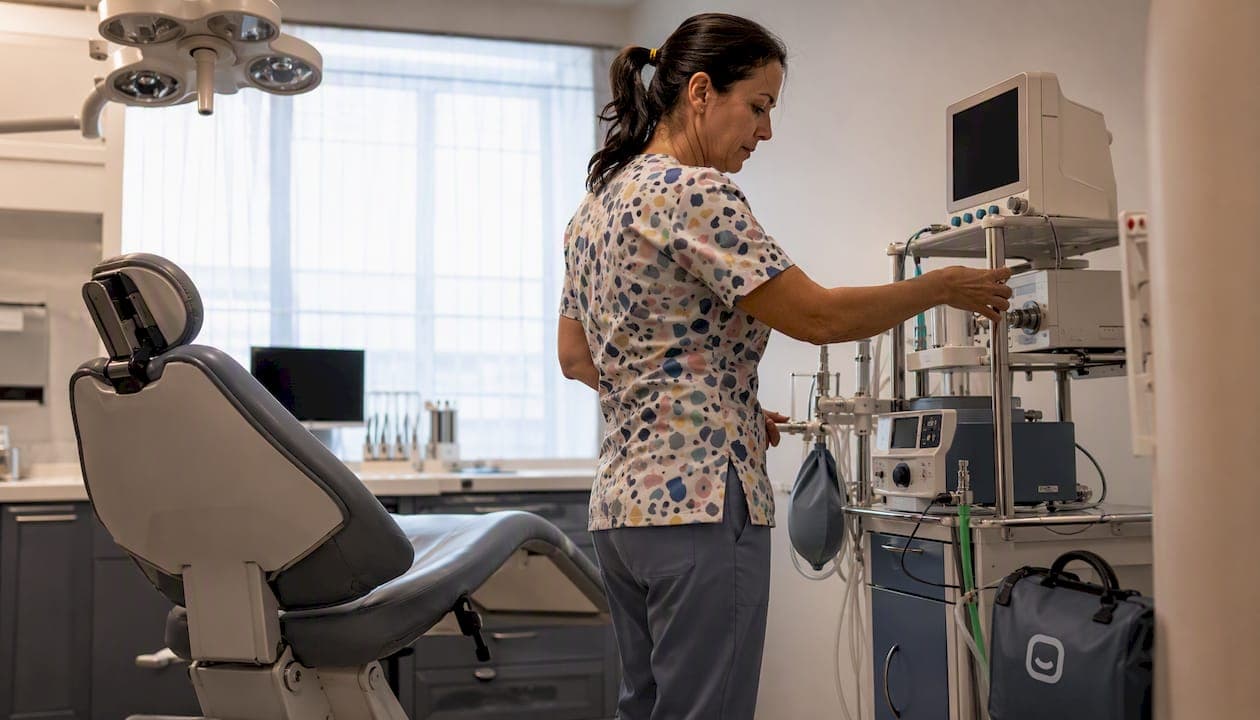
A dental anesthesiologist is the licensed specialist whose sole responsibility is to plan, deliver, and monitor anesthesia during dental surgery so the patient stays safe, comfortable, and physiologically stable throughout the procedure. The surgeon focuses on the teeth and bone. The anesthesiologist focuses entirely on you.
Their core duties, in brief:
- Pre-op evaluation: Review medical history, medications, airway anatomy, and assign an ASA physical status classification before any drug is given.
- Anesthesia plan and drug delivery: Select agents, doses, and routes matched to the patient's health profile and the procedure's demands.
- Continuous physiologic monitoring: Track oxygen saturation, end-tidal CO2, blood pressure, heart rate, and airway status throughout surgery.
- Airway and emergency management: Maintain a patent airway, respond to complications, and execute transfer protocols if escalation is needed.
- Post-op handoff: Confirm discharge criteria are met and brief the recovery team or escort before the patient leaves.
The American Society of Dentist Anesthesiologists (ASDA), the American Dental Association (ADA), and the American Dental Education Association (ADEA) all set the training standards, scope-of-practice parameters, and monitoring guidelines that govern this role in the United States. Involving a dedicated anesthesia provider is not a luxury for complex cases. According to professional guidance, it is the standard of care for deep sedation and general anesthesia in dental settings.
Table of Contents
- Who is a dental anesthesiologist and how do they differ from other providers?
- Understanding the sedation continuum used in dental procedures
- Where dental anesthesia is delivered and how the team is structured
- How safe anesthesia delivery actually works: protocols from pre-op to handoff
- What recovery looks like and how emergency situations are handled
- Which patients and procedures genuinely need a dedicated anesthesiologist
- What the research and professional guidance say about safety outcomes
- Key Takeaways
- Why dedicated anesthesia is the standard for complex implant surgery
- What to look for in a practice when complex dental surgery is on the table
- Authoritative sources and further reading
Who is a dental anesthesiologist and how do they differ from other providers?
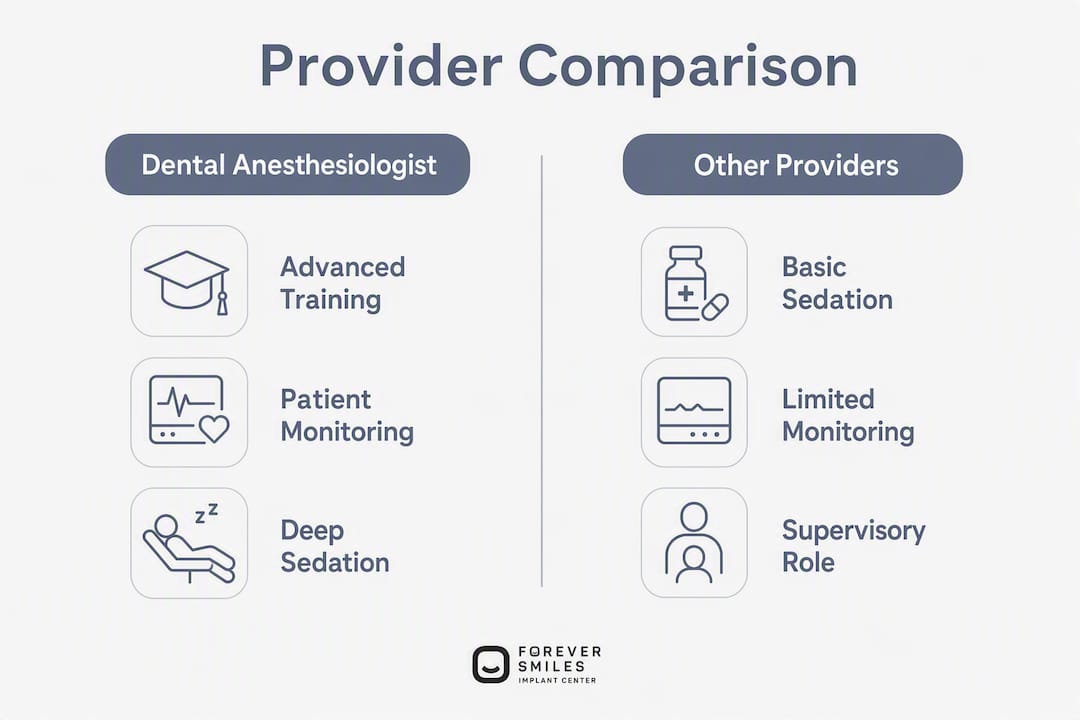
A dental anesthesiologist (also called a dentist anesthesiologist) is a licensed dentist who completes a DDS or DMD degree and then finishes an accredited 2–3 year postdoctoral anesthesia residency recognized by the ADEA and the ADA. Residency rotations typically include medical anesthesiology, internal medicine, emergency medicine, and pediatric anesthesia. That last rotation matters more than most people realize: shared-airway management in a child undergoing oral surgery is one of the most technically demanding scenarios in all of anesthesia, and dental anesthesiology training is specifically built around it.

Three provider types can legally deliver dental anesthesia in the United States, each with a distinct training path and scope:
| Provider Type | Training / Residency | Typical Duties and Scope | Common Practice Settings | Sedation Levels Typically Provided | Patient Groups Who Most Benefit |
|---|---|---|---|---|---|
| Dental/Dentist Anesthesiologist | DDS/DMD + 2–3 year accredited postdoctoral anesthesia residency | Full anesthesia management in dental/oral surgery environment; shared-airway expertise | Dental offices, ASCs, hospitals, mobile practice | Minimal through general anesthesia | Pediatric, special-needs, complex oral surgery, phobic patients |
| MD Anesthesiologist | MD + 4-year anesthesiology residency (hospital-based) | Full anesthesia management across all surgical specialties | Hospitals, ASCs; less common in freestanding dental offices | All levels | High-acuity medical comorbidities, hospital-based oral surgery |
| CRNA (Certified Registered Nurse Anesthetist) | BSN + RN experience + 2–3 year nurse anesthesia program | Full spectrum of anesthesia services within scope | Hospitals, ASCs, dental offices, underserved/rural settings | All levels | Cost-effective access, rural and underserved populations |
On billing: dental anesthesiologist fees are typically billed separately from the surgical fee, either as a time-based professional charge or bundled into a facility package. Most dental insurance plans cover anesthesia only for specific procedures (extractions, oral surgery); medical insurance coverage varies. AANA guidance notes that CRNAs are a cost-effective option that expands access, particularly in underserved areas.
Understanding the sedation continuum used in dental procedures
Anesthesia in dental procedures is not a single switch. The ADA and ASDA recognize four distinct levels, each with different monitoring requirements, staffing expectations, and drug profiles.
| Sedation Level | Patient State | Minimum Monitoring | Dedicated Anesthesia Provider Required? |
|---|---|---|---|
| Minimal sedation (anxiolysis) | Awake, cooperative; cognitive function slightly reduced | Pulse oximetry; baseline vitals | No — operator-administered acceptable |
| Moderate sedation (conscious sedation) | Purposeful response to verbal/tactile stimulation; airway maintained independently | Continuous pulse oximetry, blood pressure, heart rate; IV access recommended | Recommended for high-risk patients; operator-administered acceptable for low-risk |
| Deep sedation | Difficult to arouse; may not maintain airway independently | Continuous capnography, pulse oximetry, blood pressure, ECG; IV access required | Yes — dedicated provider strongly recommended |
| General anesthesia | Unarousable; requires airway support | All of the above plus temperature monitoring as indicated; defibrillation immediately available | Yes — dedicated provider required |
Common agents by route:
- Oral: Benzodiazepines (triazolam, diazepam) for minimal to moderate sedation; onset is slow and titration is limited.
- Inhalation: Nitrous oxide/oxygen for minimal sedation; fast onset, rapid recovery, easily titratable.
- Intravenous: Propofol, midazolam, ketamine, dexmedetomidine, and opioid adjuncts for moderate through general anesthesia; precise titration, faster recovery than oral agents.
- Inhaled general agents: Sevoflurane or desflurane when endotracheal intubation or a laryngeal mask airway is used.
The ADA's sedation guidelines are direct on one point: deep sedation and general anesthesia in a dental office are safest when a qualified anesthesia professional is dedicated solely to monitoring and managing the patient, separate from the surgeon performing the procedure. For minimal or moderate sedation in a healthy adult, operator-administered sedation with appropriate training and monitoring is generally acceptable. Once you cross into deep sedation territory, role separation is not optional.
Where dental anesthesia is delivered and how the team is structured
Dental anesthesia is not confined to the hospital operating room. Four settings are common in the United States, each with different equipment standards and rescue capacity.
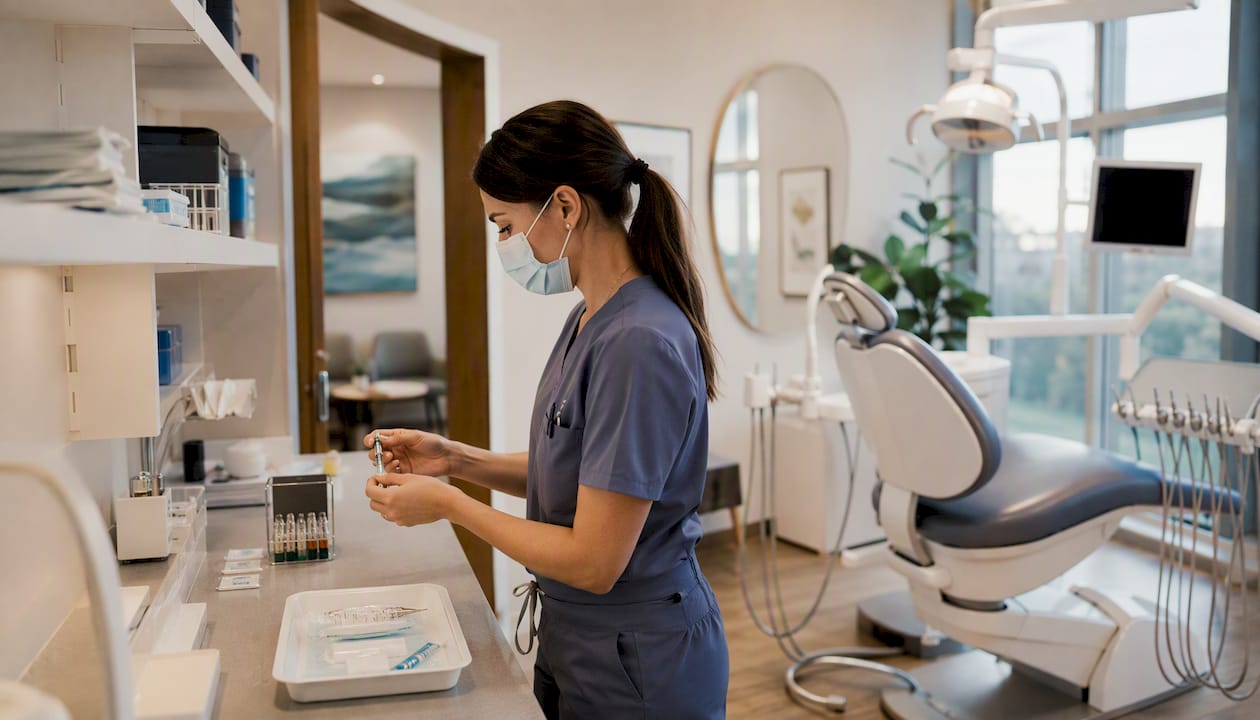
Dental office: The most common setting for routine and moderate sedation. Offices providing deep sedation or general anesthesia must meet state-specific facility permit requirements, maintain emergency equipment (oxygen, reversal agents, defibrillator, airway rescue kit), and demonstrate staff competency in basic life support.
Ambulatory surgery center (ASC): Higher-acuity cases, longer procedures, and patients with significant comorbidities often move to an accredited ASC. Equipment standards are more rigorous, and anesthesia professionals are always on-site.
Hospital operating room: Reserved for the highest-acuity patients — ASA III–IV, anticipated difficult airway, procedures requiring controlled ventilation, or cases where immediate surgical backup may be needed.
Mobile anesthesia: A growing model in which a dental anesthesiologist travels to a dental office to provide anesthesia services. A 2018 survey of ASDA members published in PMC found that a substantial share of dentist anesthesiologists practice as mobile providers, with the highest demand in pediatric dentistry, oral and maxillofacial surgery, and special-needs care. Mobile practice expands access significantly, but it requires careful pre-visit coordination, equipment verification, and documented handoff protocols to preserve continuity of care.
"The critical safety advantage of a dedicated anesthesiologist is role separation: the anesthesia provider remains the patient's safety advocate while the surgeon focuses on the procedure." — AANA, Dental Anesthesia Practice Resources
Team roles in a well-structured case:
- Anesthesia provider: Sole responsibility is patient monitoring, drug management, and airway protection. Never assists with the surgical procedure.
- Proceduralist/surgeon: Focuses entirely on the operative field.
- Dedicated monitor or surgical assistant: Passes instruments, manages suction, supports the surgeon.
- Circulating staff: Manages supplies, documentation, and communication outside the sterile field.
- Post-anesthesia recovery role: Monitors the patient after drug delivery ends, confirms discharge criteria, and briefs the escort.
Credentialing requirements differ by venue. Hospital and ASC privileges require formal credentialing review. Office-based anesthesia is governed by state dental board permits, which vary considerably in their equipment and training requirements.
How safe anesthesia delivery actually works: protocols from pre-op to handoff
Safety in anesthesia is protocol-driven. The ASA, ADA, and ASDA all publish guidance that defines what must happen before, during, and after anesthesia in dental settings. Skipping steps in that sequence is where adverse events begin.
Pre-operative evaluation checklist:
| Evaluation Item | What the Provider Assesses | Why It Matters |
|---|---|---|
| Medical history review | Systemic conditions, prior anesthesia reactions, allergies | Identifies contraindications and risk modifiers |
| Medication reconciliation | Prescription drugs, OTCs, supplements, psychotropics | Prevents dangerous drug interactions; psychotropics can deepen sedation unpredictably |
| ASA physical status | Assigns I–VI classification based on systemic disease burden | Guides setting selection and staffing level |
| Airway assessment | Mallampati score, mouth opening, neck mobility, BMI | Predicts difficult intubation or mask ventilation |
| Consultations | Required for ASA III–IV patients; may need medical clearance | Reduces risk of intraoperative medical events |
Patients with significant systemic illness or multiple comorbidities require a more conservative approach. Some cases are more appropriate for hospital-based care than office-based sedation.
Intraoperative monitoring at deep sedation and general anesthesia levels must include continuous capnography, continuous pulse oximetry, blood pressure at regular intervals, ECG, and temperature monitoring when clinically indicated. Defibrillation and airway rescue devices must be immediately available, not stored in a back room. These are mandatory requirements, not optional extras.
Informed consent must cover the anesthesia plan, alternative sedation options, risks specific to the patient's health profile, and post-operative restrictions (no driving, no operating machinery, escort requirement).
Pro Tip: Before any dental surgery involving sedation, ask three specific questions: (1) "Who will be monitoring me during the procedure, and is that person's only job to watch me?" (2) "What emergency equipment is available in this office, and when was it last checked?" (3) "What is your protocol if I need to be transferred to a hospital?" A provider who hesitates on any of these deserves a follow-up conversation before you agree to proceed.
What recovery looks like and how emergency situations are handled
Recovery and rescue preparedness are mandatory components of office-based anesthesia, not afterthoughts. A patient is not ready to leave because the procedure is finished. They are ready to leave when they meet defined discharge criteria.
Standard discharge criteria include: stable and patent airway, oxygen saturation at or near baseline on room air, hemodynamic stability (blood pressure and heart rate within acceptable range), return to near-baseline level of consciousness, adequate pain and nausea control, and a responsible adult escort confirmed and present. Patients who received IV sedation or general anesthesia should never be discharged to drive themselves.
Emergency response: immediate actions for common anesthesia crises
- Airway obstruction: Reposition the head and jaw (jaw thrust, chin lift), apply supplemental oxygen, escalate to airway rescue device (LMA or endotracheal tube) if repositioning fails. Call 911 if not resolved within 60 seconds.
- Laryngospasm: Positive-pressure oxygen via mask, IV succinylcholine if complete spasm persists, prepare for intubation.
- Anaphylaxis: Epinephrine IM (0.3–0.5 mg in adults) immediately, supplemental oxygen, IV fluid bolus, call 911, monitor for biphasic reaction.
- Hemodynamic collapse: Identify cause (vasovagal vs. cardiac vs. drug-related), position supine with legs elevated, IV fluid, vasopressors if available, call 911, begin CPR if pulseless.
- Aspiration: Suction airway immediately, position head-down and lateral, supplemental oxygen, call 911 for hospital transfer.
Common anesthesia-related complications in dental settings include:
- Nausea and vomiting (most frequent post-op complaint with opioid-containing regimens)
- Airway obstruction from soft-tissue relaxation, especially in patients with obstructive sleep apnea
- Hypotension from propofol bolus dosing or vasovagal response
- Allergic reactions to local anesthetics, latex, or antibiotic prophylaxis agents
- Delayed emergence in patients with hepatic impairment or those taking CNS depressants
Transfer to a hospital is required any time a complication cannot be managed with available office resources, the patient's condition is deteriorating, or the event involves cardiac arrest, severe bronchospasm, or anaphylaxis that does not respond to initial treatment. Every office providing deep sedation or general anesthesia should have a written transfer protocol, a relationship with a nearby emergency department, and staff trained in ACLS or PALS. For patients who need urgent implant care, knowing the practice's emergency protocols in advance is part of informed consent.
Which patients and procedures genuinely need a dedicated anesthesiologist
Not every dental procedure requires a dedicated anesthesia provider. But certain patient profiles and procedure types make one the right call, not an upgrade.
Patient-based triggers:
- Pediatric and uncooperative patients: Children who cannot tolerate treatment awake, or those with developmental delays, represent the single largest demand category for dental anesthesiologists.
- Special-needs patients: Intellectual disabilities, autism spectrum disorder, cerebral palsy, and similar conditions often make office-based conscious sedation inadequate and unpredictable.
- ASA III–IV patients: Significant cardiovascular disease, poorly controlled diabetes, morbid obesity, severe COPD, or multiple comorbidities shift the risk profile enough to warrant dedicated monitoring.
- Obstructive sleep apnea: Sedation-related airway collapse is a real and documented risk. A dedicated provider who can manage the airway independently is not optional for moderate-to-severe OSA.
- Severe dental anxiety or phobia: Patients who cannot cooperate even with oral sedation, or who have had prior adverse reactions to sedation, benefit from a provider whose only job is managing their physiologic state.
- Extremes of age: Elderly patients with polypharmacy and reduced physiologic reserve require careful titration and continuous monitoring.
Procedure-based triggers:
- Full-arch implant reconstruction (All-on-4, zygomatic implants): Long operative times, significant bone manipulation, and anticipated swelling make dedicated anesthesia the standard for these cases. Zygomatic implants in particular involve dissection near the zygoma and sinus, with airway implications that demand a dedicated monitor.
- Lengthy reconstructive maxillofacial procedures: Any case exceeding 90 minutes under sedation warrants dedicated anesthesia monitoring.
- Anticipated airway compromise: Procedures involving significant intraoral swelling, bleeding, or positional changes that could compromise the airway.
- Cases requiring controlled ventilation or intubation: These are by definition general anesthesia and require a dedicated provider.
Questions to ask when booking surgery:
- Who will manage my anesthesia, and what are their credentials?
- Will that person's only job be monitoring me, or will they also assist with the procedure?
- What sedation level is planned, and why is that level appropriate for my health history?
- What emergency equipment is on-site?
Pro Tip: Ask the front desk specifically whether the practice uses a dedicated anesthesia provider or whether the surgeon administers sedation themselves. The answer tells you more about the practice's safety culture than any marketing language on their website. You can also review questions to ask before choosing a provider to build your full list before the consultation.
The JOMA decision framework identifies four domains that should drive this decision: patient risk, procedural risk, intended anesthetic depth, and the facility's rescue capacity. When two or more of those domains are elevated, a dedicated anesthesiologist is the defensible choice.
What the research and professional guidance say about safety outcomes
The evidence base for dedicated anesthesia providers in dental surgery is consistent, even if the literature is smaller than in hospital-based specialties.
A 2018 ASDA member survey published in PMC documented that 58.7% of dentist anesthesiologists work as mobile providers, reflecting how the specialty has adapted to serve dental offices that lack in-house anesthesia staff. The highest demand concentrations are in pediatric dentistry, oral and maxillofacial surgery, and special-needs care — the exact patient groups where anesthesia complexity is greatest.
"Involving an anesthesiologist should be viewed as a mature, safety-first decision rather than a reflection on the surgeon's competence." — JOMA editorial and narrative review
The ADA and ASDA are aligned on staffing for deep sedation and general anesthesia: the anesthesia provider must be dedicated solely to the patient, not splitting attention with the operative procedure. The ADEA sets the educational standards that produce dentist anesthesiologists capable of meeting that requirement. AANA guidance adds that CRNAs deliver the full spectrum of anesthesia services in dental settings and represent a validated, cost-effective workforce model with comparable outcomes when scope and monitoring standards are met.
For patients, the practical takeaway is straightforward. The provider model matters less than whether the person managing your anesthesia has one job during your surgery: watching you. A surgeon who is simultaneously placing implants and monitoring your oxygen saturation is doing two jobs. That divided attention is where preventable adverse events occur.
Key Takeaways
A dedicated anesthesia provider whose only responsibility is patient monitoring is the standard of care for deep sedation and general anesthesia in dental surgery, supported by ADA, ASDA, and ADEA guidance.
| Point | Details |
|---|---|
| Role separation is the core safety principle | The anesthesia provider monitors the patient exclusively; the surgeon focuses on the procedure. |
| Training depth varies by provider type | Dental anesthesiologists complete a DDS/DMD plus a 2–3 year accredited postdoctoral residency with rotations in medical anesthesiology, emergency medicine, and pediatric anesthesia. |
| Deep sedation requires dedicated monitoring | ADA guidelines require a dedicated anesthesia professional for deep sedation and general anesthesia in dental offices, with continuous capnography, pulse oximetry, and defibrillation on-site. |
| Mobile practice is the dominant model | 58.7% of ASDA-member dentist anesthesiologists practice as mobile providers, primarily serving pediatric, special-needs, and oral surgery patients. |
| Forever Smiles Implant Center includes an MD anesthesiologist | Complex full-arch implant cases at Forever Smiles Implant Center in Jacksonville, FL are performed with a board-certified MD anesthesiologist dedicated solely to patient monitoring. |
Why dedicated anesthesia is the standard for complex implant surgery
Most articles about dental anesthesiologists treat the role as an abstract credential. After two decades performing full-arch implant surgery daily, the picture is less abstract.
Full-arch reconstruction is not a one-hour extraction. A patient undergoing All-on-4 or zygomatic implant surgery is in the chair for several hours, often under deep sedation or general anesthesia, with significant bone work happening in close proximity to the airway. The surgeon's attention is in the operative field. It has to be. The precision required for implant placement in atrophic bone or the zygomatic arch does not allow for divided attention.
That is exactly why the anesthesia provider's role cannot be a secondary function. When a patient's oxygen saturation begins to drift, or their blood pressure drops from a propofol bolus, or their airway shifts because of intraoral swelling, the response window is measured in seconds. A surgeon who has to stop, step back, and switch cognitive modes from implant placement to airway management is already behind. A dedicated anesthesia provider catches those changes before they become events.
The patients who arrive at a specialized implant center are often the ones who were told elsewhere they were not candidates. They tend to carry more medical complexity: bone loss, systemic disease, prior failed implants, medications that interact with anesthetic agents. That complexity is exactly why the anesthesia team needs to be as specialized as the surgical team. A board-certified MD anesthesiologist who has reviewed the patient's full medical history, assessed the airway, and planned the anesthetic before the first incision is not an upgrade. For these cases, it is the baseline.
What to look for in a practice when complex dental surgery is on the table
If you are considering full-arch implant reconstruction, the surgical credentials matter. So does the anesthesia model.
The practices that handle complex cases well share a few consistent features: a residency-trained surgical specialist (not a general dentist who completed a weekend implant course), a dedicated anesthesia provider whose only job during surgery is monitoring the patient, an in-house lab that controls the quality and timing of the final restoration, and transparent pricing that covers planning, surgery, same-day teeth, final zirconia restorations, and follow-up care in one number.
Forever Smiles Implant Center in Jacksonville, FL is built around exactly that model. Dr. Brian Young has placed over 28,000 implants across more than 20 years of full-arch surgical practice. Every complex case is supported by a board-certified MD anesthesiologist dedicated solely to patient monitoring. The in-house dental lab means the team that plans the case also controls the final result. For patients traveling from outside Jacksonville, the practice has specific resources to support out-of-town patients through the planning and recovery process.
Full-mouth implant treatment pricing varies but typically includes planning, surgery, same-day teeth, final zirconia restorations, and follow-up care. Financing options are available. If you want to understand the full scope of what that process involves, the full-mouth dental implants page covers candidacy, procedure details, and what to expect at each stage. To schedule a consultation or request an anesthesia-specific pre-op review, contact the practice directly through the website.
This article provides general educational information about dental anesthesia roles and is not a substitute for professional medical or dental advice. Confirm current guidelines and your specific candidacy with a qualified provider before scheduling any procedure.
Authoritative sources and further reading
The following sources were used in this article and are recommended for deeper reading:
- ASDA member survey — mobile provider prevalence (PMC) — Peer-reviewed survey data on dentist anesthesiologist practice patterns, including mobile provider prevalence and specialty demand.
- ADA — Anesthesia and sedation resources — Professional guidance on training pathways, residency requirements, and scope of practice for dental anesthesiologists (ADEA-aligned).
- Conscious sedation in dentistry — StatPearls/NCBI Bookshelf — Peer-reviewed clinical reference covering contraindications, patient risk stratification, and special populations requiring careful sedation management.