
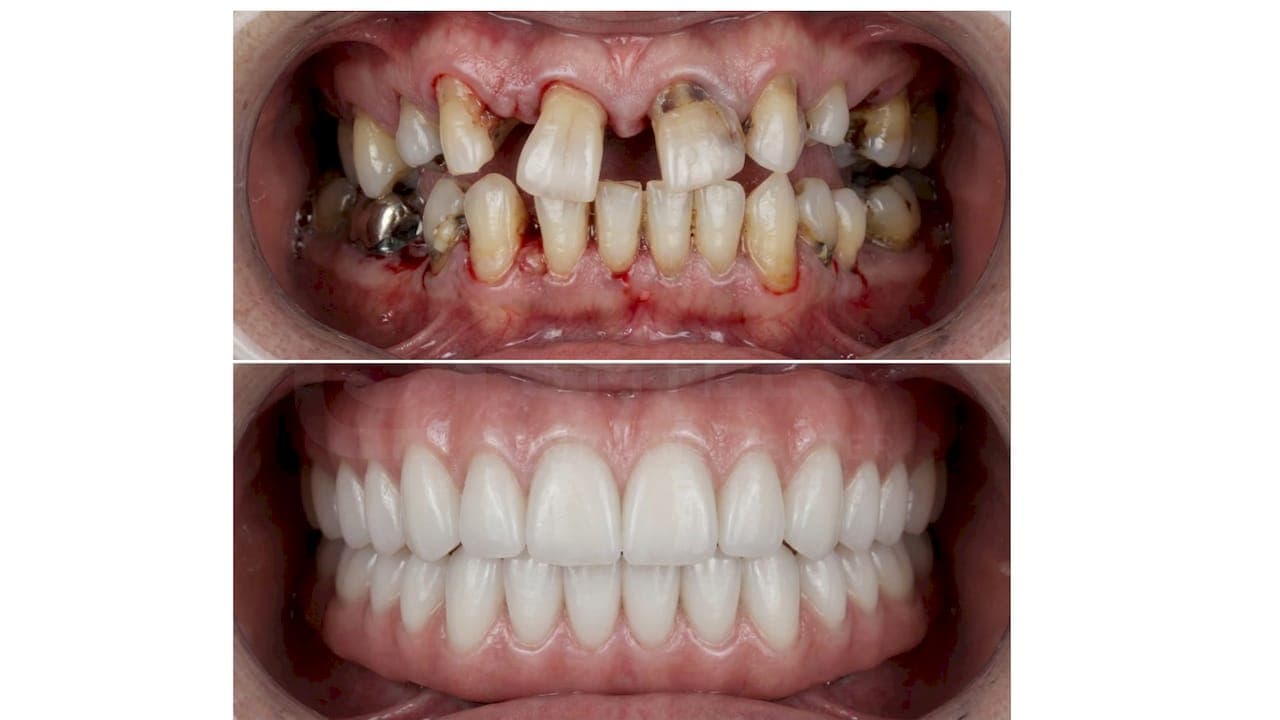
Most patients who've been told "you're not a candidate" can still qualify for full-mouth dental implant reconstruction — if they work with a specialist who handles advanced cases. The five factors that matter most are bone volume and quality, systemic disease control, active infection status, tobacco use, and long-term maintenance commitment.
The short verdict: If you can meet or be brought to meet these five thresholds, full-mouth reconstruction is achievable. Bring a recent CBCT scan, your complete medical records, and five years of dental history to your specialist consult.
- Bone volume: minimum 10 mm vertical height and 5 mm horizontal width for standard lower-jaw implants, with advanced techniques sometimes allowing reduced dimensions
- Systemic control: well-managed diabetes and stable management for other conditions
- Infection status: active periodontitis must be treated before surgery
- Tobacco: cessation required around surgery; longer is better
- Maintenance commitment: demonstrated history of consistent dental care
Table of Contents
- Does your dental implant candidacy checklist pass these clinical thresholds?
- Advanced options that convert "not a candidate" into a surgical plan
- What does the preoperative evaluation actually involve?
- What timeline and outcomes should you realistically expect?
- What surgeons ask at consult and what delays or denies surgery
- Practical steps to improve your candidacy before the consult
- Key Takeaways
- What most patients get wrong about implant candidacy
- Complex cases deserve a specialist, not a second guess
- Useful sources and further reading
Does your dental implant candidacy checklist pass these clinical thresholds?
The criteria below are what surgeons actually measure, not a general wellness overview.
| Factor | Clinical Threshold | Why It Matters |
|---|---|---|
| Bone height (lower jaw) | Minimum 10 mm height | Implant must anchor without contacting the inferior alveolar nerve |
| Bone width (lower jaw) | Minimum 5 mm width | Narrower ridges risk perforation and poor primary stability |
| HbA1c (Type 2 diabetes) | Well-controlled levels | Well-controlled diabetes produces survival rates comparable to non-diabetic patients |
| Periodontal status | No active disease before surgery | Untreated periodontitis raises peri-implantitis risk substantially |
| Tobacco | Cessation required perioperatively | Smoking significantly increases failure and graft complication rates |
| Dental history | Five-year auditable attendance record | Demonstrates maintenance behavior for high-investment reconstruction |
| Skeletal maturity | — | Active jaw growth displaces implants over time |
Bone quality is graded using the Misch classification (D1 through D4). D1 and D2 bone integrates predictably; D3 and D4 require modified protocols, longer healing windows, or augmentation. Your CBCT scan will show which category applies.

Bisphosphonates and anticoagulants require specific attention. Bisphosphonate therapy carries elevated risk of medication-related osteonecrosis of the jaw (MRONJ) and demands coordinated medical planning before surgery. Never stop these medications without physician guidance.
Pro Tip: Age alone is not a disqualifier. The Cleveland Clinic confirms there is no upper age limit for implants — bone quality and stable systemic health drive the decision, not the number on your birthday.
Advanced options that convert "not a candidate" into a surgical plan
A prior denial from a general dentist or non-specialist is often a referral problem, not a final answer.
- Zygomatic implants: Used when severe posterior maxillary bone loss makes standard implants impossible. These longer implants anchor into the cheekbone (zygoma) instead of the jaw, bypassing the need for sinus grafting entirely. They're a specialist-only procedure with a steep learning curve.
- All-on-X with tilted implants: Tilting posterior implants 30–45 degrees allows placement in areas with reduced bone height, avoiding the sinus and nerve. This strategy works for compromised ridges that can't support four vertical fixtures.
- Bone grafting and sinus lifts: Ridge augmentation and sinus floor elevation rebuild lost volume before implant placement. Timelines vary: minor grafts can be done simultaneously with implant surgery; major ridge augmentation typically adds 4–6 months before implants can be placed.
- Explantation and replacement: Failed implants can be removed, the site allowed to heal, and new implants placed once the bone has recovered. Success depends on the reason for the original failure and the remaining bone volume.
The tradeoffs are real: staged care adds months to the timeline, advanced techniques require a surgeon with specific training, and costs rise with complexity. But for patients who've been turned away elsewhere, these pathways are often the only route to a permanent fixed result. See the dental implants without bone guide for a detailed breakdown of augmentation options.
Pro Tip: When seeking a second opinion, ask specifically whether the surgeon performs zygomatic implants and All-on-X in-house. Many practices refer these cases out, which fragments care and accountability.
What does the preoperative evaluation actually involve?
| Step | What Happens | Purpose |
|---|---|---|
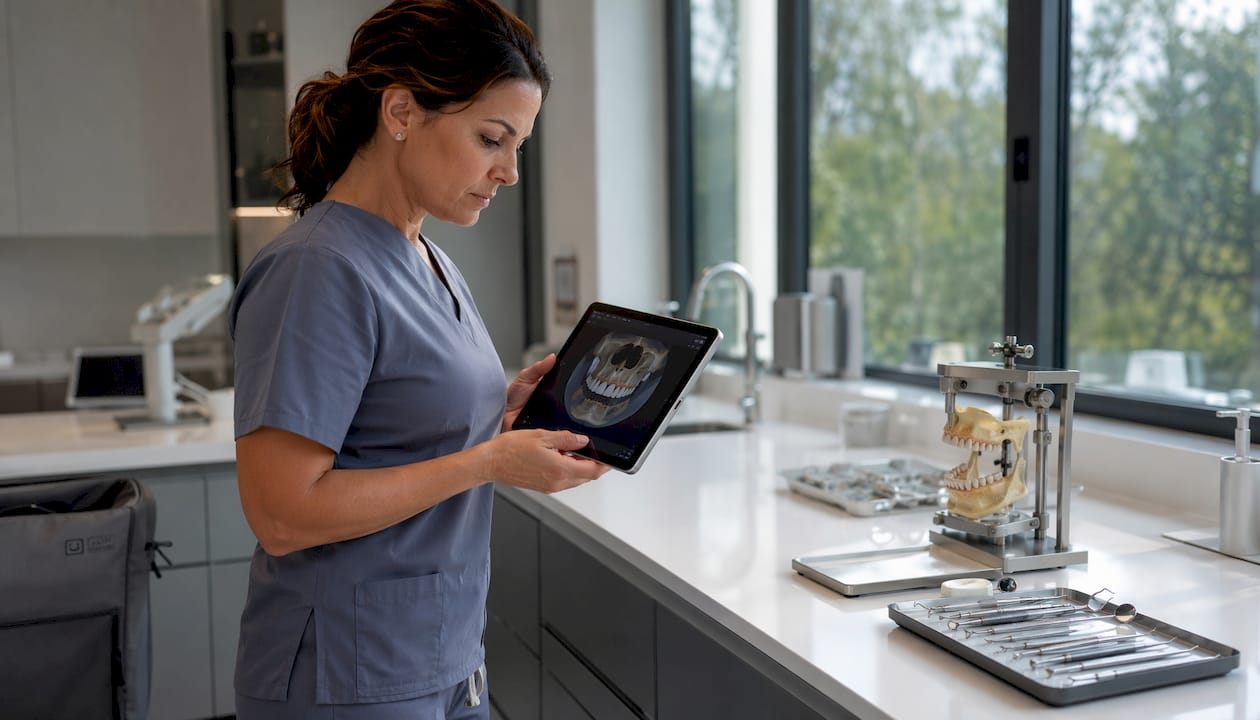
| CBCT 3D imaging | Cone-beam CT of the full jaw | Maps bone height, width, density, nerve position, and sinus anatomy |
| Medical history review | Medications, systemic conditions, prior surgeries | Flags bisphosphonates, anticoagulants, radiation history |
| Lab work | HbA1c, CBC, coagulation panel where indicated | Confirms systemic control before surgery |
| Periodontal charting | Probing depths, bleeding index, radiographs | Identifies active infection requiring treatment first |
| Anesthesia evaluation | Board-certified MD anesthesiologist assessment for full-arch cases | Determines IV sedation or general anesthesia suitability |
CBCT is the standard of care for implant planning. It gives the surgical team a three-dimensional view of every anatomical structure that matters: the mandibular canal, maxillary sinus floor, cortical plate width, and bone density at each proposed implant site. A flat periapical X-ray simply cannot provide this.
On imaging: The StatPearls implant surgery reference notes that precise evaluation of anatomical landmarks — including the mandibular canal position and maxillary sinus — is indispensable for safe implant placement. CBCT makes that precision possible.
The typical flow runs: consult → CBCT → medical clearance (if needed) → staged or single-stage surgical plan. Patients on bisphosphonates or anticoagulants may need a physician-coordinated medication hold before surgery proceeds.
What timeline and outcomes should you realistically expect?
ITI consensus data documents single-tooth implant survival exceeding 95% at 10 years in healthy adults. Full-arch reconstructions involve more variables, but well-selected patients with controlled health conditions achieve comparable long-term results.
- Straightforward cases: Consult through final zirconia teeth in 3–6 months when bone is adequate and no grafting is needed
- Grafting required: Add 4–6 months for major ridge augmentation or sinus lift before implant placement
- Staged full-arch: Total treatment from first consult to final prosthesis commonly runs 6–12 months
- Immediate loading: In qualifying cases, provisional teeth are placed the same day as surgery; final restorations follow after osseointegration
Risk factors that reduce long-term survival include active smoking, poorly controlled diabetes, prior peri-implantitis, and inconsistent maintenance. Patients who maintain their implant-supported teeth with regular professional cleanings and daily hygiene consistently outperform those who don't. The surgical act is one part of success; what happens over the following years determines whether the investment holds.
What surgeons ask at consult and what delays or denies surgery
What surgeons are really evaluating: Not just whether you qualify today, but whether you'll maintain the result for the next 20 years.
| Red Flag | Why It Delays or Denies |
|---|---|
| Active periodontal infection | Bacteria at the surgical site compromise osseointegration |
| Uncontrolled systemic disease | Impairs healing, raises infection risk, and complicates anesthesia |
| Recent head/neck radiation | Damages vascularity; raises risk of osteoradionecrosis |
| Active MRONJ or bisphosphonate use without clearance | Jaw necrosis risk requires specialist medical coordination |
| Heavy, uninterrupted smoking | Substantially raises failure and graft complication rates |
Surgeons will ask directly about bruxism (grinding), prior implant history, how long teeth have been missing, and whether you've maintained regular dental visits. Bring your consultation questions prepared. Modifiable risks — smoking, blood sugar, infection — can be addressed. Non-modifiable ones, like prior radiation, require specialist protocols.
Practical steps to improve your candidacy before the consult
- Stop tobacco now. The perioperative window matters most, but longer cessation produces better outcomes. Start before you even book the consult.
- Schedule a hygiene visit and periodontal screening. Active disease needs treatment before any surgeon will proceed. Getting this done first shortens your overall timeline.
- Request your HbA1c result from your primary care provider. If it's above 7%, work with your physician to bring it down before pursuing surgery.
- Ask your physician about bisphosphonates or anticoagulants. Do not stop these on your own. A coordinated medication review is what's needed.
- Collect your dental records. Gather the last five years of X-rays, periodontal charting, restorations list, and any prior implant notes. If you've had implants placed elsewhere, include those surgical records.
- Get a CBCT scan if you don't have a recent one. Many specialist offices will order one at the consult, but arriving with current imaging speeds the process.
Pro Tip: If your dental history has gaps, don't wait to fix them before calling a specialist. A good surgeon will build a remediation plan around what you have. Gaps in records are a problem to solve, not a reason to delay the conversation.
Key Takeaways
Most patients denied standard implants can still qualify for full-mouth reconstruction when a specialist addresses bone deficiency, systemic disease, and infection before or during surgery.
| Point | Details |
|---|---|
| Bone thresholds are starting points | Standard implants require approximately 10 mm height and 5 mm width in the lower jaw; advanced techniques may allow placement with less bone. |
| Systemic control is required, not optional | HbA1c below 7% for diabetes; bisphosphonate and anticoagulant coordination required before surgery. |
| Infection must be cleared first | Active periodontitis disqualifies you until treated; healthy gums are a prerequisite, not a preference. |
| Advanced salvage options exist | Zygomatic implants and All-on-X strategies convert many "not a candidate" cases into surgical plans. |
| Forever Smiles Implant Center | Specializes in complex and previously failed cases, with CBCT planning, an in-house lab, and Dr. Young's 28,000+ implant volume. |
What most patients get wrong about implant candidacy
The conventional wisdom treats a "not a candidate" verdict as a final answer. It rarely is. What it usually means is: not a candidate here, with this surgeon, using standard techniques. The real question is whether the obstacles are modifiable — and most of them are.
Bone loss is the one that scares patients most, but it's often the most solvable. Zygomatic implants exist precisely because severe maxillary atrophy used to be an absolute barrier. Now it isn't, provided the surgeon has the training and case volume to execute the technique safely. The same logic applies to grafting, staged care, and medical coordination for systemic disease.
What actually disqualifies patients long-term isn't bone loss or even diabetes. It's the behavioral piece: patients who won't maintain their implants, won't attend follow-up appointments, and won't address hygiene. A surgeon can rebuild bone. No one can rebuild commitment.
Complex cases deserve a specialist, not a second guess
Patients who've been turned away elsewhere are exactly who Forever Smiles Implant Center was built for. Dr. Brian Young is a residency-trained surgical specialist with more than 20 years of experience and over 28,000 implants placed. He performs full-arch surgery daily and trains other surgeons nationally on the same techniques.
Every case at Forever Smiles Implant Center starts with CBCT 3D imaging and a full surgical plan before a single incision is made. The in-house lab and board-certified MD anesthesiologist mean the entire process, from planning through final zirconia teeth, happens under one roof with one accountable team. Full-mouth treatment starts at a substantial cost per arch and includes planning, surgery, same-day teeth, final restorations, and follow-up care.
If you've been told you're not a candidate, visit the dental implants FAQ page or review full-mouth implant replacement options to understand what's actually possible for your case. Then request a specialist consult.
Useful sources and further reading
- ITI consensus: implant survival benchmarks — 10-year survival data and skeletal maturity criteria
- PMC: tobacco use and implant outcomes — smoking cessation and graft complication evidence
- PubMed: bisphosphonates and implant risk — medication coordination protocols
- PubMed: oral hygiene and peri-implant disease — long-term maintenance requirements
- Harvard Health: dental implant overview — patient-facing eligibility summary
- Cleveland Clinic: dental implants — age, health, and candidacy guidance
- Mayo Clinic: dental implant surgery — procedure overview and preparation checklist
- StatPearls: dental implants — anatomical and surgical planning reference
- ACC patient selection criteria — five-year dental history and eligibility standards
- Forever Smiles Implant Center: am I a candidate? — specialist candidacy evaluation in Jacksonville, FL
This article is general clinical information, not a substitute for professional evaluation. Confirm your specific candidacy with a qualified implant surgeon or your primary care provider.