
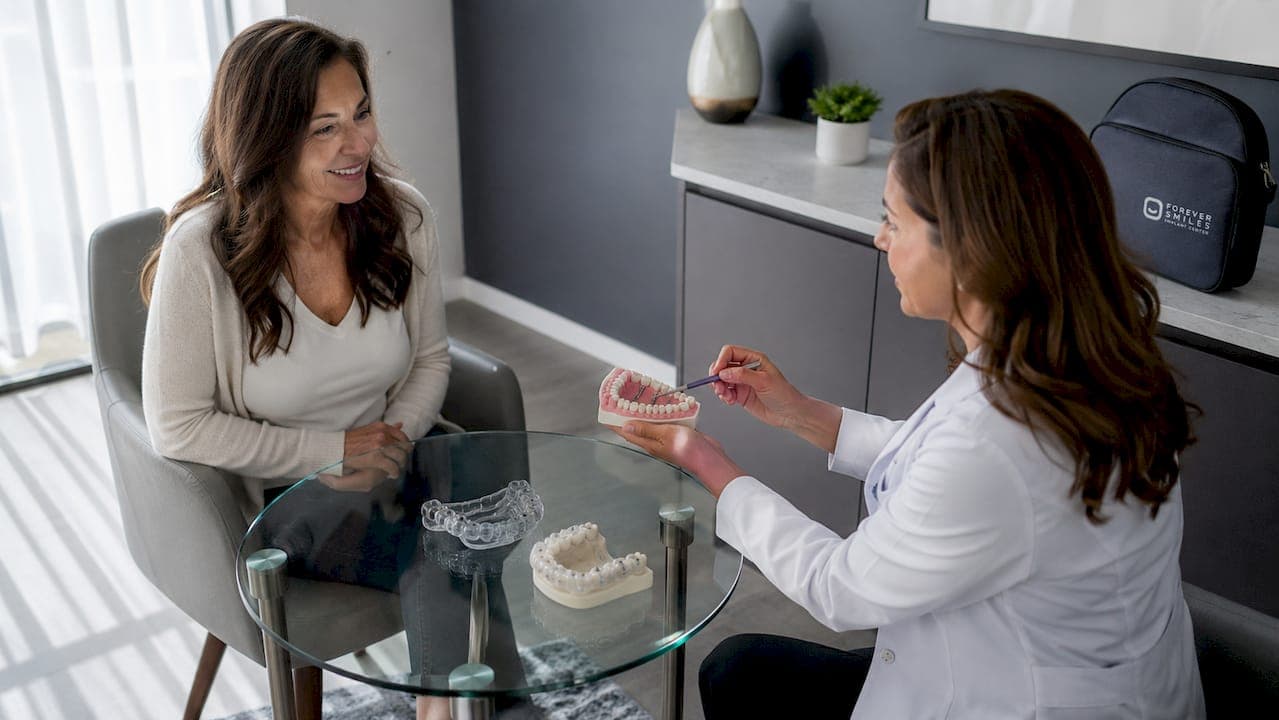
A full arch implant is a permanent, fixed dental restoration that replaces every tooth in an upper or lower jaw by anchoring a prosthetic bridge onto multiple titanium implants placed directly into the jawbone. Unlike removable dentures, this prosthesis stays in place around the clock and functions like natural teeth. Protocols like All-on-4 and All-on-6 are the most recognized variations under the full arch implant umbrella. If you are dealing with severe tooth loss, failing teeth, or a denture that no longer fits your life, understanding what implant arch reconstruction actually involves is the clearest first step toward making a confident decision.
What is a full arch implant and how is it built?
A full arch implant restoration uses 4 to 6 titanium implants per arch to support a fixed, non-removable bridge. That number is not arbitrary. Fewer implants spread load more aggressively, while more implants distribute bite force more evenly and can improve long-term stability in patients with stronger bone.
The bridge itself sits permanently on top of those implants. Bridge materials include acrylic, zirconia, or a metal framework layered with porcelain or composite, each affecting strength, appearance, and cost differently. Zirconia is the most durable and lifelike option. Acrylic costs less upfront but wears faster and requires earlier replacement.
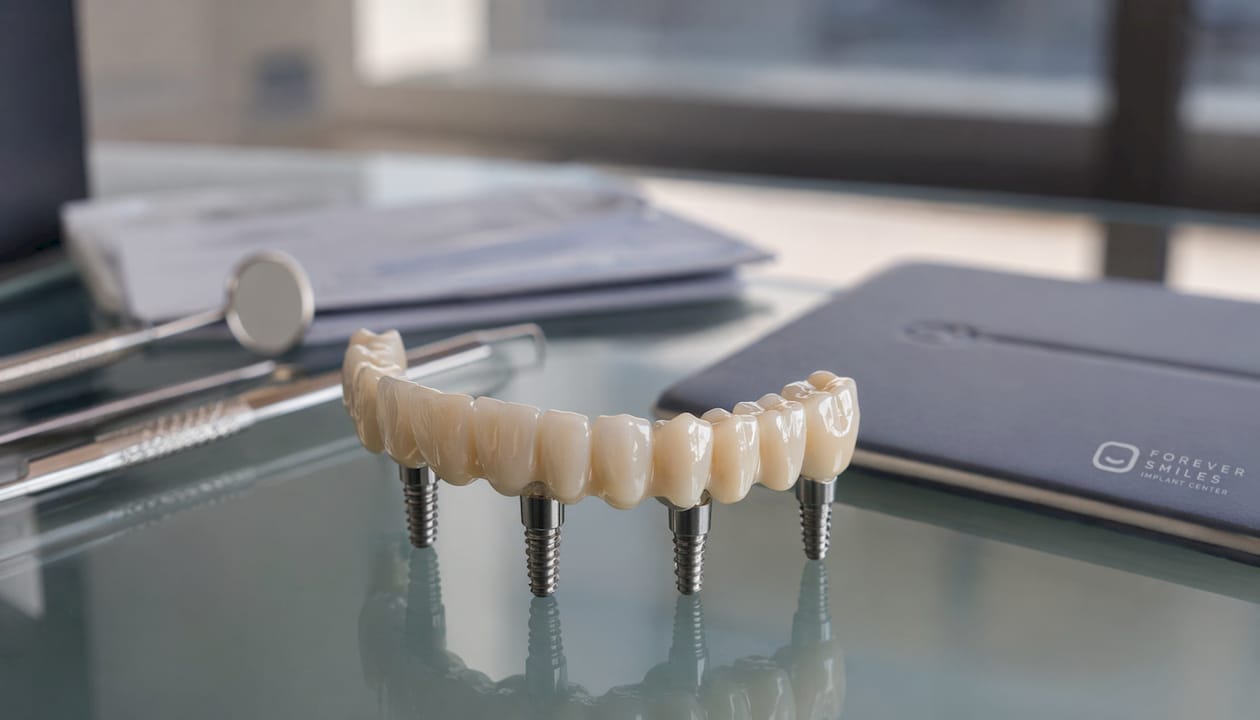
Implant angulation matters more than most patients realize. Posterior implants are often placed at an angle to engage denser bone and avoid anatomical structures like the sinus cavity. This angulation strategy is what makes All-on-4 work with just four implants in cases where straight placement would require bone grafting first.
Prosthetic-driven planning determines where the teeth need to be before the surgeon decides where to place the implants. The final tooth position drives the surgery, not the other way around. This approach optimizes bite, lip support, and facial aesthetics from the start.
Key construction differences between the main protocols:
- All-on-4: Four implants per arch, two straight in front and two angled in back. Designed to avoid grafting in many cases.
- All-on-6: Six implants per arch for greater load distribution. Better suited for patients with higher bite force or denser bone volume.
- Traditional multi-implant bridges: Six or more implants placed in a straighter configuration, often used when bone volume is sufficient throughout the arch.
Pro Tip: Ask your surgeon to show you the digital treatment plan before surgery. If the plan starts with implant positions rather than tooth positions, that is a red flag.
Who is a good candidate for full arch implants?
Most patients with significant tooth loss qualify for some form of full arch restoration, but the specific approach depends on several clinical factors. A thorough evaluation by a residency-trained surgical specialist is the only way to know which protocol fits your anatomy.
The core candidacy factors include:
- Extent of tooth loss: Full arch implants are designed for patients missing most or all teeth in one or both arches, or those with teeth that cannot be saved due to decay, fracture, or advanced gum disease.
- Jawbone volume and density: Adequate bone is needed to anchor implants securely. Patients with moderate bone loss often qualify for angled implant protocols without grafting.
- Bone grafting or sinus lifting: When bone volume is insufficient, grafting procedures can rebuild the foundation before implant placement. This adds time and cost but expands candidacy significantly.
- Overall health: Uncontrolled diabetes, active autoimmune conditions, or heavy smoking can slow healing and raise complication risk. These factors do not automatically disqualify a patient, but they require careful management.
- Bite force and habits: Patients who grind their teeth heavily may need a nightguard after restoration to protect the prosthesis from excessive load.
- Complex cases: Patients with severe bone loss who have been told they are not candidates elsewhere may still qualify for zygomatic implants, which anchor into the cheekbone rather than the jaw.
Full arch restoration also addresses bone loss and facial structure collapse that occurs after tooth loss. Full-arch rehabilitation restores a youthful facial profile by replacing the bone stimulation that natural tooth roots once provided. That structural benefit goes far beyond cosmetics.
What does the full arch surgery day and treatment process look like?
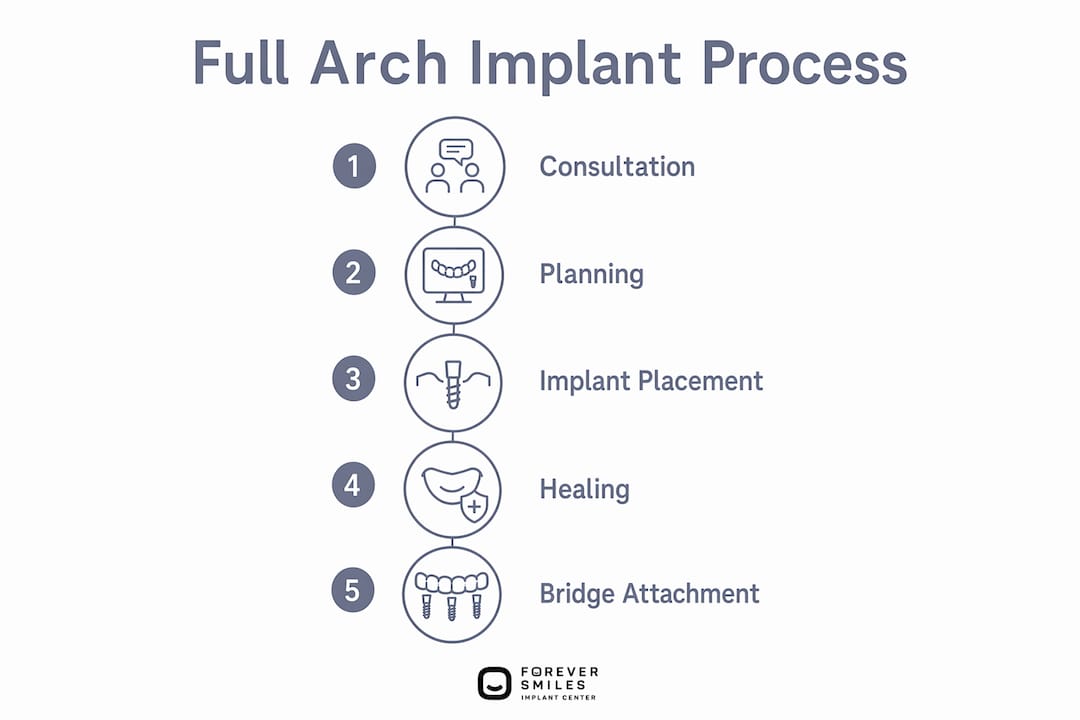
The full arch implant process follows a clear sequence from evaluation to final teeth. Knowing each step removes the uncertainty that keeps many patients from moving forward.
- Consultation and diagnostic imaging: The process begins with a cone beam CT scan (CBCT), digital impressions, and a full clinical evaluation. This 3D imaging maps bone volume, nerve locations, and sinus anatomy with accuracy that standard X-rays cannot match.
- Digital treatment planning: The surgical team designs the final tooth position first, then plans implant placement to support it. Digital and guided surgery improves implant positioning accuracy and reduces surgical variability.
- Implant placement surgery: On full arch surgery day, the surgeon places the implants and, in most cases, attaches a temporary fixed bridge the same day. Patients leave with teeth, not a gap.
- Immediate loading vs. staged loading: Immediate loading provides faster aesthetics but requires careful patient selection based on bone quality and implant stability. Not every patient is a candidate for same-day teeth.
- Osseointegration and healing: The implants fuse to the jawbone over a period of roughly 3 to 6 months. During this time, the temporary bridge protects the implants while bone grows around them.
- Final restoration delivery: Once osseointegration is confirmed, the permanent prosthesis, typically milled zirconia, is fabricated and fitted. Adjustments are made to refine the bite and aesthetics.
- Follow-up and maintenance visits: Regular professional cleanings and checkups begin immediately after final delivery and continue on a scheduled basis for the life of the restoration.
For a detailed walkthrough of each surgical phase, the full mouth implant process at Forever Smiles Implant Center covers what patients experience from the first scan through recovery.
What is the total cost of full arch implants?
Cost is the question most patients ask first, and the honest answer is that it varies based on materials, the number of implants, and whether additional procedures like bone grafting are needed.
The cost for a single arch restoration ranges from $15,000 to $50,000, while restoring both arches costs $40,000 to $100,000 or more. Forever Smiles Implant Center starts full-mouth treatment at $19,000 per arch, which includes planning, surgery, same-day teeth, final zirconia teeth, and follow-up care.
| Protocol | Typical single arch cost | Key cost driver |
|---|---|---|
| All-on-4 | $18,000–$38,000 | Fewer implants, may avoid grafting |
| All-on-6 | $21,000–$46,000 | Additional implants add $3,000–$8,000 |
| Zirconia prosthesis | Higher upfront cost | Lasts 15–20 years or longer |
| Acrylic prosthesis | Lower upfront cost | Requires earlier replacement |
All-on-6 costs $3,000 to $8,000 more per arch than All-on-4 due to the additional implants. That difference is often worth it for patients with higher bite forces or more bone to work with.
A well-maintained zirconia prosthesis lasts 15 to 20 years or longer. Traditional dentures typically require relining or replacement every 5 to 7 years, making the long-term cost comparison far closer than the upfront numbers suggest.
Pro Tip: When comparing quotes, ask what is included. Some practices quote the surgery alone. Others include the prosthesis, lab fees, and follow-up. The lowest number rarely reflects the full picture.
Most practices offer financing plans. Dental implant financing options at Forever Smiles Implant Center are structured to make treatment accessible without compromising the quality of care.
How do you care for full arch implants long term?
Full arch implants do not decay, but the tissue around them can. Peri-implantitis, an infection of the tissue and bone surrounding an implant, is the leading biological cause of implant failure. Patients who miss regular peri-implant maintenance face significantly higher complication risk, including bone loss that can destabilize the entire restoration.
The core maintenance practices every patient needs to follow:
- Professional cleanings every 3 to 6 months: A hygienist trained in implant care uses instruments that clean around implant components without scratching the titanium surface.
- Daily home care: A water flosser, implant-specific floss, and a soft-bristle or electric toothbrush remove biofilm from under the bridge where bacteria accumulate.
- Annual radiographic checks: X-rays taken at regular intervals catch early bone loss around implants before it becomes a clinical problem.
- Nightguard use if grinding is present: Unmanaged bruxism generates forces that can fracture the prosthesis or loosen implant connections over time.
- Prompt attention to warning signs: Swelling, bleeding around the implants, or any looseness in the bridge warrants an immediate evaluation, not a wait-and-see approach.
Long-term predictability of full arch implants depends heavily on structured peri-implant maintenance. The implants themselves are designed to last a lifetime. Whether they do depends almost entirely on how consistently a patient maintains them. A guide to cleaning an implant-supported arch covers the specific tools and techniques that protect the restoration between professional visits.
Key Takeaways
Full arch implants are the most durable, functional, and long-lasting tooth replacement option available, but their success depends on surgical planning, material selection, and consistent long-term maintenance.
| Point | Details |
|---|---|
| Core construction | Four to six titanium implants per arch support a fixed, non-removable prosthetic bridge. |
| Planning drives outcomes | Prosthetic-driven planning sets tooth position first, then determines implant placement for best results. |
| Cost range | Single arch treatment ranges from $15,000 to $50,000 depending on protocol and materials. |
| Zirconia longevity | A well-maintained zirconia prosthesis lasts 15 to 20 years, outperforming dentures on long-term value. |
| Maintenance is non-negotiable | Skipping peri-implant maintenance raises the risk of peri-implantitis and implant failure significantly. |
What I have learned after 28,000 implants
Patients come to me after years of living with failing teeth, ill-fitting dentures, or a mouth they are embarrassed by. The clinical work is the part I can control completely. What surprises most patients is how much the outcome depends on decisions made before a single implant is placed.
The biggest mistake I see in failed cases from other practices is implant placement driven by bone availability rather than the final tooth position. When you place implants wherever the bone happens to be, you get teeth wherever the implants end up. That is not a plan. That is improvisation. Prosthetic-driven planning is not optional. It is the foundation of a result that looks right, bites right, and lasts.
The second thing patients underestimate is maintenance. I have seen beautiful restorations fail within five years because a patient stopped coming in for cleanings. Peri-implantitis is preventable. It is not inevitable. But it requires the patient to show up consistently, not just after surgery.
What I want every patient to understand is this: a full arch restoration is a once-in-a-lifetime investment when it is done correctly. The cost of doing it wrong is not just financial. It is the bone you lose, the time you spend, and the second surgery you did not plan for. Choose your surgeon based on daily volume, residency training, and a clear, documented treatment plan. Everything else follows from that.
— Dr. Brian Young
Full arch implant care at Forever Smiles Implant Center
Forever Smiles Implant Center in Jacksonville, Florida, performs full arch implant procedures every day. The practice was built around one focus: full-mouth dental implant reconstruction for patients who want it done correctly the first time.
Every patient receives surgical planning, in-house lab fabrication, and a board-certified MD anesthesiologist under one roof. Dr. Brian Young has placed over 28,000 implants and specializes in complex cases, including patients with severe bone loss who have been turned away elsewhere. Treatment starts at $19,000 per arch and includes same-day teeth, final zirconia teeth, and follow-up care. To learn more or schedule a consultation, visit the full mouth dental implants page or review financing options that fit your situation.
FAQ
What is a full arch implant in simple terms?
A full arch implant is a fixed set of teeth anchored by 4 to 6 titanium implants placed in the jawbone. It replaces every tooth in an upper or lower arch and does not come out.
How long does full arch implant surgery take?
The surgical placement typically takes 2 to 4 hours per arch. Most patients receive a temporary fixed bridge the same day and leave the office with functional teeth.
What is the difference between All-on-4 and All-on-6?
All-on-4 uses four implants per arch with two placed at an angle to avoid grafting. All-on-6 uses six implants for greater load distribution and costs roughly $3,000 to $8,000 more per arch.
How do you recover from full arch implant surgery?
Most patients manage discomfort with prescribed medication for the first 3 to 5 days. Soft foods are required during the osseointegration period, which lasts approximately 3 to 6 months before the final prosthesis is placed.
Are full arch implants covered by dental insurance?
Most dental insurance plans provide limited or no coverage for full arch implants. Financing plans and flexible payment options are the most common way patients manage the total cost of treatment.