

Most dental plans do not fully cover implants, and there is no federal rule forcing them to. Some plans pay a percentage toward implant crowns or extractions after you meet a deductible, but annual maximums usually cap out at a limit far below what a single implant costs. Medicare and Medicaid generally exclude implants outright, though certain Medicare Advantage plans offer limited dental add-ons worth checking. Your next moves: pull your summary of benefits, request a pre-treatment estimate, and ask your surgeon about a medical necessity letter.
TL;DR:
- Most dental plans cap annual benefits at $1,000 to $2,000, which is often insufficient to cover a single implant, costing $3,000 to $6,000.
- Insurance typically covers only partial procedures like crowns or extractions, often leaving patients responsible for most implant costs.
- Medicare and Medicaid rarely cover dental implants, and Medicare Advantage plans offer limited, highly variable dental benefits.
- Verifying coverage requires requesting itemized benefit details, pre-treatment estimates, and submitting clinical documentation to improve approval chances.
- Patients often rely on out-of-pocket methods such as Health Savings Accounts, financing plans, or discount plans to pay for implants when insurance falls short.
Table of Contents
- How Dental Insurance Treats Dental Implants
- What Dental Implants Cost and What Plans Actually Pay
- Medicare, Medicaid, and Medicare Advantage: What to Expect
- How to Verify Coverage and Document Medical Necessity
- Paying for Implants When Insurance Falls Short
- What Insurers Actually Look for in Complex Cases
- The Gap Between What Insurance Promises and What It Pays
- How Forever Smiles Implant Center Helps With Coverage and Financing
- Sources
How Dental Insurance Treats Dental Implants
Insurance companies rarely see implants the way patients do. Where a patient sees a medical necessity, an insurer often sees a cosmetic upgrade, and that classification decision determines everything about what gets paid. Basic dental plans, the kind bundled cheaply with vision or built for routine cleanings, frequently exclude "major restorative" procedures entirely. Implants almost always fall into that bucket.
Even when a plan does cover part of the process, four mechanics work against you. There is no federal minimum requirement for adult dental coverage, so dental insurance that covers implants is entirely a matter of which plan you bought, not a guaranteed benefit.
- Waiting periods. Many plans make you hold the policy 6 to 12 months before major services qualify for any payment at all.
- Annual maximums. Total benefits often cap between $1,000 and $2,000 per year, a limit set decades ago and rarely adjusted for inflation.
- Coinsurance splits. Major services typically pay 50%, while preventive care pays closer to 100%.
- Deductibles. You pay the first $50 to $100 out of pocket before any coinsurance kicks in.
A single implant can wipe out a year's benefit in one visit. If your plan caps at $1,500 annually and the implant post alone runs $2,000 to $4,000, you have already exceeded the entire year's allowance before the crown or abutment is even discussed.
One lever actually works in your favor here: choosing an in-network surgeon. Negotiated fee schedules can shave hundreds of dollars off the total charge before insurance even applies, which often matters more than the coinsurance percentage printed on your plan summary.
What Dental Implants Cost and What Plans Actually Pay
A single-tooth implant, covering the post, abutment, and crown, typically runs $3,000 to $6,000 in the U.S., depending on your region and whether bone grafting or sedation is needed. Full-arch reconstruction, replacing an entire row of teeth on one implant-supported bridge, runs considerably higher once you factor in surgical planning, anesthesia, and lab-fabricated final teeth.
Here is where plan math gets ugly for patients. Walk through a typical scenario:
- Your plan offers 50% coinsurance on major restorative work after a $100 deductible, with a $1,500 annual maximum.
- The implant post and crown total $4,000.
- You pay the $100 deductible first, leaving $3,900 subject to coinsurance.
- Insurance would theoretically cover 50% of that, or $1,950, but the annual cap stops payment at $1,500.
- Your out-of-pocket total lands at $2,600, roughly 65% of the full bill, even with "coverage."
Some plans quietly cover pieces of the process, like the tooth extraction or the final crown, while excluding the implant post itself, which is usually the most expensive component. Full-coverage plans sometimes pay 40 to 50% toward implants after deductibles, but that number only matters once you have confirmed which line items your specific policy actually names. Always request the itemized benefit description in writing before scheduling surgery.
Medicare, Medicaid, and Medicare Advantage: What to Expect
Original Medicare, Parts A and B, was built around hospital and medical care, not dentistry. It does not cover routine dental visits, cleanings, or implants under almost any circumstance, and that has not changed in decades.
Medicare Advantage plans are a different story, sort of. Many private Advantage plans layer on supplemental dental benefits, but the scope varies wildly from plan to plan and insurer to insurer. Some cap dental benefits at a few hundred dollars a year; others offer more. Medicare Advantage dental implant coverage, when it exists, is almost never enough to cover a full procedure on its own.
Medicaid adds another layer of complexity because adult dental coverage is optional for states under federal law. A few states cover only emergency extractions. Others offer broader adult dental benefits, though implants remain rare and typically require documented medical necessity even where covered.
- Review your Medicare Advantage plan's supplemental dental rider line by line, not just the marketing summary.
- Check your state's specific Medicaid adult dental policy rather than assuming national rules apply.
- If you believe your case qualifies as medically necessary, ask your surgeon to coordinate documentation directly with the payer before treatment.
How to Verify Coverage and Document Medical Necessity
Getting a real answer from your insurer takes more than one phone call. Here is the sequence that actually produces clarity instead of runaround.
- Pull your summary of benefits (SOB) and read it line by line. Search specifically for the words "implant," "prosthodontics," "major restorative," and "exclusion." These four terms tell you almost everything about how your plan handles implants.
- Request a pre-treatment estimate and preauthorization. Ask the insurer directly which CPT or ADA procedure codes they will review, and get a written answer on which codes are covered versus excluded before you book surgery.
- Have your surgeon submit clinical documentation. This means radiographs, a record of failed or non-restorable teeth, bone-loss measurements, and a history of prior treatment attempts. When the case is reconstructive rather than cosmetic, a formal letter of medical necessity carries real weight with reviewers.
- If denied, appeal within the plan's stated window, typically 30 to 180 days depending on the insurer. Gather additional clinical notes, function-based documentation (chewing, speech, nutrition impact), and a peer-to-peer review request if your surgeon is willing to speak directly with the plan's dental director.
Pro Tip: Ask your insurer explicitly whether they cover the abutment and crown even if they deny the implant post itself. Partial approval on components can still meaningfully lower your total bill.
Paying for Implants When Insurance Falls Short
Insurance was never designed to cover this level of surgical work, so most patients end up combining coverage with other funding sources.
Health Savings Accounts and Flexible Spending Accounts are the most tax-efficient option available. HSAs and FSAs cover qualified dental expenses, including implants, letting you pay with pretax dollars. Confirm with your plan administrator which specific procedure codes qualify before you rely on the account.
Beyond that, a few practical routes exist:
- In-office payment plans, often interest-free for a set period, spread cost across months without a credit check.
- Third-party medical financing companies offer longer terms but carry interest rates that vary based on your credit profile, so read the terms closely.
- Dental discount plans (not insurance) provide negotiated reduced rates at participating providers, which can beat weak insurance coverage for cash-pay patients.
- In rare cases, medical insurance, not dental, may cover portions of implant-related reconstruction following trauma or oncologic surgery, since that falls under medical rather than dental necessity.
What Insurers Actually Look for in Complex Cases
Insurers respond to measured clinical outcomes, not adjectives. A letter describing a patient's smile as "unattractive" gets ignored. A letter documenting inability to chew a normal diet, measurable bone loss on imaging, and a history of failed prior restorations gets read differently.
The strongest medical necessity letters connect the implant directly to restored function, not appearance. We document nutrition impact, speech changes, and every prior treatment that failed before recommending full-arch or zygomatic reconstruction. Insurers rarely approve these advanced cases in full, and patients need to plan their finances around that reality from day one, not after treatment starts.
Comprehensive surgical planning matters here beyond the operating room. When a case is mapped in advance with detailed imaging and a documented history of failed dentures or non-restorable teeth, that same clinical record becomes the backbone of a stronger insurance claim.
The Gap Between What Insurance Promises and What It Pays
Here is what the research on this topic actually supports, and it is blunter than most articles will say out loud: dental insurance was built for cleanings and fillings, not surgical reconstruction. Treating it as a primary funding source for implants sets you up for disappointment.
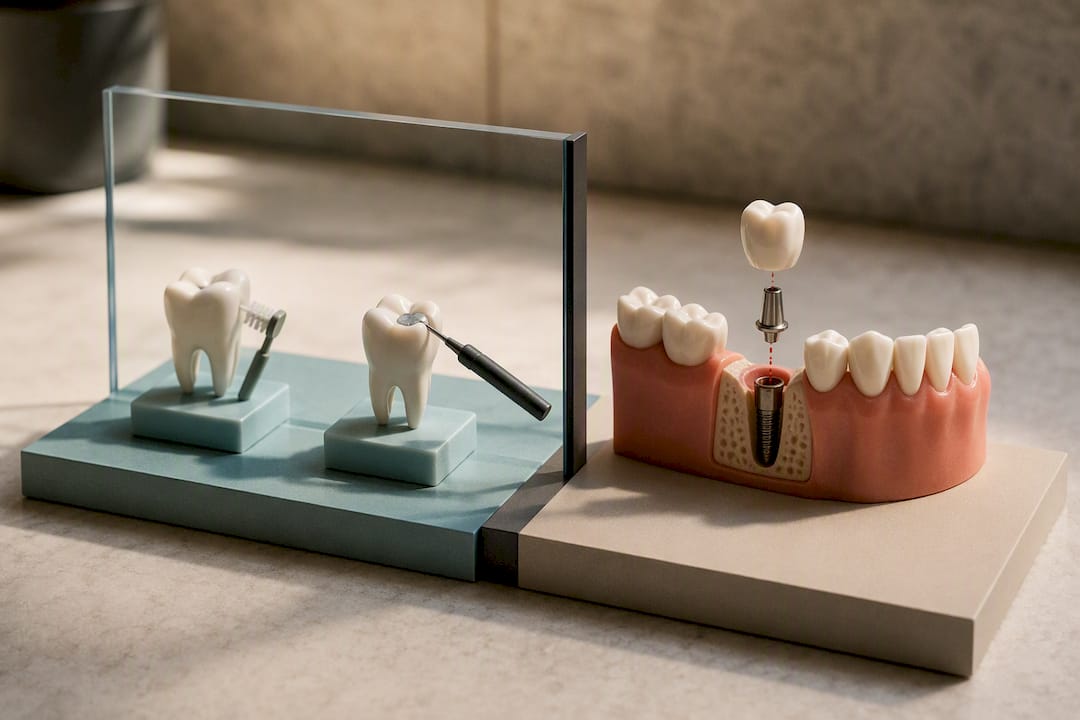
The conventional advice, "call your insurer and ask if implants are covered," undersells the real work. A yes or no answer means nothing without the CPT and ADA codes attached to it, and without a preauthorization in writing. The documentation step gets treated as an afterthought when it should be the first phone call you make, not the last.
Prioritize this: get your surgeon and your insurer talking before surgery, not after a denial. A coordinated claim, with imaging, function-based notes, and a clear treatment history, changes outcomes far more than switching insurance carriers ever will.
— Dr. Brian Young
How Forever Smiles Implant Center Helps With Coverage and Financing
Forever Smiles Implant Center exists for exactly the cases insurance struggles with most: full-mouth reconstruction, failed prior implants, and severe bone loss that other practices turn away. That focus matters for insurance purposes too. Every patient gets 3D imaging, surgical planning, an in-house dental lab, and an MD anesthesiologist, all under one roof, which means the clinical documentation insurers ask for during a medical necessity review is generated as a natural part of treatment planning, not scrambled together after a denial letter arrives.
The team helps patients request pre-treatment estimates, prepares the clinical records insurers expect for complex cases, and offers financing plans for the portion insurance won't touch, which for advanced surgical cases is usually most of it. If you're weighing your options, start with the dental implant FAQs or review full-mouth dental implant costs and financing to see what a pre-treatment estimate would look like for your specific situation.
This article is general information, not a substitute for advice from a qualified doctor. Consult a qualified healthcare professional about your own circumstances before acting on anything here.