

Diabetes does not rule out dental implants for most patients. The determining factor is glycemic control, not the diagnosis itself: well-managed diabetes, generally an HbA1c at or below 7%, tends to produce implant survival rates close to those seen in non-diabetic patients. Poorly controlled blood sugar, especially above 8%, raises the risk of complications and often requires a delayed or modified treatment plan.
TL;DR:
- Patients with well-managed diabetes (HbA1c at or below 7%) can expect implant survival rates similar to non-diabetics, often exceeding 90%.
- Poorly controlled diabetes (HbA1c above 8%) significantly increases failure risk due to delayed healing, infection susceptibility, and bone metabolism issues.
- Achieving stable blood sugar levels before surgery, with recent HbA1c readings and medical consultation, improves success chances and minimizes complications.
- Surgical and post-op protocols are adjusted for diabetics, including antibiotics, delayed loading, and closer glucose monitoring to promote proper healing.
- Long-term implant success relies on ongoing glycemic management, regular check-ups, and diligent oral hygiene to prevent marginal bone loss and inflammation.
Table of Contents
- What Do Studies Say About Diabetes and Dental Implant Success Rates?
- How Does Diabetes Affect Implant Healing and Osseointegration?
- What HbA1c Level Is Safe for Dental Implant Surgery?
- What Precautions Are Taken During and After Implant Surgery for Diabetics?
- How Should Diabetic Patients Maintain Implants Long Term?
- How Experienced Implant Centers Evaluate Diabetic Patients
- The Real Gap Between the Research and What Patients Get Told
- Considering Implants With Diabetes? Here's Where to Start
- Where to Read More on Diabetes and Dental Implant Research
- Sources
What Do Studies Say About Diabetes and Dental Implant Success Rates?
The research on diabetes and dental implants has matured considerably over the past decade, and the picture that emerges is more reassuring than most patients expect. Diabetes alone is not the deciding variable. Blood sugar control is.
Patients who keep their HbA1c at or below 7% show implant survival rates that frequently exceed 90 to 95 percent at one year, numbers that sit in the same range reported for people without diabetes. That finding shows up consistently across systematic reviews, which pool results from dozens of studies rather than relying on any single clinic's outcomes.
The picture shifts once glycemic control breaks down. A pooled analysis found that diabetic patients overall faced a 77.7 percent higher risk of implant failure compared to non-diabetic patients. That figure sounds alarming out of context, but it's driven largely by patients with poorly controlled disease dragging down the average. Split the data by glycemic status and the gap narrows sharply for well-managed patients while widening for those with elevated HbA1c.
Key takeaways from the current evidence:
- Well-controlled diabetics (HbA1c ≤7%): survival rates comparable to non-diabetic patients, often above 90%.
- Poorly controlled diabetics (HbA1c >8%): meaningfully elevated failure risk driven by delayed healing and infection susceptibility.
- Pooled failure risk across all diabetic patients: roughly 78% higher than non-diabetics, weighted heavily by the poorly controlled subgroup.
None of this evidence is perfectly clean. Studies define "well-controlled" and "poorly controlled" diabetes using different HbA1c cutoffs, some drawing the line at 7%, others at 8% or even 10%, and follow-up periods range from one year to several. That variation in methodology means pooled statistics are useful for general risk framing but shouldn't be read as a precise prediction for any one patient. Your own numbers, and your own dentist's read on your case, matter more than any average.
How Does Diabetes Affect Implant Healing and Osseointegration?
Osseointegration, the process where bone fuses to the implant surface, is a biological event, and diabetes interferes with several of the systems that drive it.
Chronically elevated blood sugar impairs the immune response your body relies on to fight off bacteria at the surgical site. Wound healing slows because high glucose levels disrupt collagen formation and reduce blood flow efficiency at the cellular level. Bone metabolism also takes a hit: hyperglycemia has been linked to reduced osteoblast activity, the cells responsible for building new bone around the implant, which can delay early implant stability.
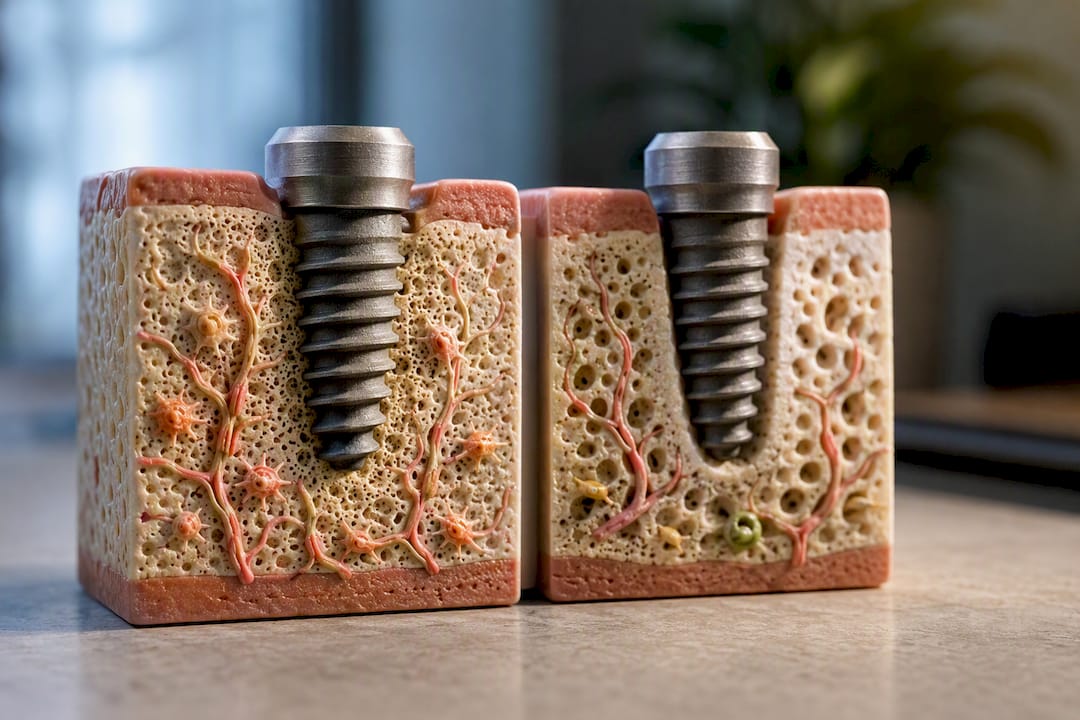
That delay matters most in the first weeks after placement, when the implant needs a stable bone bed to lock into before it can handle chewing forces.
The downstream risks show up in three main forms:
- Delayed or incomplete osseointegration, especially in the first three to six months.
- Increased susceptibility to peri-implant inflammation, a precursor to peri-implantitis.
- Higher rates of marginal bone loss around the implant over time, even after initial healing succeeds.
Marginal bone loss is the long-term concern that gets less attention than early failure but arguably matters more, since it's the slow, silent process that eventually threatens an otherwise successful implant years after placement.
What HbA1c Level Is Safe for Dental Implant Surgery?
Most clinical guidance draws the line around 7%, treating that HbA1c as the point below which implant risks are minimal and above which they climb. The clearest evidence-based clinical direction comes from the S3 guideline "Dental implants with diabetes mellitus", published in 2023, which recommends a risk-adapted approach rather than a flat yes-or-no rule.
An HbA1c of 7% or below is generally treated as the threshold for proceeding with standard protocols. Between those two numbers sits a gray zone where case-by-case judgment, periodontal status, and overall health weigh heavily on the decision.
A practical pre-op checklist looks like this:
- Get a recent HbA1c reading, ideally within the past three months.
- Schedule a consult with your physician or endocrinologist to confirm your diabetes is stable and medications are optimized.
- Address any active periodontal disease before implant surgery, since untreated gum infection compounds implant risk.
- If you smoke, get counseling on cessation. Smoking and diabetes together compound healing problems significantly.
- Review your medication list with your dental team, including insulin dosing and any recent changes in your regimen.
Certain findings tend to pause treatment altogether: unstable or wildly fluctuating glucose readings, active uncontrolled gum disease, or a recent major cardiovascular event. None of these are permanent disqualifiers. They're signals to stabilize first.
Pro Tip: Bring your last two or three HbA1c readings to your consultation, not just the most recent one. A single number tells your dentist where you are; a trend tells them where you're headed, and that trend often shapes the treatment timeline more than the raw score.
What Precautions Are Taken During and After Implant Surgery for Diabetics?
Surgical technique and follow-up protocols both shift when a patient has diabetes, even when control is good.
Many surgeons use prophylactic antibiotics and chlorhexidine rinses as standard adjuncts for diabetic patients, a practice associated with improved short-term success in diabetic cohorts specifically. The logic is straightforward: if healing capacity is even modestly reduced, giving the site extra protection against bacterial colonization buys the bone time to integrate properly.
Loading protocol is another variable that changes. Immediate loading, placing a functional tooth on the implant the same day as surgery, works well for many patients but gets more scrutiny in diabetics with borderline glycemic control. When osseointegration timing is uncertain, a delayed loading approach gives bone more time to establish a solid foundation before it bears chewing forces.
Post-op precautions typically include:
- Closer glucose monitoring in the days immediately following surgery, since stress and healing can shift blood sugar levels.
- Coordination between your dentist and physician on any medication timing adjustments around the surgical date.
- A follow-up schedule that's more frequent than the standard implant patient sees, particularly in the first year.
- Clear instructions on recognizing early signs of infection, since diabetic patients may not always mount an obvious inflammatory response.
Pro Tip: Keep a simple log of your blood sugar readings for the first two weeks after surgery. If you notice consistent elevation compared to your baseline, call your dental team before your next scheduled visit rather than waiting.
How Should Diabetic Patients Maintain Implants Long Term?
Getting through surgery successfully doesn't end the story. Diabetic patients face an elevated long-term risk of marginal bone loss around implants, even when short-term survival rates look identical to non-diabetic patients. That's the finding that gets the least attention but deserves the most.
An individualized recall schedule matters more for diabetic patients than the standard six-month cleaning cycle.
What your dental team should be checking at each recall visit:
- Peri-implant probing depths, watching for any increase that signals developing inflammation.
- Radiographic checks of marginal bone levels, comparing against baseline images taken after initial healing.
- Plaque and biofilm control around the implant collar, since diabetics can be more prone to bacterial buildup.
- Any signs of loosening, sensitivity, or bleeding on probing that weren't present at prior visits.
Early peri-implant inflammation responds well to intervention: professional cleaning, improved home care, and tighter glucose management often reverse the problem before it progresses to bone loss. The patients who do best long term are the ones who treat glycemic control as part of their implant maintenance routine, not a separate health goal. A structured maintenance checklist helps keep both tracks moving together.
How Experienced Implant Centers Evaluate Diabetic Patients
Volume changes how a surgeon thinks about risk. Dr. Brian Young, founder and lead surgeon at Forever Smiles Implant Center, has placed a very high volume of implants over his career, and that repetition builds a pattern-recognition skill that a occasional-implant provider simply doesn't accumulate at the same pace.
Case selection for diabetic patients isn't a single checkbox. It's a coordinated process: recent HbA1c review, physician consultation, in-house surgical planning, and an anesthesiology team equipped to manage complex medical histories safely during longer procedures. That interdisciplinary structure, emphasized in expert guidance on treating patients with systemic disease, is exactly what separates a rushed clearance from a genuinely risk-adapted plan.
Patients with diabetes and a history of failed implants elsewhere often assume they've run out of options. In most cases, they haven't. The question isn't whether the diagnosis disqualifies them. It's whether the bone, the glucose control, and the surgical plan line up well enough to proceed safely, and often they do with the right adjustments.
The Real Gap Between the Research and What Patients Get Told
The data on diabetes and dental implants is more encouraging than the conversation most patients have in a dentist's chair. Too many people get told, informally and without nuance, that diabetes makes them a poor candidate, full stop. The systematic reviews don't support that blanket statement. They support a conditional one: control your glucose, and your odds look a lot like anyone else's.
Where conventional advice falls short is in treating HbA1c as a pass or fail gate instead of a variable to manage before, during, and after treatment. Given a few months of coordinated effort with a physician, that number often moves, and so does the risk profile.
If I had to tell a diabetic patient one thing to prioritize, it wouldn't be finding the "best" surgeon. It would be getting their glucose trend documented and stable before that first consultation. Surgical skill matters enormously, but it can't compensate for a metabolic environment that isn't ready to heal.
— Dr. Brian Young
Considering Implants With Diabetes? Here's Where to Start
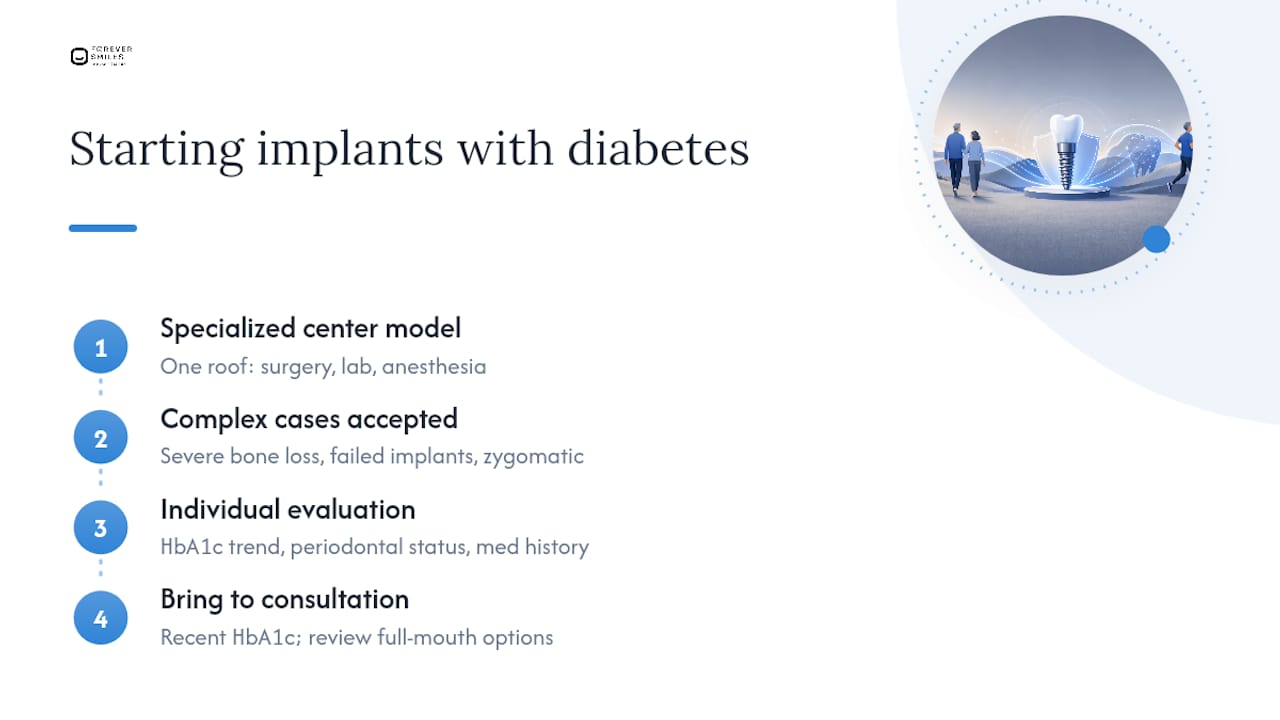
Complex diabetic cases are exactly where a specialized implant center's model earns its keep. Every full-arch procedure happens under one roof, surgical planning, an in-house dental lab, and a board-certified MD anesthesiologist, so glucose management and anesthesia decisions get coordinated by one accountable team instead of being passed between separate offices.

The center focuses specifically on patients other providers have turned away: severe bone loss, previously failed implants, and cases requiring advanced solutions like zygomatic implants when standard implant sites won't support a reconstruction. Dr. Young's team evaluates each diabetic patient's HbA1c trend, periodontal status, and medical history before building a surgical plan, rather than applying a one-size-fits-all protocol.
If you're missing most or all of your teeth, wearing dentures you're unhappy with, or wondering whether a prior "no" from another dentist still applies given the current evidence, start with a consultation. Review the full-mouth dental implant options available and bring your recent HbA1c numbers so the conversation starts with real data, not guesswork.
Where to Read More on Diabetes and Dental Implant Research
For patients who want to dig into the primary research or bring documentation to their own physician:
- The systematic review on diabetes mellitus and dental implants breaks down how HbA1c above 8% correlates with delayed healing and complications.
- The S3 clinical guideline on dental implants with diabetes mellitus lays out the risk-adapted framework most specialists now follow.
- General oral hygiene guidance is worth reviewing alongside your implant maintenance routine, since plaque control matters even more once diabetes is part of the picture.
Share these with your dentist or physician. A shared reference point makes the conversation about your specific case far more productive than a generic yes or no.
This article is general information, not a substitute for advice from a qualified doctor. Consult a qualified healthcare professional about your own circumstances before acting on anything here.
Sources
- Dental implant outcomes in patients with diabetes mellitus: a systematic review
- Systematic review on diabetes mellitus and dental implants
- S3 Guideline “Dental implants with diabetes mellitus” (long version)
- Dental implants and diabetes mellitus—a systematic review