

Teeth that need implants don't fail quietly. Persistent pain, visible mobility, recurring infections, and dark discoloration are the clearest signals that a tooth has crossed from restorable to replaceable. The clinical term is "non-restorable," and once a tooth reaches that threshold, attempting to save it often accelerates the bone loss that makes implant placement harder later.
Recognizing dental implant needs early changes the outcome. Here are the specific signs to watch for:
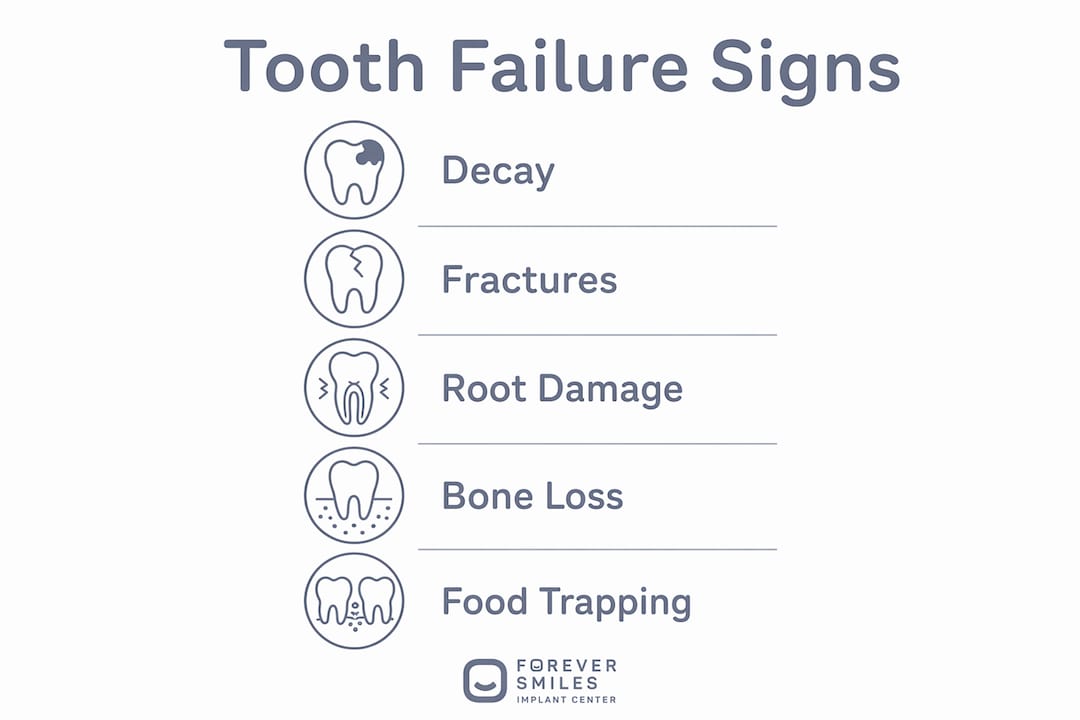
- Persistent or spontaneous pain that doesn't resolve with treatment
- Tooth mobility beyond normal physiologic movement
- Recurring abscesses or infections despite antibiotics or root canals
- Dark gray, brown, or black discoloration indicating internal tissue death
- Repeated restoration failures on the same tooth (crowns, fillings that keep breaking)
- Food trapping around a tooth or rough margins on existing restorations
- Swelling, a pimple-like bump on the gum, or a persistent bad taste
The last three are subtle. Food trapping and rough margins often precede catastrophic failure by months, giving patients a window to act before bone loss compounds the problem.
Pro Tip: If your dentist says a tooth "looks fine" on a standard X-ray but you still have symptoms, ask specifically about CBCT (cone beam CT) imaging and objective scoring like the SHEEP system (Structure, History, Endodontic, Expertise, Periodontal) to get a clearer prognosis.
Table of Contents
- Why some teeth fail beyond saving
- Diagnostic tools that reveal what X-rays miss
- What full-mouth implant reconstruction actually involves
- How the consultation and treatment planning process works
- Forever Smiles Implant Center: built for cases like yours
- Key Takeaways
Why some teeth fail beyond saving
Severe decay, deep fractures, root damage, and advanced periodontal bone loss are the four main drivers of irreversible tooth failure. Each one can reach a point where no restoration predicts a reliable long-term outcome.
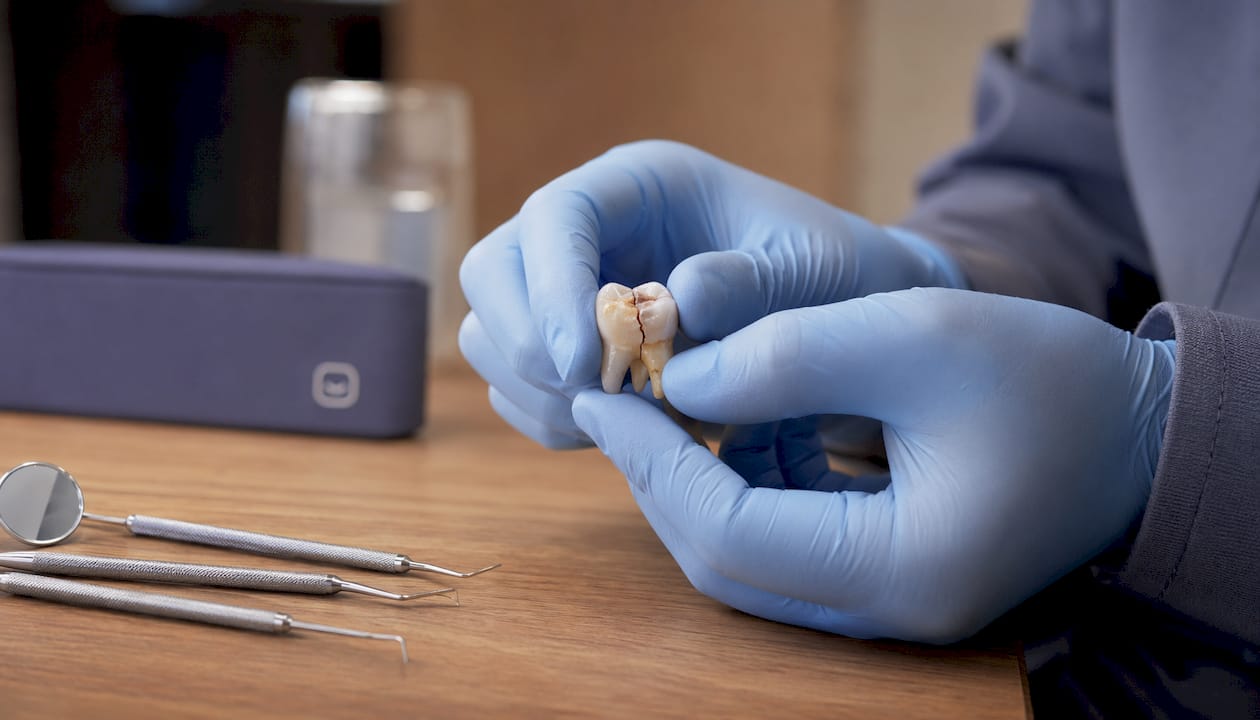
The fracture scenario is particularly deceptive. A cracked tooth that extends into the pulp chamber floor is almost always unrestorable. What makes it dangerous is the "quiet death" phase: the nerve dies, pain subsides, and patients assume the problem resolved itself. It hasn't. Infection continues internally, destroying the surrounding bone silently. By the time pain returns or swelling appears, the bone loss may already complicate implant placement.
Prolonged attempts to save a structurally compromised tooth carry their own risk. Saving severely fractured teeth can accelerate bone loss, narrowing the window for straightforward implant placement and sometimes requiring bone grafting that wouldn't have been necessary with earlier extraction.
The practical distinction between a savable tooth and one that warrants extraction comes down to predictability. A tooth that can be stabilized with a crown and has intact pulp or successful endodontic treatment may have years of function left. A tooth with subgingival fractures, pulp chamber floor involvement, or bone loss exceeding the root's supporting structure does not. Stabilization options like orthodontic bands or full-coverage crowns work when pulp health is intact, but extensive pulp involvement usually predicts extraction regardless of the restoration placed.
Diagnostic tools that reveal what X-rays miss
Standard clinical exams catch a lot. Visual inspection under magnification, bite tests using a Tooth Slooth instrument, vitality testing with ethyl chloride, and fiber-optic transillumination (FOTI) are the front-line tools for identifying cracks and pulp status. FOTI works by shining light through the tooth until a fracture deflects it, producing a visible light-to-dark transition line that reveals crack location.
The limitation of conventional 2D X-rays is real. A fracture running mesio-distally, parallel to the film, is essentially invisible on a bitewing or periapical radiograph. Subtle vertical bone loss around a root can also be missed until it's advanced.
- CBCT (cone beam CT) provides 3D imaging that detects vertical root fractures and bone defects invisible on standard films
- Bite tests isolate the specific cusp triggering symptoms, narrowing the diagnosis
- FOTI highlights crack lines before they're visible to the naked eye
- Vitality testing distinguishes reversible pulpitis from irreversible pulp damage
- Restorability assessment involves removing existing restorations to directly visualize crack depth and pulp chamber floor involvement
CBCT imaging is the standard for complex cases where conventional imaging shows no clear problem but symptoms persist. The American Association of Endodontists supports its use when standard radiographs are inconclusive. For patients considering bone density and implant candidacy, 3D imaging also provides the bone volume data needed for surgical planning.
Pro Tip: If you've had a root canal, a crown, or multiple fillings on the same tooth and symptoms keep returning, request a CBCT scan before agreeing to another restoration. The 3D view often reveals what 2D films cannot.
What full-mouth implant reconstruction actually involves
The process is more structured than most patients expect, and that structure is what makes outcomes predictable.
Evaluation and planning come first. Bone quality and quantity are assessed using 3D imaging. Patients with significant bone loss may need preparatory procedures like bone grafting before implants can be placed. Some cases qualify for same-day one-stage placement when bone density is sufficient. For patients with severe resorption, zygomatic implants anchor into the cheekbone instead of the jaw, bypassing the need for grafting entirely.
Surgical placement follows the plan precisely. Implants are positioned to maximize bone contact and load distribution. Patients typically receive provisional teeth the same day, so they leave with function restored immediately.
Osseointegration takes several months. The titanium fuses with the jawbone during this period, creating the stable foundation for the final restoration. Post-operative care during this phase directly affects long-term success.
Final restoration with custom zirconia teeth completes the process. These are fabricated in-house at centers with dedicated dental labs, allowing fit and aesthetics to be refined without shipping delays.
| Stage | Timeline | What Happens |
|---|---|---|
| Evaluation and imaging | — | CBCT scan, bone assessment, surgical planning |
| Preparatory procedures | several months if grafting needed | Bone grafting, healing |
| Implant placement | Surgery day | Implants placed, provisional teeth delivered |
| Osseointegration | several months | Bone fuses to implant |
| Final zirconia restoration | — | Custom teeth fabricated and fitted |
Dental implant survival rates in healthy patients are generally high over several years, though long-term success depends on hygiene and follow-up care. Peri-implantitis and mechanical complications remain real risks, which is why the surgical and restorative team matters as much as the implant itself.
Dr. Brian Young, Forever Smiles Implant Center: Full-mouth reconstruction requires comprehensive surgical planning, including advanced imaging and team-based care under expert specialists. Integrated services under one roof optimize outcomes for complex cases.
Pro Tip: Ask your provider whether their dental lab is in-house. An on-site lab means faster adjustments, better fit control, and a single accountable team from surgery through final teeth.
About Dr. Brian Young: Dr. Young is the founder and lead surgeon at Forever Smiles Implant Center, a residency-trained surgical specialist with more than 20 years of experience and over 28,000 implants placed. He trains surgeons nationally, lectures on full-arch technique, and sits on the editorial board of Implant Practice US.
How the consultation and treatment planning process works
A thorough consultation does more than confirm you need implants. It maps out exactly which path gets you there with the fewest complications.
The clinical exam covers tooth-by-tooth assessment, gum health, bite evaluation, and imaging review. From there, the conversation shifts to goals: function, aesthetics, timeline, and budget. The BRAN analysis (Benefits, Risks, and Nothing) structures this discussion so patients weigh all three options clearly, including the consequences of doing nothing, without being pushed toward a decision by availability bias or urgency pressure.
Prognosis scoring using the SHEEP framework gives both patient and provider an objective read on whether a tooth can be predictably saved. Structure, History, Endodontic status, Expertise required, and Periodontal condition each contribute to a score that removes guesswork from the "save it or replace it" question.
Planning factors that affect the final treatment path:
- Number and location of implants needed
- Whether zygomatic implants are indicated for severe bone loss
- Timing of extractions relative to implant placement
- Financial planning, since full-mouth treatment at Forever Smiles Implant Center starts at $19,000 per arch, representing a significant investment
- Medical history factors that affect healing (diabetes, bisphosphonate use, smoking)
Pro Tip: Before your consultation, write down every tooth that has been treated more than twice, any teeth causing recurring symptoms, and any changes in your bite or jaw comfort. That list gives your provider a faster, more accurate starting point.
Coordinated care teams that include a surgeon, restorative dentist, and in-house lab reduce the handoff errors that cause delays and mismatches in complex cases. Patients with questions about implant consultations often find that preparation makes the difference between a vague estimate and a concrete treatment plan.
Forever Smiles Implant Center: built for cases like yours
Patients who arrive at Forever Smiles Implant Center have usually been through the cycle already: multiple restorations on the same teeth, a root canal that didn't hold, or a dentist who said implants weren't possible because of bone loss. That's exactly the patient population this practice was built for.
Dr. Brian Young performs full-arch implant surgery every day, not occasionally. The practice handles surgical planning, surgery, an in-house dental lab, and a board-certified MD anesthesiologist under one roof. For patients with severe bone loss, zygomatic implants are available as an alternative to grafting. For patients who've had implants fail elsewhere, Dr. Young specializes in those cases too.
Full-mouth treatment at this center involves planning, surgery, same-day teeth, final zirconia restoration, and follow-up care, with costs starting at $19,000 per arch depending on the specifics of each case. The full-mouth implant services page outlines what's included and who qualifies. If you're ready to get a clear answer on whether your teeth can be saved or need replacing, schedule a consultation with Forever Smiles Implant Center in Jacksonville, Florida.
Key Takeaways
Teeth that cannot be predictably restored show specific clinical signs, and acting on them before significant bone loss occurs leads to simpler, more successful implant treatment.
| Point | Details |
|---|---|
| Early warning signs matter | Food trapping, rough margins, and discoloration often precede severe failure by months. |
| Quiet infection is dangerous | Nerve death stops pain but infection continues, destroying bone needed for implants. |
| CBCT imaging is often necessary | Standard X-rays miss vertical fractures and subtle bone loss that 3D imaging reveals. |
| Implant survival over several years | Dental implant survival rates in healthy patients are generally high over several years. |
| Forever Smiles Implant Center | Specializes in full-mouth reconstruction, including complex and previously failed cases, with treatment starting at $19,000 per arch. |