

Dental implant recovery best practices are the specific post-operative actions that protect your surgical site, support osseointegration, and prevent complications during healing. Implant success rates exceed 95% when patients follow structured aftercare protocols covering pain management, oral hygiene, diet, and activity. The American Dental Association recognizes osseointegration, the process by which the implant fuses with your jawbone, as the biological foundation of long-term implant success. What you do in the first 72 hours after surgery shapes that entire process. This guide covers every evidence-based step, from the moment you leave the surgical chair through your final follow-up.
1. Implant recovery best practices start with pain control
Pain management is not optional. It is the first line of defense against a difficult recovery. Discomfort peaks at days 1–2 after implant surgery and drops significantly by day 5–7 when medication is used correctly. That window is short, but missing it sets back your entire recovery.
Take your pain medication before the local anesthetic wears off. If you wait until you feel pain, you are already behind. Ibuprofen at 600 mg every 6–8 hours delivers a cumulative anti-inflammatory effect that keeps swelling and pain suppressed. Avoid aspirin entirely during early recovery, as it thins the blood and can prolong bleeding at the surgical site.
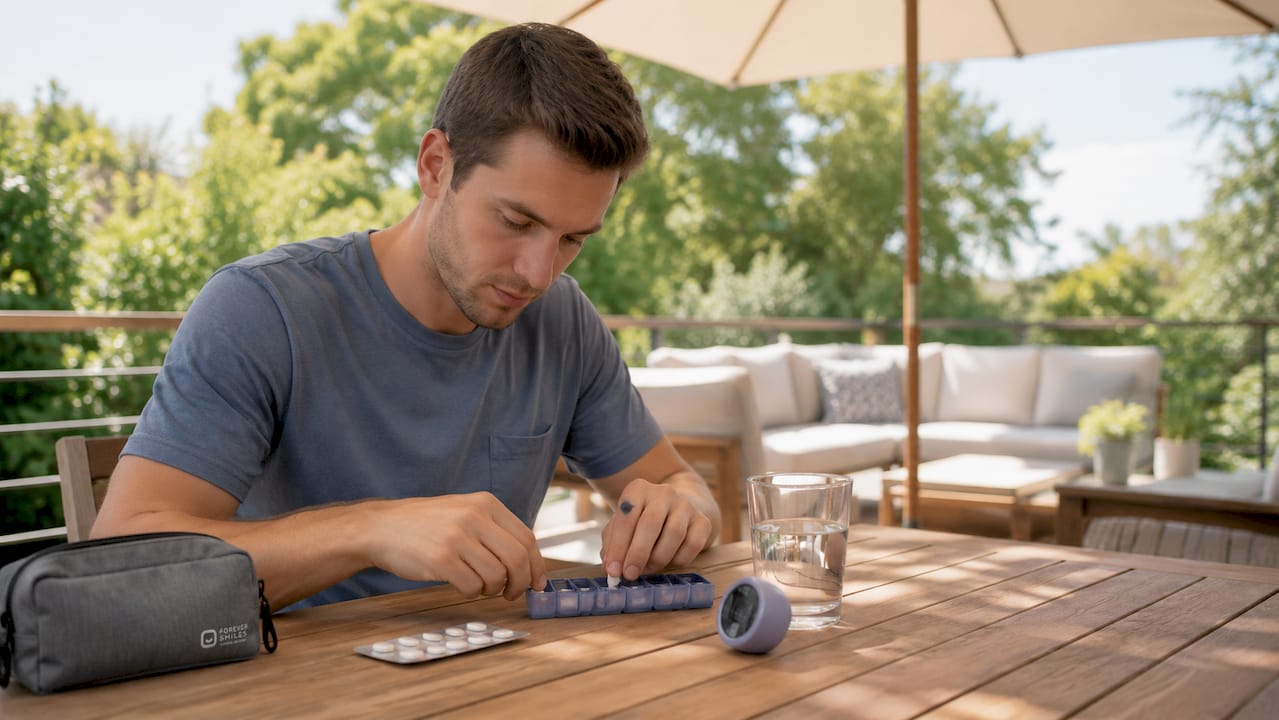
Pro Tip: Set phone alarms for every dose during the first 48–72 hours. Skipping doses causes rebound swelling that is harder to control than the original inflammation.
2. Managing swelling with cold and heat therapy
Swelling is a normal part of the implants healing process. Swelling peaks at 48–72 hours post-surgery, not immediately after. Knowing this timeline prevents unnecessary panic and helps you plan your recovery schedule.
Apply a cold compress to the outside of your face in 20-minute on, 20-minute off intervals for the first 24 hours. After 48 hours, switch to warm, moist heat. Warm compresses increase circulation and help the body reabsorb the fluid that causes puffiness. Do not apply ice directly to your skin, and do not use heat during the first 48 hours, as it can worsen early swelling.
3. Dietary choices that support bone and tissue repair
What you eat directly affects how fast your implant site heals. Protein, calcium, and vitamin D during the first two weeks support both soft tissue repair and the early stages of bone integration. Nutrition is one of the most underestimated factors in dental implant recovery.
Start with cold or lukewarm soft foods for the first 48 hours. Good choices include:
- Yogurt and cottage cheese (high in protein and calcium)
- Applesauce and mashed bananas
- Smoothies (no straws)
- Scrambled eggs
- Mashed potatoes and soft-cooked oatmeal
- Protein shakes blended to a drinkable consistency
After the first week, gradually introduce soft foods that require minimal chewing, such as soft fish, well-cooked pasta, and tender chicken. Avoid hard, crunchy, sticky, spicy, and acidic foods for at least two weeks. Hot foods and beverages can increase swelling and disrupt clot formation.
Pro Tip: Blend a recovery smoothie with Greek yogurt, banana, and a scoop of protein powder. You get protein, calcium, and calories without any chewing pressure on the surgical site.
4. Oral hygiene without disturbing the surgical site
Keeping your mouth clean after implant surgery is critical, but the method matters as much as the frequency. For the first 24 hours, do not rinse, spit, or brush anywhere near the surgical site. Disturbing the area too early dislodges the blood clot that protects the wound.
Starting 24 hours after surgery, follow this oral hygiene protocol:
- Rinse gently with warm saltwater (1/4 teaspoon of salt in 8 oz of water) 4–5 times daily
- Use a soft-bristled toothbrush on all teeth except the surgical site for the first week
- Avoid electric toothbrushes near the implant area until your surgeon clears you
- Do not use a Water Pik near the implant site during early healing
- Use any prescribed antimicrobial rinse, such as chlorhexidine, exactly as directed
- Keep the rest of your mouth clean to reduce overall bacterial load
Vigorous rinsing or spitting in the first 24 hours risks dislodging the blood clot, which causes dry socket, a painful condition that significantly delays healing. Gentle care is not laziness. It is the correct clinical approach.
5. Activity restrictions that protect your implant
Physical activity directly affects blood pressure, circulation, and clot stability at the surgical site. Rest with your head elevated for the first 24 hours after surgery. Lying flat increases blood flow to the head and worsens swelling.
Follow this activity timeline to protect your recovery:
- Days 1–2: Rest completely. Avoid bending, lifting, or any exertion.
- Days 3–4: Light walking is acceptable and promotes healthy circulation.
- Days 5–7: Return to desk work is typical for most patients.
- Days 5–7: Moderate exercise may resume if swelling and pain have resolved.
- Week 2 onward: Gradually return to normal activity as your surgeon advises.
Avoid blowing your nose forcefully, using straws, or spitting during the first week. All three actions create suction or pressure that can disrupt the healing site. Strenuous exercise raises blood pressure and increases the risk of bleeding and clot disruption.
6. Why smoking is the single biggest threat to implant success
Smoking does not just slow healing. It actively works against it. Smoking increases implant failure rates 2–3 times by restricting blood flow to the surgical site. Reduced circulation means less oxygen and fewer nutrients reaching the tissue that needs to repair itself.
Nicotine constricts blood vessels. That constriction is the enemy of osseointegration, the biological process that determines whether your implant becomes a permanent part of your jaw. Patients who smoke during recovery face a dramatically higher risk of implant failure, infection, and prolonged healing. Cessation before surgery and throughout the recovery period is not a suggestion. It is a clinical requirement for a successful outcome.
Alcohol also impairs healing and interacts negatively with pain medications. Avoid alcohol for at least the first week and for the full duration of any antibiotic or prescription pain medication course.
7. Understanding the recovery timeline for implants
The implant recovery timeline has two distinct phases, and confusing them leads to premature activity or unnecessary worry. Soft tissue healing takes 7–14 days. Osseointegration, the deeper bone fusion process, takes 3–6 months.
During soft tissue healing, your gums close over the surgical site and the initial wound resolves. You will see bruising, mild swelling, and moderate discomfort during this phase. All of these are normal. By the end of week two, most patients feel close to normal in terms of comfort and daily function.
Osseointegration happens silently beneath the surface. You will not feel it, but it is the most important phase of your recovery. This is why your surgeon takes X-rays before placing the final crown. Radiographic confirmation of bone integration is the clinical standard before loading the implant with a permanent restoration.
8. Recognizing warning signs that need immediate attention
Normal recovery has a predictable pattern. Anything that breaks that pattern deserves a call to your dental team. Signs of implant failure include increasing pain after day 3, swelling that worsens after day 4, implant mobility, fever, and pus discharge.
Watch for these specific warning signs:
- Pain that increases rather than decreases after day 3
- Swelling that gets worse after the 72-hour peak has passed
- Fever above 101°F
- Pus or unusual discharge from the surgical site
- Visible implant movement or looseness
- Prolonged bleeding that does not respond to gentle pressure
Early intervention saves implants. A complication caught at day 5 is far easier to manage than one that has progressed for two weeks. Follow-up appointments at two weeks are standard for suture removal and healing assessment. Attend every scheduled visit, even if you feel fine.
9. Long-term implant maintenance after recovery
Recovery ends, but implant care does not. The habits you build during healing set the standard for how you care for your implants long term. Use this implant maintenance checklist as your reference once healing is complete.
Brush twice daily with a soft-bristled toothbrush and non-abrasive toothpaste. Floss daily using implant-specific floss or an interdental brush. Schedule professional cleanings every six months, or more frequently if your surgeon recommends it. Avoid chewing ice, hard candy, or anything that puts excessive force on the implant crown. Grinding your teeth at night, a condition called bruxism, is one of the leading causes of implant crown damage. If you grind, ask your surgeon about a night guard.
Key takeaways
Dental implant recovery best practices require consistent action across pain management, diet, oral hygiene, and activity to achieve the clinical success rate that exceeds 95%.
| Point | Details |
|---|---|
| Start pain meds early | Take ibuprofen before anesthesia fades to prevent rebound swelling in the first 48–72 hours. |
| Cold then warm therapy | Use ice for the first 24 hours, then switch to warm moist heat after 48 hours to resolve swelling. |
| Eat for healing | Prioritize protein, calcium, and vitamin D in soft foods during the first two weeks of recovery. |
| Protect the blood clot | Avoid straws, spitting, and vigorous rinsing for the first 24 hours to prevent dry socket. |
| Attend every follow-up | Two-week and pre-crown appointments confirm healing and catch complications before they escalate. |
What I've learned from 28,000 implants about recovery
By Dr. Brian Young, Founder and Lead Surgeon, Forever Smiles Implant Center
The patients who recover fastest are not the ones with the easiest cases. They are the ones who follow instructions without improvising. I have placed over 28,000 implants, and the pattern is consistent. Patients who stop their anti-inflammatory medication early because they "feel fine" are the same patients calling the office on day 4 with rebound swelling. The medication schedule exists for a reason. Feeling better is the result of following it, not a signal to stop.
Nutrition surprises most patients. They focus entirely on what not to eat and forget that the body needs fuel to heal. Protein and calcium are not optional extras during recovery. They are the raw materials your body uses to rebuild tissue and integrate bone. A patient who eats well heals faster. That is not a theory. It is what I observe every week.
The other thing I tell every patient at Forever Smiles Implant Center: communicate with your team. If something feels wrong, call. We would rather answer ten unnecessary questions than miss one early warning sign. Recovery is a process we manage together, not something you navigate alone. The post-surgery healing process has predictable milestones, and knowing what to expect removes most of the anxiety.
— Dr. Brian Young
Ongoing support at Forever Smiles Implant Center
Recovery does not end when you leave the surgical suite. At Forever Smiles Implant Center in Jacksonville, Florida, every patient receives a personalized post-operative care plan built around their specific procedure, health history, and healing timeline. The team monitors osseointegration progress with advanced imaging before any final restoration is placed.
Patients have direct access to the clinical team throughout recovery, not a call center. If you have questions about your healing timeline, warning signs, or what to expect at each phase, the dental implants FAQ page covers the most common concerns in plain language. For patients considering full-arch reconstruction, the full-mouth implant process guide walks through every stage from planning through final teeth.
FAQ
How long does dental implant recovery take?
Soft tissue healing takes 7–14 days. Full osseointegration, the bone fusion required before placing a permanent crown, takes 3–6 months depending on bone density and individual health factors.
What foods should I avoid after implant surgery?
Avoid hard, crunchy, sticky, spicy, acidic, and hot foods for at least two weeks. Start with cold or lukewarm soft foods like yogurt, applesauce, and scrambled eggs, then gradually reintroduce soft foods requiring minimal chewing.
What are the warning signs of implant failure?
Increasing pain after day 3, worsening swelling after 72 hours, fever, pus discharge, or implant mobility all require immediate contact with your dental surgeon.
Can I smoke after dental implant surgery?
Smoking increases implant failure rates significantly by restricting blood flow and impairing osseointegration. Cessation before and throughout recovery is the clinical standard for protecting your implant investment.
When can I return to exercise after implant surgery?
Most patients return to desk work within 1–2 days and resume moderate exercise after 5–7 days. Strenuous activity should be avoided during the first week to prevent clot disruption and increased bleeding risk.