
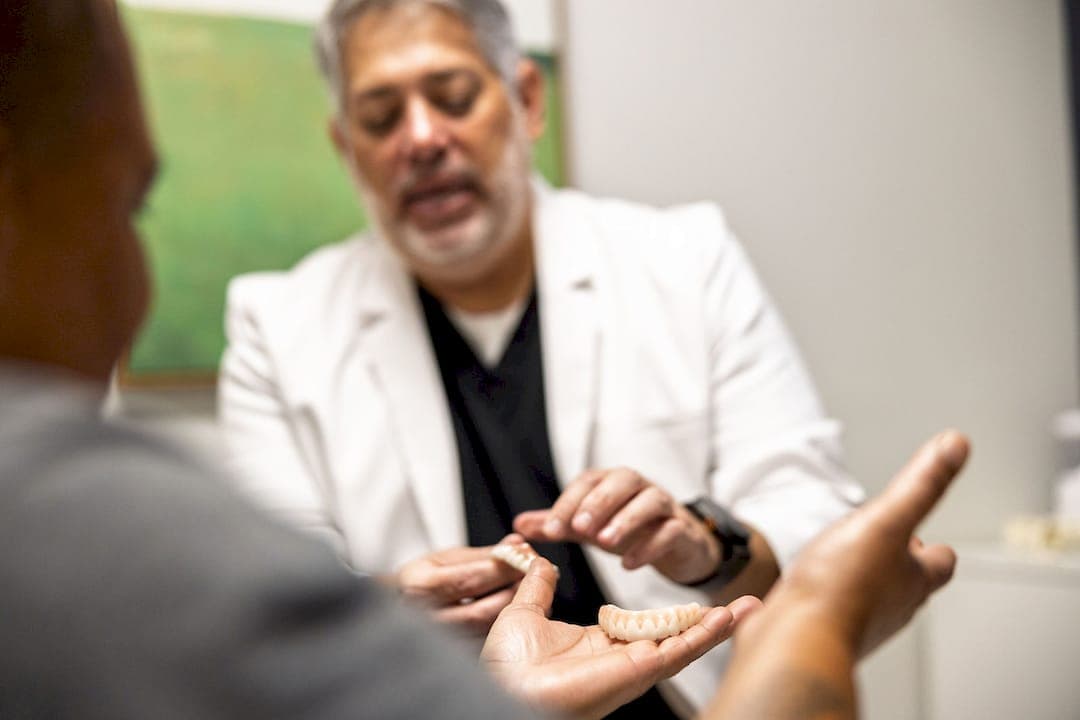
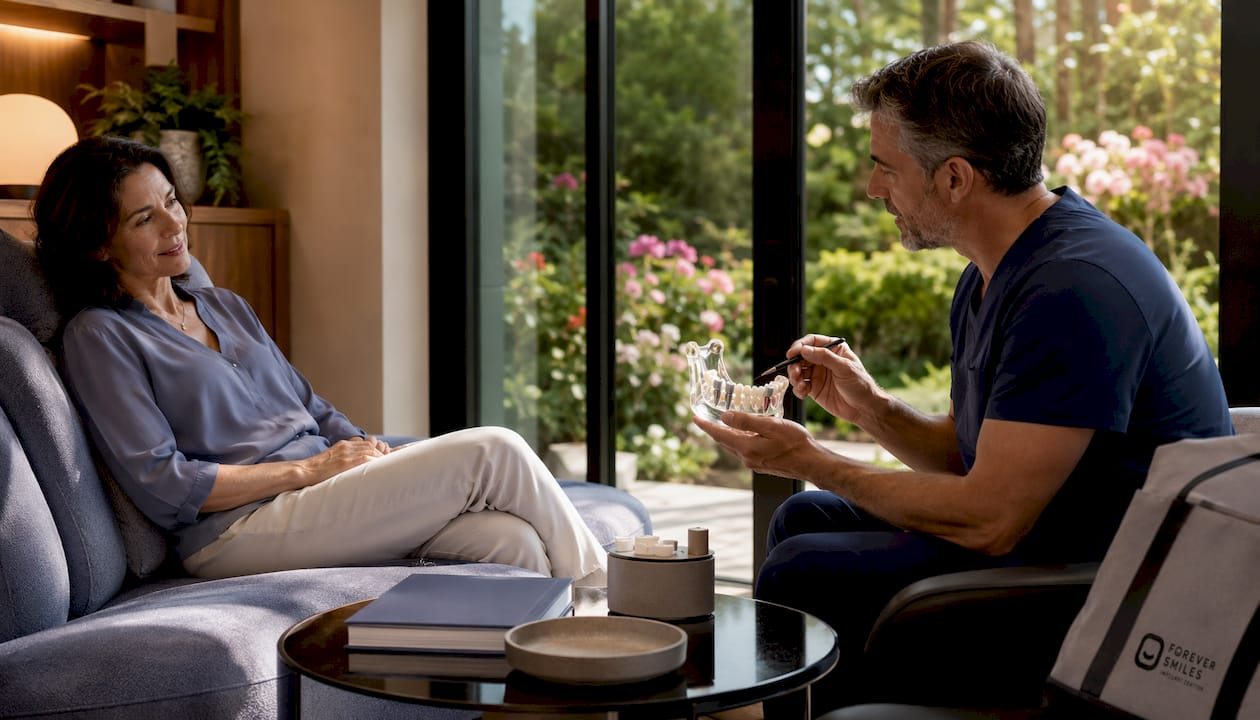
Dedicated implant centers produce measurably better clinical results than general dental practices handling implants as a side service. The core reasons are not complicated: concentrated surgical volume builds technical precision, single-site workflows eliminate the handoff errors that fragment care, and specialist teams catch problems before they become failures. A retrospective nationwide cohort study found that hospital-based dental clinics showed a hazard ratio of 0.35 for implant failure compared to private practices, meaning organized, high-volume settings cut failure risk by roughly two-thirds. For anyone considering full-arch reconstruction or a complex case, the setting where you receive care is not a minor detail.
Table of Contents
- Why dedicated implant centers produce better outcomes
- Who is on a dedicated implant center team and why each role matters
- What technologies raise implant success rates at specialist centers
- What the research shows about outcomes at specialized implant centers
- How to choose a dedicated implant center: a practical checklist
- What the treatment timeline and cost drivers actually look like
- Why dental implants fail and how dedicated centers reduce those risks
- Forever Smiles Implant Center: full-arch reconstruction done right the first time
- Key Takeaways
Why dedicated implant centers produce better outcomes
Single-site, specialist-led care changes the clinical equation in ways that matter to patients. When imaging, surgery, and restoration all happen under one roof with one accountable team, the feedback loops are tighter, the planning is more thorough, and the execution is more consistent.
The core advantages:
- Concentrated procedural volume builds pattern recognition. Surgeons who place implants daily develop standardized responses to uncommon complications, which reduces variation and improves predictability across cases.
- Unified records and shared imaging mean the surgeon and restorative team work from the same data. No faxed X-rays, no lost referral notes, no miscommunication about bone depth or occlusal load.
- Fewer handoffs reduce the risk of treatment falling through the cracks. Referral completion failures run 30–50% in fragmented models; coordinated practices cut that loss significantly.
- Faster scheduling between phases shortens total treatment time. Patients in single-site coordinated care complete treatment around 40% faster on average than those managed across multiple offices.
- Consistent restorative planning from day one means the final prosthesis is designed before the first implant is placed, not retrofitted afterward.
- On-site lab control shortens the feedback loop between surgeon and technician, improving restoration fit and reducing remakes that can compromise long-term success.
The patient-facing result: fewer total appointments, a shorter overall timeline, and a predictable esthetic outcome that was planned from the start rather than assembled piece by piece.
Pro Tip: When evaluating any implant provider, ask one direct question: "Is your imaging, surgery, and lab all in the same building?" If the answer involves multiple locations or outside referrals for any of those three, you are not in a true single-site center.
Who is on a dedicated implant center team and why each role matters
The difference between a general dentist who places implants occasionally and a dedicated implant center is not just volume. It is the composition of the team and the depth of each member's training.
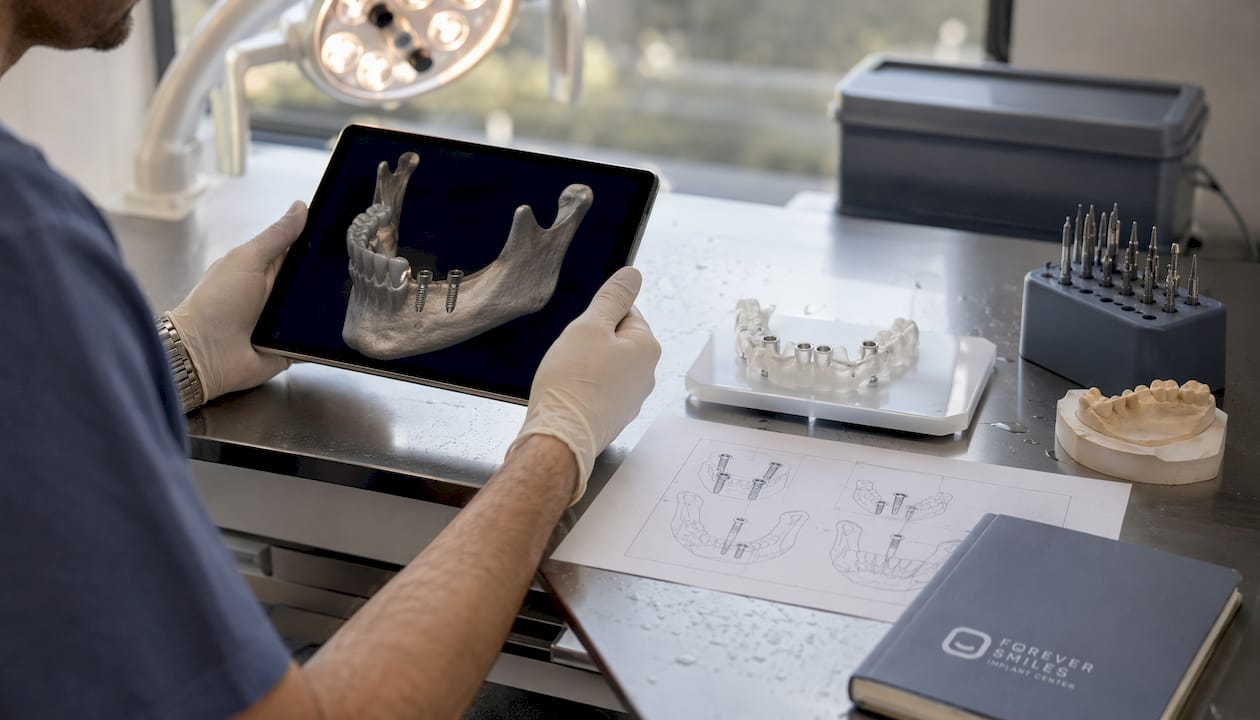
A well-structured center includes a residency-trained implant surgeon who has completed formal post-doctoral training in oral surgery or implantology, not a weekend course. That distinction matters most in complex cases: severe bone loss, failed prior implants, or full-arch reconstruction where placement angle and depth directly determine whether the final prosthesis fits and functions. A prosthodontist handles the restorative side, designing the final teeth with occlusal load, esthetics, and long-term durability in mind. When the surgeon and prosthodontist plan together before surgery, implant position is driven by the prosthetic outcome, not the other way around.
For multi-implant full-arch cases, a board-certified MD anesthesiologist on-site enables procedures under general anesthesia or deep sedation. That improves surgical conditions, reduces patient movement, and makes longer, more complex procedures safer and more comfortable. Many general dental offices cannot offer this, which limits the complexity of cases they can safely handle.
The in-house lab technician is often the overlooked member of the team. When the technician works in the same building as the surgeon, adjustments happen in real time. A restoration that does not seat correctly can be corrected the same day rather than sent back to an outside lab for a two-week remake.
When evaluating a center, look for these signals:
- Residency-trained surgeon with documented specialty credentials
- Prosthodontist involvement in treatment planning
- Annual full-arch case volume (ask for a specific number)
- In-house dental lab with on-site technician
- Board-certified anesthesiologist available for complex cases
- Published case studies or before-and-after documentation
Surgeon experience benchmarks matter more than most patients realize. Volume is a proxy for the range of complications a surgeon has encountered and solved.
What technologies raise implant success rates at specialist centers
Technology does not replace surgical skill, but it amplifies it. The gap between a general practice and a dedicated implant center is often most visible in the diagnostic and planning tools available before a single incision is made.
Core technologies and their clinical contributions:
- 3D cone beam CT (CBCT) imaging maps bone density, volume, and anatomy with precision that two-dimensional X-rays cannot match. Accurate bone assessment before surgery prevents misplaced implants and avoids nerve damage.
- Computer-assisted guided surgery translates the 3D plan into a physical surgical guide that controls implant angle and depth during placement. Recent evidence confirms that guided and robotic approaches outperform conventional techniques in placement accuracy, which is especially important for immediate loading protocols.
- Immediate loading (same-day teeth) is possible when primary stability is achieved and the prosthetic plan is ready at surgery. Immediate loading protocols require a controlled surgical and prosthetic workflow that general practices rarely have in place.
- Zygomatic implants anchor into the cheekbone rather than the upper jaw, providing a graftless solution for patients with severe maxillary bone loss. Long-term follow-up data cites mean survival rates around 96–97% for zygomatic implants, making them a reliable option when conventional implants are not feasible. More on zygomatic fixation and its indications is worth reviewing for patients told they lack sufficient bone.
- Advanced implant surface technologies (such as Straumann's SLActive) can reduce osseointegration time from 6–8 weeks down to approximately 3–4 weeks, shortening the healing phase for eligible patients.
- In-house custom zirconia restorations give the surgeon direct control over the final prosthesis. Same-day provisionals and custom final teeth produced on-site eliminate the quality uncertainty of outsourced lab work.
For patients with severe maxillary atrophy, zygomatic implants combined with All-on-4 or All-on-6 hybrid protocols can eliminate the need for bone grafting entirely, cutting months from the total treatment timeline.
What the research shows about outcomes at specialized implant centers
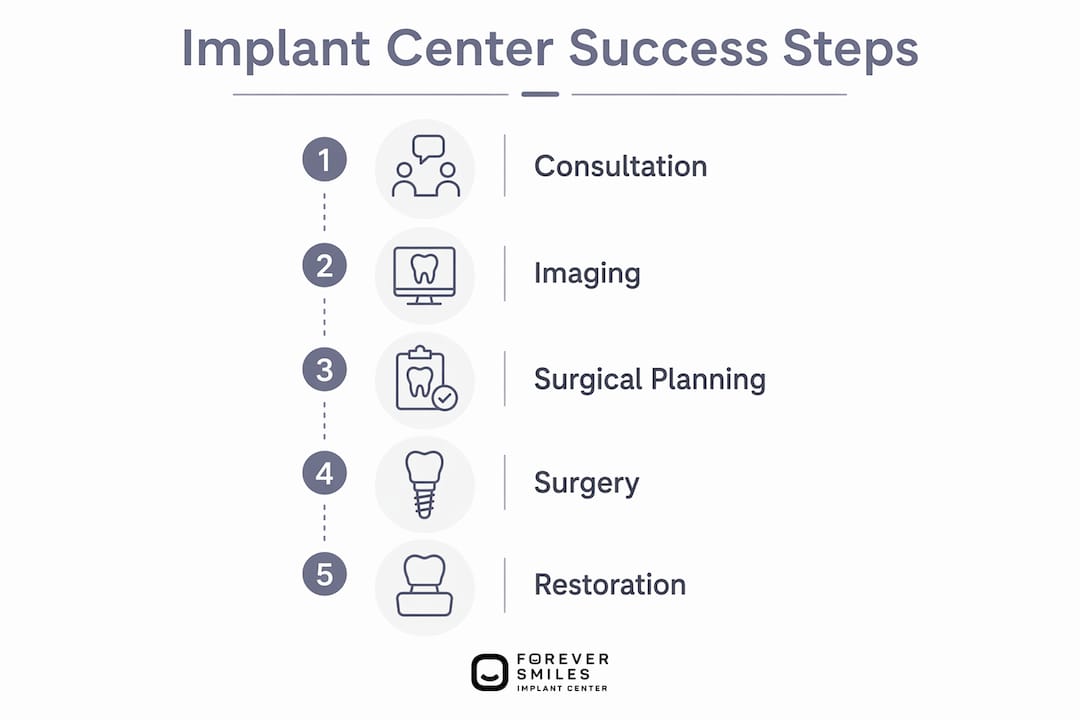
The clinical evidence points consistently in one direction: organized, high-volume settings produce better implant outcomes than fragmented care.
| Outcome Measure | Finding | Source |
|---|---|---|
| Implant failure risk | Hospital/organized centers: HR 0.35 vs. private practices | Nationwide cohort study (IJHPM) |
| Treatment completion time | ~40% faster in single-site coordinated care | Multi-specialty practice analysis |
| Zygomatic implant survival | ~96–97% mean survival in long-term follow-up | Nobel Biocare clinical data |
| Immediate loading survival (SLActive) | mean survival rates around 96–97% for zygomatic implants | — |
The bottom line from the data: The setting where implants are placed is an independent predictor of failure risk. A hazard ratio of 0.35 means that in the Korean nationwide cohort, organized clinical settings reduced failure risk by 65% compared to standard private practices. That is not a marginal difference.
Treatment in single-site coordinated care is noticeably faster, reducing gaps between appointments and allowing the team to move to the next phase promptly once clinical criteria are met. For full-arch cases that already span several months, a 40% reduction in total time is a meaningful quality-of-life difference.
How to choose a dedicated implant center: a practical checklist
Not every practice that calls itself an implant center is one. Some are general dental offices that added "implant center" to their name as a marketing move. Here is how to tell the difference.
Prioritized checklist:
- Surgeon credentials: Is the surgeon residency-trained in oral surgery, periodontics, or implantology? Ask for their post-doctoral training history, not just their dental degree.
- Procedural volume: How many full-arch cases does the surgeon complete per year? A high-volume specialist performs these procedures daily, not occasionally.
- In-house lab: Is there a dental lab on-site with a dedicated technician? Outsourced restorations without clear quality control are a risk factor.
- Anesthesia capabilities: Is a board-certified MD anesthesiologist available for complex or anxious patients?
- Advanced imaging: Is 3D CBCT imaging performed in-house, or are you sent elsewhere for scans?
- Documented outcomes: Can the center show before-and-after cases similar to yours? Are there published or verifiable outcome data?
- Post-op protocol: What does follow-up care look like after surgery? Is there a structured maintenance plan?
Questions to ask at your consultation:
- "How many full-arch implant cases do you perform each year?"
- "Do you have an on-site dental lab and technician?"
- "Is an MD anesthesiologist available for my procedure?"
- "Can you show me cases similar to mine?"
- "What happens if something goes wrong after surgery?"
Red flags: Vague answers about surgical experience, no documented case outcomes, restorations outsourced without a clear quality-control process, and no structured post-operative follow-up plan. A dental implant consultation checklist can help you organize these questions before your appointment.
Traveling for a high-volume specialist is worth considering when your case involves severe bone loss, previously failed implants, or full-arch reconstruction. The difference in outcomes between an occasional implant provider and a daily-volume specialist justifies the trip for most patients in that situation.
What the treatment timeline and cost drivers actually look like
A realistic full-arch implant timeline from consult to final restoration runs roughly 3–6 months for immediate-loading protocols and 9–18 months for staged approaches requiring bone grafting or extended healing.
Typical phase durations:
- Consultation and 3D imaging: 1–2 appointments over 1–2 weeks
- Surgery and same-day provisional teeth: Single appointment (immediate loading candidates)
- Osseointegration and healing: 3–4 weeks with advanced surface implants; 6–8 weeks with standard protocols
- Final zirconia restoration: 2–4 weeks of lab fabrication and fitting appointments
- Grafted or staged cases: Add 6–9 months for graft healing before implant placement
Zygomatic protocols for severe maxillary atrophy can eliminate the grafting phase entirely, compressing a potential 18-month timeline into 4–6 months. That is a significant practical advantage for patients who qualify.
The major cost drivers that correlate with better outcomes are specialist fees, in-house lab and custom zirconia materials, anesthesia providers, and advanced implants or techniques. Full-mouth implant treatment at a dedicated specialist center starts around $19,000 per arch, with that price typically covering planning, surgery, same-day teeth, final zirconia restorations, and follow-up care. Bargain pricing almost always reflects a tradeoff in one of those components. Thinking about implants as a long-term investment reframes the cost question: a failed implant that requires revision surgery costs more, in both money and time, than doing it right the first time.
Why dental implants fail and how dedicated centers reduce those risks
Most implant failures trace back to a small set of causes, and the majority of operator-dependent ones are preventable with the right planning and protocols.
Primary failure causes:
- Poor surgical planning: Implants placed without adequate 3D imaging or prosthetic-driven positioning fail at higher rates due to biomechanical stress and poor bone engagement.
- Infection (peri-implantitis): Inadequate aseptic technique during surgery or poor post-operative hygiene protocols leads to bacterial colonization around the implant.
- Low operator volume: Surgeons who place implants infrequently encounter complications they have not developed standardized responses to.
- Insufficient bone: Placing standard implants in inadequate bone without a graftless alternative (such as zygomatic implants) leads to early failure.
- Systemic factors: Uncontrolled diabetes, active smoking, and certain medications impair osseointegration and are patient-dependent risk factors.
- No post-op maintenance: Patients without a structured follow-up schedule miss early signs of peri-implantitis before it becomes irreversible.
Dedicated centers mitigate the operator-dependent causes through thorough pre-surgical imaging, prosthetic-driven planning, strict aseptic protocols, and immediate corrective options when anatomy is challenging. When implants fail, specialist centers with in-house capabilities can address the problem directly rather than referring out. For patients with previously failed implants, revision surgery at a high-volume center is often the most reliable path forward.
Patient-side steps that reduce risk: quit smoking at least 8 weeks before surgery, get blood sugar under control if you have diabetes, and commit to every scheduled follow-up appointment.
Forever Smiles Implant Center: full-arch reconstruction done right the first time
Patients who arrive at Forever Smiles Implant Center have often already been through a difficult experience, told they were not candidates, dealing with failed implants placed elsewhere, or worn down by dentures that never worked. The practice was built specifically for those cases.
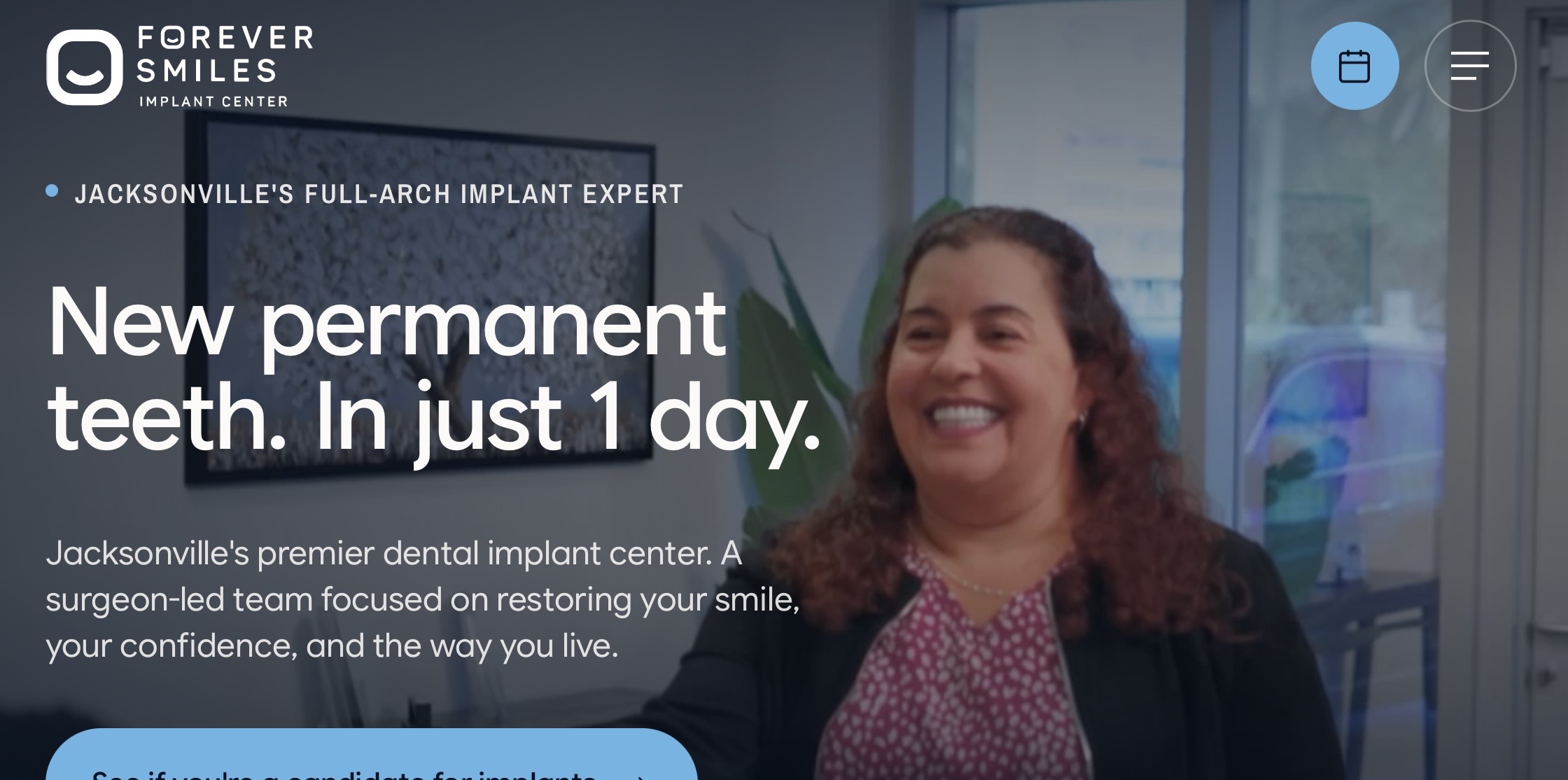
Dr. Brian Young is a residency-trained surgical specialist with over 20 years of experience and more than 28,000 implants placed. He performs full-arch surgery daily, trains surgeons nationally, and sits on the editorial board of Implant Practice US. Every procedure at Forever Smiles Implant Center happens under one roof: 3D imaging, guided surgical planning, surgery, an in-house dental lab, and a board-certified MD anesthesiologist for complex cases. The final custom zirconia teeth are fabricated on-site. Nothing is outsourced, and nothing falls through the cracks.
Full-mouth dental implants at Forever Smiles Implant Center start at $19,000 per arch, covering planning, surgery, same-day teeth, final zirconia restorations, and follow-up care. For patients who want the procedure done once and done correctly, the next step is a consultation. Call the Jacksonville office or visit foreversmilesjax.com to schedule.
Key Takeaways
Dedicated, single-site implant centers with specialist-led teams, on-site labs, and advanced imaging consistently produce better outcomes than fragmented general-practice implant care.
| Point | Details |
|---|---|
| Failure risk drops sharply | Organized implant centers showed an HR of 0.35 for failure versus standard private practices in a nationwide cohort. |
| Single-site care saves time | Coordinated single-site workflows complete treatment around 40% faster than multi-office referral models. |
| Team composition is critical | Residency-trained surgeon, prosthodontist, in-house lab, and MD anesthesiologist each reduce a specific category of risk. |
| Technology amplifies skill | CBCT, guided surgery, and zygomatic implants expand what is treatable and improve placement precision. |
| Forever Smiles Implant Center | A Jacksonville-based specialist center with 28,000+ implants placed, daily full-arch surgery, in-house lab, and MD anesthesiologist for complex and previously failed cases. |