
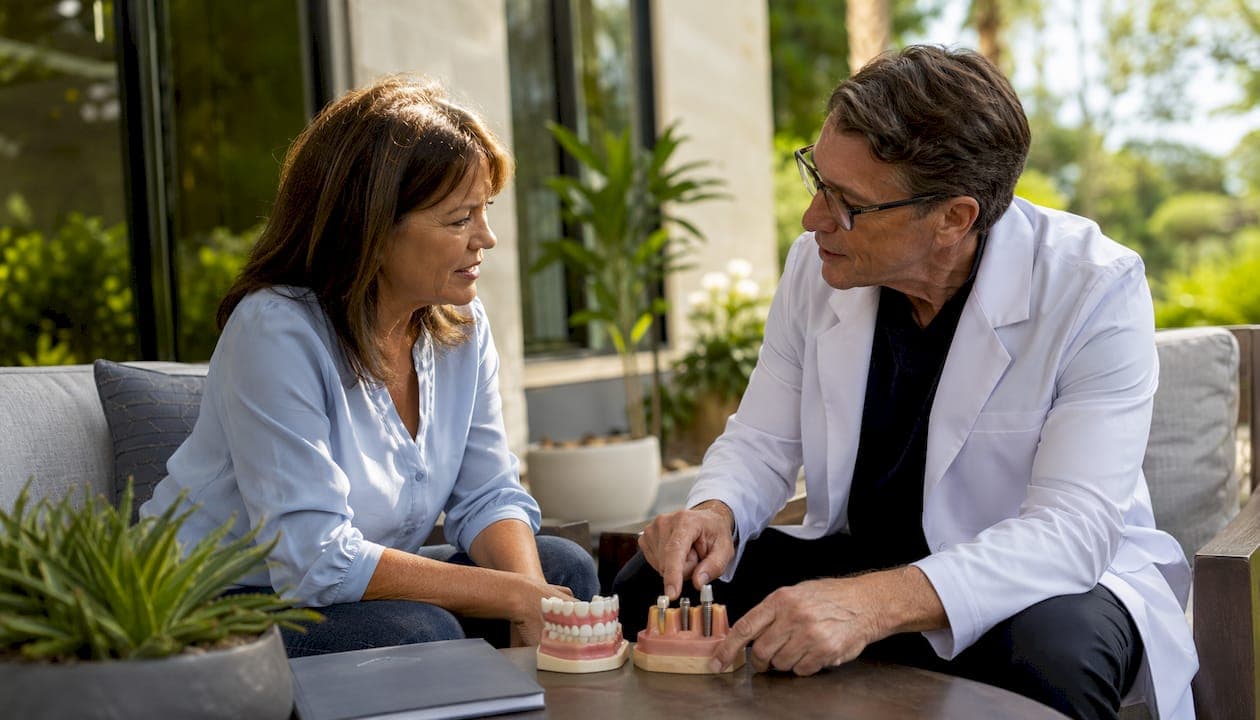
Dental implant revision surgery is the process of correcting, repairing, or replacing a dental implant that has failed or is causing problems. It is not a niche procedure. Implants fail for biological, mechanical, and patient-related reasons, and when they do, revision is often the clearest path back to a functioning, stable restoration. The clinical term you will hear from surgeons is "reimplantation treatment," though revision surgery covers a broader range of interventions, from repositioning a malplaced fixture to full removal and bone reconstruction before a new implant goes in.
Signs that revision may be necessary include:
- Persistent pain or pressure around the implant site
- Visible implant mobility or a crown that feels loose
- Swelling, bleeding, or discharge near the gum line
- Radiographic evidence of bone loss around the implant
- A crown or abutment that no longer fits correctly
At Forever Smiles Implant Center in Jacksonville, Florida, Dr. Brian Young has placed over 28,000 implants and focuses specifically on complex cases, including patients who have been told elsewhere that revision is not possible. His residency-trained surgical background and daily full-arch practice give him a different vantage point than a general dentist who handles implants occasionally.
Table of Contents
- What causes dental implants to fail?
- How do surgeons evaluate candidacy for revision?
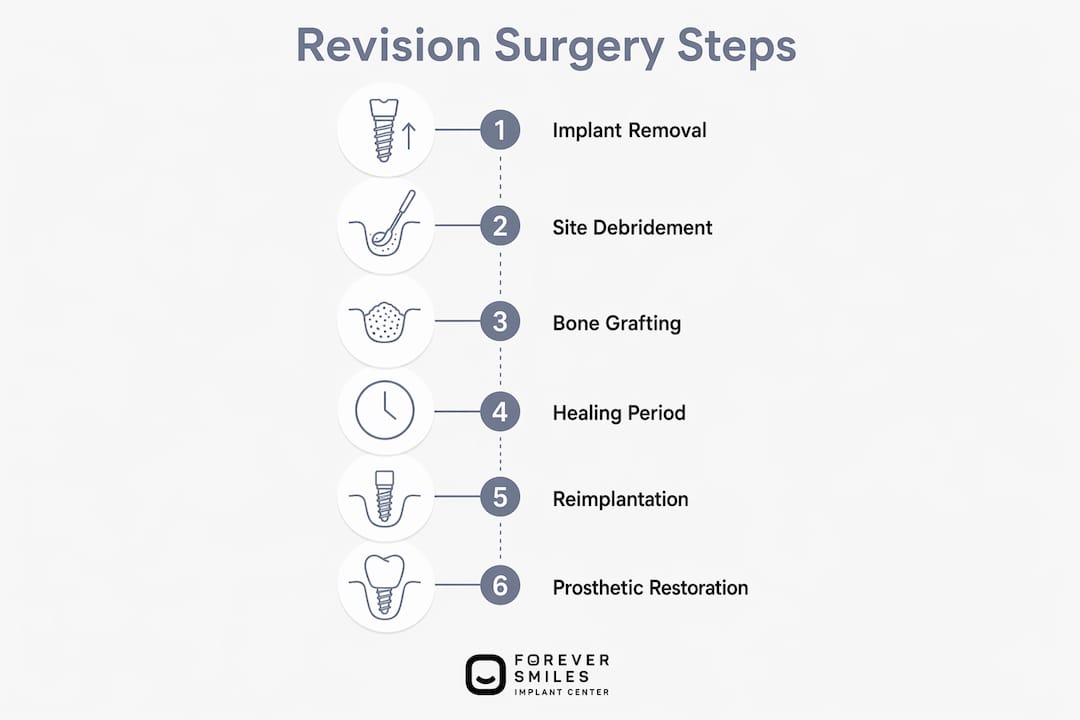
- What does the revision procedure actually look like, step by step?
- What types of revision procedures are available?
- Modern best practices and post-operative care
- What are the success rates and long-term prognosis?
- Cost and insurance coverage for revision surgery
- When revision surgery is not the right answer
- Key Takeaways
- Failed implants deserve a specialist, not a second guess
What causes dental implants to fail?
Implant failure splits cleanly into two categories: biological and mechanical. Understanding which one applies to your situation directly shapes what kind of revision is needed.
Biological causes are the most common. Peri-implantitis, a progressive bacterial infection of the tissue surrounding an implant, typically takes about five years to show clinical signs, but by the time it does, bone loss can be severe enough to require full implant removal. Early biological failures, by contrast, happen within weeks or months and usually trace back to poor osseointegration, often linked to smoking, uncontrolled diabetes, or inadequate bone quality at the time of placement.
Mechanical causes include screw loosening, implant fracture, and malposition. Biomechanical overloading is the driver here. When an implant carries more bite force than it was designed for, or when it was placed at the wrong angle, the surrounding bone absorbs stress it cannot handle. Replacing a failed implant without correcting the bite load or prosthetic design that caused the original failure leads directly to a second failure.
Patient risk factors that raise failure rates significantly:
- Smoking (failure rate of 11% for smokers versus 5% for non-smokers)
- Uncontrolled diabetes, which impairs bone healing and osseointegration
- Active periodontitis in remaining natural teeth
- Bruxism, or habitual teeth grinding, which generates excessive lateral forces
- A history of radiation therapy to the jaw
- Bisphosphonate use, which interferes with bone remodeling
The practical takeaway: risk factors do not automatically disqualify someone from revision, but they must be identified and addressed before a new implant goes in. A surgeon who skips that step is setting the patient up for a repeat failure.
How do surgeons evaluate candidacy for revision?
The evaluation for dental implant revision surgery is more involved than the workup for a primary implant. The surgeon needs to understand not just the current state of the bone and tissue, but why the original implant failed.
A thorough consultation at a center like Forever Smiles Implant Center starts with 3D imaging via CBCT (cone beam computed tomography). This gives the surgeon a three-dimensional view of remaining bone volume, bone density, the proximity of anatomical structures like the sinus and nerve canals, and the exact position of the failed implant. A flat X-ray simply cannot provide that level of detail for revision planning.
Candidacy criteria surgeons assess:
- Bone volume and density at the failed site (determines whether grafting is needed before reimplantation)
- Status of surrounding teeth and periodontal health
- Presence of active infection or residual inflammatory tissue
- Systemic health, particularly diabetes control and medication history
- Smoking status and willingness to quit or reduce before surgery
- Bite pattern and occlusal load distribution
- Patient's age, overall health, and realistic expectations
Factors that may delay revision include active, uncontrolled infection, unmanaged diabetes, or continued smoking. These are not permanent disqualifiers. They are conditions that need to be resolved first. Dr. Young's approach at Forever Smiles is to evaluate each case individually, including patients who have been turned away elsewhere, and determine what it would actually take to get them to a successful outcome.
Pro Tip: Before your revision consultation, gather all records from your original implant procedure, including X-rays, the implant brand and dimensions, and any notes about complications. This information helps the surgeon understand the failure mechanism and plan more accurately.
What does the revision procedure actually look like, step by step?
Dental implant revision surgery is not a single operation. For most patients, it unfolds across multiple stages, each with a specific biological purpose.
Implant removal
The first task is extracting the failed implant with as little damage to the surrounding bone as possible. The reverse torque technique is the preferred first choice because it is the least invasive, with a high success rate across numerous implants studied. When reverse torque is not sufficient, surgeons move to trephine burs, piezosurgery, or laser-assisted explantation, depending on how integrated the implant remains and what caused the failure.
Debridement and decontamination
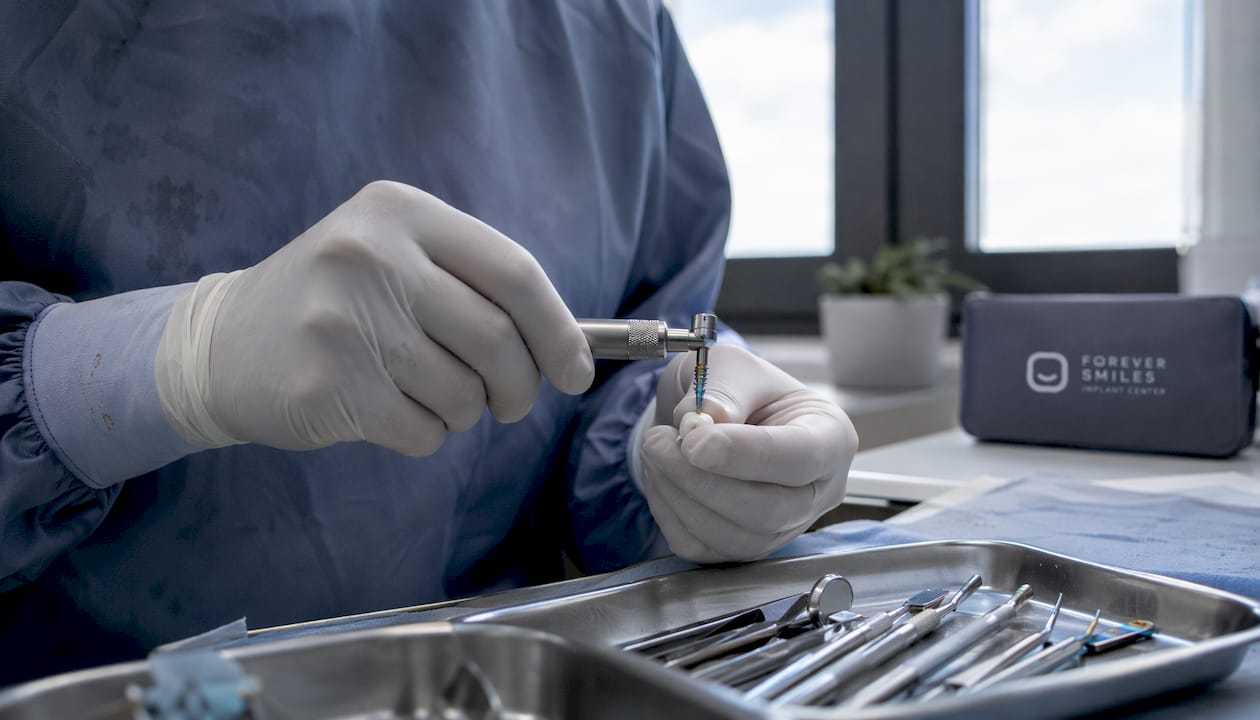
After removal, the site must be thoroughly cleaned. This means aggressive curettage of infected or inflamed tissue, removal of any contaminated bone substitute material from prior grafts, and decontamination of the socket until healthy, bleeding bone is visible at the margins. Skipping or rushing this step is one of the most common reasons revision implants fail.
Bone grafting and healing
When significant bone has been lost, grafting is required before a new implant can be placed. Bone augmentation followed by a healing period of 3–6 months is standard in these cases. The graft material, whether autogenous bone, allograft, or a combination with growth factors like BMP-2, fills the defect and provides a scaffold for new bone formation. Rushing past this stage compromises the structural foundation for the replacement implant.
Reimplantation
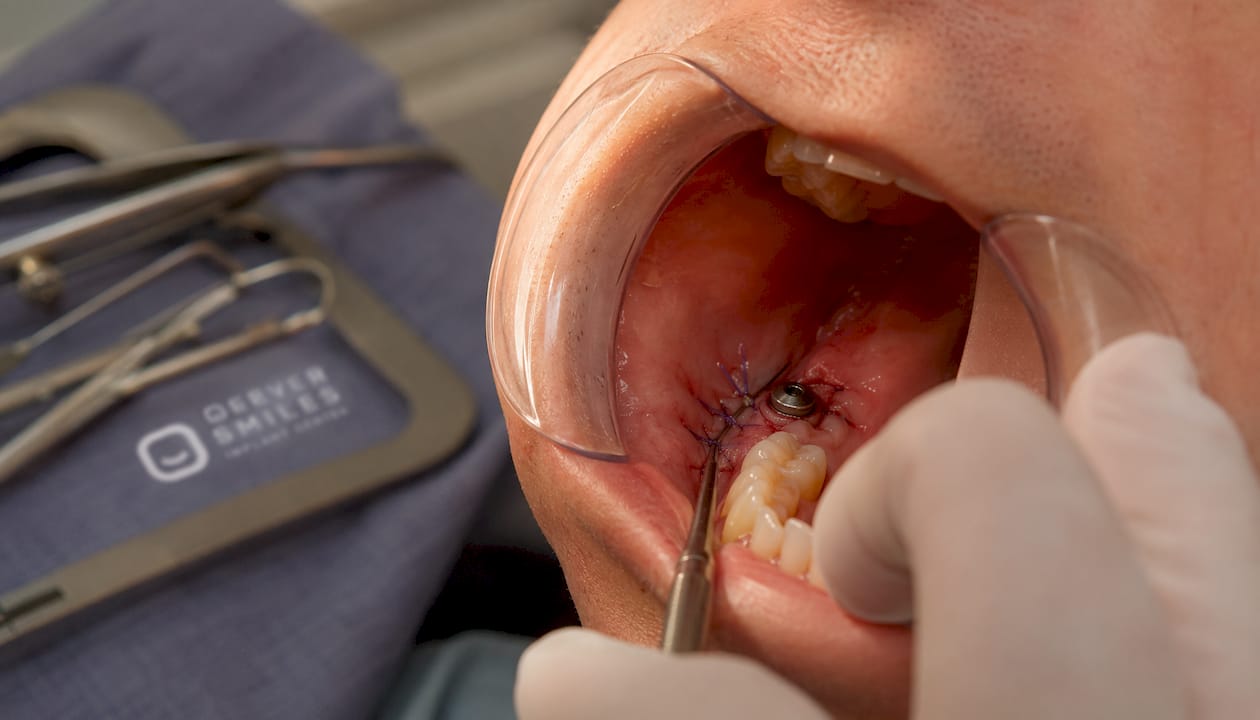
Once the site has healed and CBCT confirms adequate bone, the new implant is placed. The surgeon may adjust implant dimensions, change the angulation, or modify the healing protocol based on what went wrong the first time. A staged approach that separates removal from reimplantation, rather than doing both in one visit, consistently produces better long-term outcomes, particularly in cases with severe bone loss.
Prosthetic restoration
The final stage is attaching the crown, bridge, or full-arch prosthesis. For full-arch cases with sufficient primary stability, a temporary prosthesis may be delivered on the day of surgery. The final zirconia restoration typically follows after several months of healing and soft tissue stabilization.
Typical revision timeline at a glance:
- Consultation and CBCT imaging
- Implant removal and site decontamination
- Bone grafting (if needed) and 3–6 months of healing
- CBCT reassessment before reimplantation
- New implant placement
- Healing and osseointegration (several months)
- Final prosthetic restoration
The full process can range from a few months for straightforward cases to well over a year when extensive bone reconstruction is required. Patients who understand this timeline upfront tend to have significantly better experiences.
What types of revision procedures are available?
Not every revision looks the same. The right procedure depends on the cause of failure, the amount of bone remaining, and the patient's overall health.
Minimally invasive revision applies when the implant has failed due to a mechanical issue, such as a fractured screw or minor malposition, and the surrounding bone is largely intact. The implant is removed with reverse torque, the site is cleaned, and a replacement implant, often with a larger diameter or adjusted angulation, is placed at the same appointment or shortly after.
Staged revision with bone grafting is the standard approach when peri-implantitis has caused moderate to severe bone loss. Removal, debridement, and grafting happen first. Reimplantation follows only after the bone has regenerated, which typically takes 3–6 months. This sequence is not optional in severe cases. Placing an implant into a compromised, under-reconstructed site almost guarantees another failure.
Zygomatic implants represent a specialized solution for patients who have lost so much jawbone that conventional implants, even with grafting, are not viable. Rather than anchoring in the jaw, zygomatic implants fix into the cheekbone (zygoma), which retains its density even when the maxilla has resorbed significantly. Forever Smiles Implant Center is one of the few practices in Florida that offers zygomatic implants routinely, giving patients who have been told they have "no bone left" a real path to fixed teeth. You can read more about permanent teeth despite bone loss and what that actually involves.
Prosthetic-level revision addresses cases where the implant itself is stable but the crown, abutment, or connecting hardware has failed. This may involve replacing a loose screw, refabricating the crown, or redesigning the prosthesis to better distribute bite forces. It is the least invasive category and often resolves the problem without touching the implant body at all.
For patients in Jacksonville or traveling to the area, understanding what fixes failed implants and who is qualified to perform the work is the most important first question to answer.
Modern best practices and post-operative care
The biggest shift in revision surgery over the past several years is the move away from expedited, same-day approaches toward staged, patient-specific treatment that prioritizes biological predictability. This is not about being conservative for its own sake. It is about recognizing that a reimplanted site carries a lower baseline success rate than a primary implant site, and that every shortcut taken during the revision process compounds that disadvantage.
Risk factor control before and after surgery:
- Patients who smoke should be counseled clearly on the data: smokers face more than double the failure rate of non-smokers. Quitting or significantly reducing smoking before revision surgery is not a suggestion. It is a prerequisite for a reasonable prognosis.
- Diabetic patients need documented glycemic control, not just a verbal assurance. Hyperglycemia directly impairs bone healing and osseointegration.
- Bruxism must be managed, typically with an occlusal guard, before the final prosthesis is placed.
Post-operative care guidelines:
- Antibiotic prophylaxis is standard following revision surgery to reduce infection risk at the reconstruction site.
- Oral hygiene around the new implant must be meticulous. Interproximal brushes, water flossers, and regular professional cleanings are not optional maintenance. They are the primary defense against a repeat peri-implant infection.
- Follow-up CBCT scans at 3–6 month intervals allow the surgeon to catch early bone changes before they become a second crisis.
- Soft tissue management matters. Even infected soft tissue should generally be preserved during surgery when possible, since viable soft tissue is critical for wound closure and regenerative success.
Pro Tip: The weeks immediately after revision surgery are when the biological foundation of your new implant is being established. Prioritize sleep, avoid smoking entirely, keep blood sugar controlled if you are diabetic, and attend every follow-up appointment. Patients who treat this period seriously give their implant the best possible start.
For detailed guidance on the recovery period, the implant recovery best practices guide covers what to expect week by week.
What are the success rates and long-term prognosis?
Revision surgery works, but the numbers are honest about the stakes. The weighted survival rate for replacement implants at 1–5 years after reimplantation is 86.3%. That figure drops for second or subsequent reimplantations, with one systematic review finding a survival rates decline for second reimplantations compared with the first. The message is clear: get the revision right the first time.
Revision surgery works, but the numbers are honest about the stakes. The weighted survival rate for replacement implants at 1–5 years after reimplantation is 86.3%. That figure drops for second or subsequent reimplantations, with one systematic review finding a survival rates decline for second reimplantations compared with the first. The message is clear: get the revision right the first time.
Patient satisfaction, which dropped sharply upon learning the original implant had failed, recovered fully after successful reimplantation and thorough communication with the surgical team.
Several factors push outcomes toward the better end of that range. Rough-surfaced implants outperform smooth-surfaced ones in revision sites. Larger-diameter implants placed in revision sites tend to have slightly higher survival rates than smaller ones. Addressing patient-specific risk factors before reimplantation, particularly smoking and bruxism, is the single most controllable variable in the outcome. Surgeons like Dr. Young who perform these procedures at high volume and have seen the full range of complications are better positioned to anticipate and avoid the failure patterns that sink revision cases.
For patients who want to understand how to protect their investment after a successful revision, maximizing implant longevity after surgery is a practical next read.
Cost and insurance coverage for revision surgery
Revision surgery costs more than a primary implant placement, and that is worth understanding before you start the process. The additional expense reflects the complexity: more surgical time, possible bone grafting, advanced imaging, and in some cases specialized implant systems like zygomatic fixtures.
At Forever Smiles Implant Center, full-mouth implant treatment starts at $19,000 per arch. That price covers planning, surgery, same-day teeth, final custom zirconia teeth, and follow-up care. For revision cases, the specific cost depends on what the failed site requires, and that cannot be determined without a CBCT-based evaluation.
On the insurance side, dental implants and revision procedures are frequently classified as elective or cosmetic by insurers, which means coverage is limited or absent. Some plans cover the diagnostic imaging (CBCT scans) or the bone grafting component if it is coded as a medically necessary procedure. Patients with dental insurance should request a pre-authorization review before surgery so there are no surprises. Flexible spending accounts (FSAs) and health savings accounts (HSAs) can be applied to implant surgery costs, which reduces the after-tax burden meaningfully for many patients.
The financial reality of revision surgery is that it is a second major investment, often made after a first one did not deliver the expected result. Patients who chose the lowest-cost option the first time around frequently find themselves spending more in total than they would have with a specialist from the start. Dr. Young's guiding philosophy at Forever Smiles captures it plainly: experience isn't expensive. Inexperience is.
When revision surgery is not the right answer
Not every failing implant leads to revision surgery. In some situations, non-surgical or less invasive options are worth trying first, and in others, implant removal without replacement is the most appropriate outcome.
Non-surgical options apply primarily to early-stage peri-implantitis with mild bone loss. Mechanical debridement, local antimicrobial delivery, and improved oral hygiene can stabilize the condition in selected patients. These approaches do not reverse bone loss, but they can halt progression and preserve the implant if the disease is caught early enough.
Prosthetic repair covers cases where the implant body is sound but the hardware above it has failed. Replacing a fractured screw, recementation of a loose crown, or refabricating a worn prosthesis resolves the problem without any surgical intervention.
Implant removal without replacement is sometimes the right call, particularly for patients with severe systemic conditions that make reimplantation too risky, or for those who have experienced multiple sequential failures at the same site. A well-fitted removable denture or implant-retained overdenture can restore function without the biological demands of a fixed implant.
The decision between revision surgery and an alternative depends on bone levels, systemic health, patient goals, and the honest assessment of what the site can support. A surgeon who performs revision surgery daily, rather than occasionally, is better equipped to make that call accurately.
Key Takeaways
Dental implant revision surgery offers a reliable path to restored function, but success depends on identifying the original failure cause, controlling patient risk factors, and following a staged surgical approach rather than rushing to reimplant.
| Point | Details |
|---|---|
| Failure causes must be addressed | Replacing an implant without correcting bite load, infection, or patient risk factors leads to repeat failure. |
| Smokers face double the risk | Smokers have an 11% implant failure rate versus 5% for non-smokers; quitting before revision is a clinical prerequisite. |
| Staged treatment outperforms expedited approaches | A stepped process of decontamination, grafting, healing, and reimplantation produces better long-term outcomes than same-day revision. |
| Survival rates are strong but decline with repeat attempts | The weighted survival rate for first reimplantation is 86.3%; precision the first time is critical. |
| Forever Smiles Implant Center | Dr. Brian Young specializes in complex and previously failed implant cases, including zygomatic implants for patients with severe bone loss. |
Failed implants deserve a specialist, not a second guess
Most patients who contact Forever Smiles Implant Center about a failed implant have already been through a frustrating experience somewhere else. Some were told the revision was too complicated. Others had a general dentist attempt a fix that did not hold. A few were simply handed a removable denture and told that was the end of the road.
Dr. Brian Young built Forever Smiles Implant Center around exactly these cases. With over 28,000 implants placed and more than 20 years of residency-trained surgical experience, he performs full-arch implant surgery every day, including revision procedures that other practices decline. The center handles everything under one roof: 3D imaging, surgical planning, the surgery itself, an in-house dental lab, and a board-certified MD anesthesiologist. Patients from across Florida and from out of state travel to Jacksonville specifically because this level of focused expertise is not available everywhere.
If you have a failed implant or are dealing with ongoing dental implant complications that have not been resolved, the dental implants FAQ page is a good starting point for understanding your options. When you are ready to talk through your specific case, the team at Forever Smiles is the right call.