
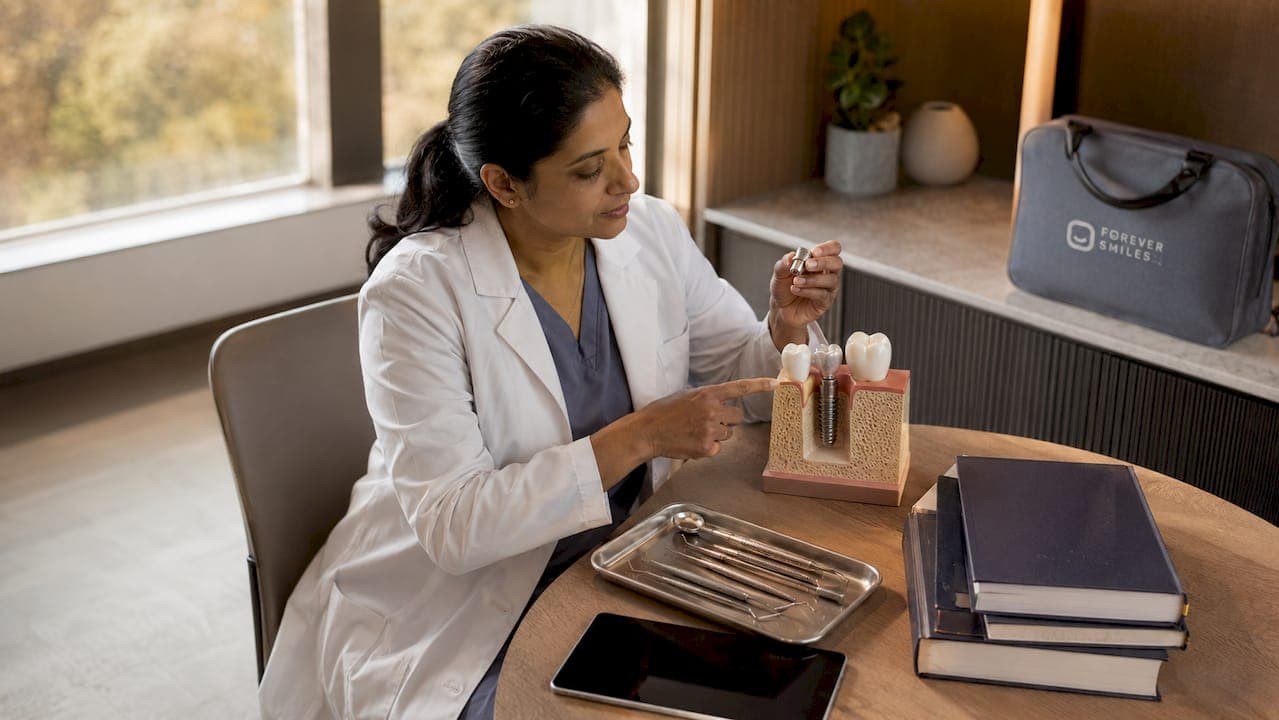
Osseointegration is defined as the direct, cellular-level bond between living jawbone and a titanium dental implant surface, with no intervening soft tissue. This bond is the biological foundation that makes dental implants function like natural tooth roots. Without it, an implant cannot support a crown, bridge, or full arch of teeth long-term. Dental implant osseointegration explained simply: your bone grows into and around the implant until the two become structurally inseparable. Clinical guidelines across implant dentistry recognize osseointegration as the single most critical factor in implant success. Understanding this process helps you set realistic expectations, make informed decisions, and protect your investment in tooth replacement.
How does the osseointegration process work biologically?
Osseointegration is a direct bone-to-implant bond that produces no fibrous tissue layer between the implant and the jaw. That distinction matters because fibrous tissue would act like a shock absorber, allowing the implant to move under pressure. Direct bone contact eliminates that movement entirely, creating a connection that can exceed the strength of a natural tooth root.
The process unfolds in four overlapping phases:
-
Protein adsorption. Within seconds of implant placement, proteins from blood plasma coat the titanium surface. Titanium's oxide layer (TiO₂) is chemically inert and biologically invisible to immune cells. Bone cells treat the implant surface as mineralized bone and begin attaching directly.
-
Inflammatory response and clot formation. The body responds to surgery with controlled inflammation. A blood clot forms around the implant and acts as a scaffold. Swelling peaks 48–72 hours after surgery as part of this normal biological response. Patients often interpret this as a sign something is wrong. It is not.
-
Woven bone formation. Within the first few weeks, osteoblasts (bone-forming cells) deposit woven bone across the implant surface. This early bone is structurally immature but provides initial biological grip.
-
Lamellar bone remodeling. Over the following months, the body replaces woven bone with dense lamellar bone through a process called remodeling. This is when the implant reaches full biological stability.
Pro Tip: Mechanical stability from the implant's press-fit into the socket is highest immediately after surgery. Biological stability from bone growth takes weeks to develop. There is a brief window around two weeks post-surgery when mechanical grip fades and bone growth has not yet caught up, creating a temporary stability dip. Avoid any unnecessary pressure on the implant during this window.
What is the typical timeline for osseointegration and healing?
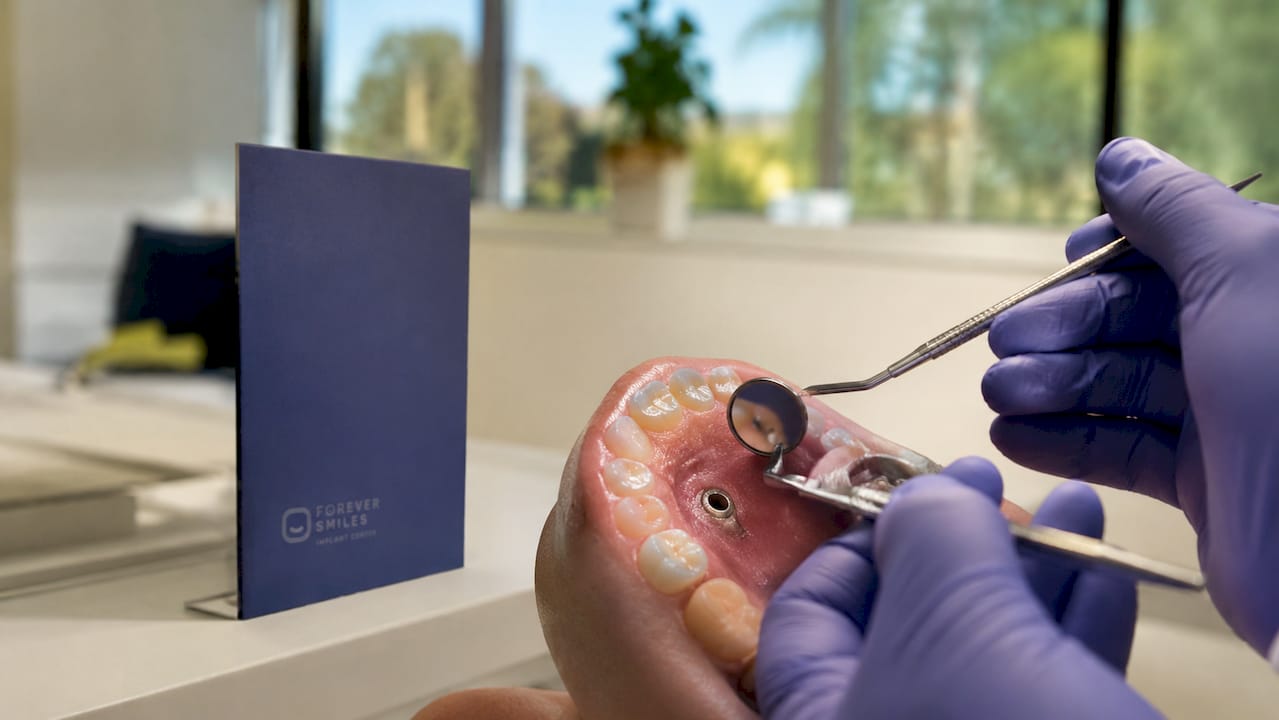
The standard osseointegration timeline runs 3–6 months, with some cases extending to 9 months depending on bone quality, implant location, and patient health. That range is not arbitrary. It reflects the time bone remodeling biology actually requires, regardless of how quickly the surface tissue heals.
One of the most common misconceptions patients hold is that healed gums mean a healed implant. Soft tissue heals within two weeks after surgery. Bone integration continues silently beneath the gum surface for months after that. Loading an implant with a permanent crown before bone integration is complete risks implant failure.
The location of the implant in your jaw also affects timing. The lower jaw integrates faster than the upper jaw because the mandible has higher bone density. Upper jaw implants, particularly in the back molar region, often require the full 6-month window or longer.
| Healing phase | Approximate timeline | What is happening |
|---|---|---|
| Soft tissue healing | 1–2 weeks | Gum tissue closes over the implant site |
| Early bone response | 2–4 weeks | Woven bone begins forming around the implant |
| Stability dip | Around 2 weeks | Mechanical grip fades; biological stability not yet established |
| Active osseointegration | 2–6 months | Lamellar bone replaces woven bone; implant stabilizes |
| Full integration | 3–9 months | Bone remodeling complete; implant ready for final restoration |
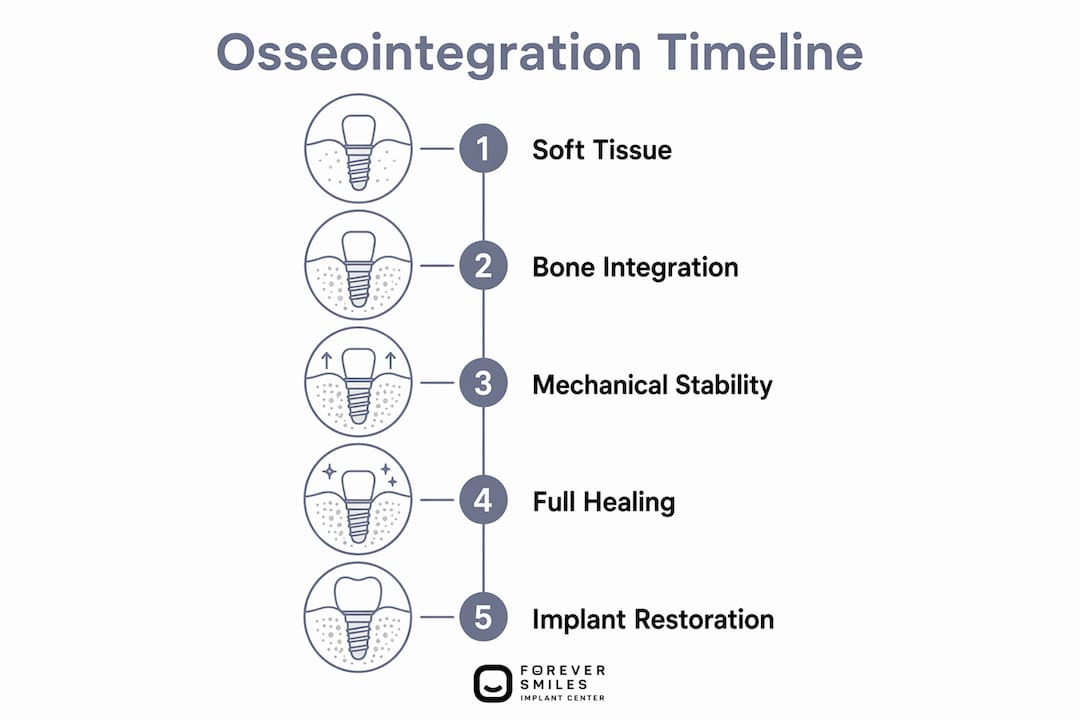
Clinicians use the Osstell ISQ scale to measure implant stability objectively during this process. The ISQ scale tracks the transition from mechanical to biological stability, giving surgeons a data-driven signal for when prosthetic loading is safe. This removes guesswork from one of the most consequential decisions in implant treatment.
What factors influence successful osseointegration?
Osseointegration is the biological key factor that determines whether an implant lasts decades or fails prematurely, beyond surgical skill alone. Several variables directly affect whether bone bonds successfully to the implant surface.
Bone quality and quantity rank first. Surgeons use the Lekholm and Zarb classification system to grade bone density from Type I (dense cortical bone) to Type IV (soft, low-density bone). Type IV bone, common in the upper jaw posterior region, requires longer healing time and sometimes additional procedures like bone grafting before implant placement.
Patient health factors that impair osseointegration include:
- Smoking, which restricts blood flow to healing bone tissue
- Uncontrolled diabetes, which slows cellular repair and increases infection risk
- Poor oral hygiene, which allows bacteria to colonize the implant site
- Excessive bite forces from bruxism (teeth grinding), which can disrupt early bone formation
Smoking, poor oral hygiene, and uncontrolled diabetes all significantly increase implant failure risk. These are modifiable factors. Patients who address them before surgery give their implants a measurably better chance of long-term success.
Implant surface technology also plays a role. Roughened titanium surfaces, created through sandblasting or acid etching, increase the surface area available for bone cell attachment. This accelerates early osseointegration compared to smooth-surface implants used in earlier decades.
Pro Tip: If you smoke, stopping at least two weeks before surgery and throughout the healing period is one of the highest-impact steps you can take. Nicotine constricts the small blood vessels that carry oxygen and nutrients to healing bone. No surgical technique fully compensates for that deficit.
Understanding why implants fail is as important as understanding how they succeed. Most failures are preventable with the right preparation and patient compliance.
How should patients care for their implant during healing?
Patient behavior during the osseointegration phase directly affects the outcome. The implant is biologically vulnerable during the first 3–6 months, even when it feels stable. The following practices protect the healing site.
-
Follow a soft diet. Avoid chewing hard foods near the implant site throughout the healing phase. Soft foods like eggs, yogurt, mashed vegetables, and fish place minimal stress on the bone-implant interface. Hard or crunchy foods can apply micro-forces that disrupt early bone formation.
-
Maintain oral hygiene carefully. Clean around the implant site with a soft-bristle brush and rinse with an antimicrobial mouthwash as directed by your surgeon. Bacteria that accumulate around the implant can trigger peri-implantitis, an infection of the surrounding bone tissue.
-
Attend every follow-up appointment. Your surgeon monitors implant stability at scheduled intervals. Missing these visits means missing early detection of complications. Clinicians who use the Osstell ISQ scale can measure stability objectively at each visit and adjust the treatment timeline accordingly.
-
Recognize the difference between normal healing and warning signs. Swelling and mild discomfort in the first 72 hours are expected. Persistent pain after the first week, visible implant movement, or discharge from the site are not normal and require immediate evaluation.
-
Protect your temporary restoration. Many patients receive a temporary tooth during the healing phase. Treat it as a placeholder, not a functional tooth. Avoid biting into hard foods with it, and report any loosening to your care team promptly.
The full implant process step by step involves more than surgery. The healing phase is where the long-term result is actually built, one layer of bone at a time.
Key Takeaways
Osseointegration is the direct bone-to-implant bond that determines whether a dental implant functions for decades or fails within years, and patient behavior during the 3–6 month healing window is as critical as the surgery itself.
| Point | Details |
|---|---|
| Osseointegration defined | Direct cellular bonding between titanium and living bone, with no soft tissue layer in between. |
| Healing timeline | Standard integration takes 3–6 months; upper jaw cases may require up to 9 months. |
| Stability dip at 2 weeks | Mechanical grip fades before biological stability develops, making this the most vulnerable window. |
| Key risk factors | Smoking, uncontrolled diabetes, and poor oral hygiene are the top modifiable failure risks. |
| Patient role in healing | Soft diet, careful hygiene, and consistent follow-up visits protect the implant during bone remodeling. |
What I have learned after 28,000 implants about osseointegration
Patients consistently underestimate this phase. They expect the hard part to be the surgery. The surgery takes 30–60 minutes for a single implant placement. The biology takes months. Those months are where the real outcome is decided.
The most common mistake I see is patients treating visible healing as complete healing. Gums close in two weeks. Bone integration is a different process entirely, happening beneath the surface on a timeline that cannot be rushed. I have seen patients with beautifully healed gum tissue and an implant that was not yet ready for a permanent crown. Loading too early is one of the most preventable causes of implant failure.
Technology has improved outcomes significantly. Roughened implant surfaces, 3D surgical planning, and tools like the Osstell ISQ scale give clinicians better data and better control than was possible even a decade ago. But technology does not replace biology. The bone still needs time to remodel. No implant surface, no matter how advanced, changes that fundamental timeline.
What I tell every patient is this: your job during healing is not passive. Oral hygiene, diet, avoiding smoking, and showing up for follow-up visits are active contributions to your outcome. The surgeon places the implant. The patient's biology and behavior determine whether it lasts.
The patients who do best are the ones who understand that osseointegration is not a waiting period. It is the most important phase of the entire treatment.
— Dr. Brian Young
Full-mouth implant care at Forever Smiles Implant Center
Osseointegration is not a background process that happens on its own. It requires the right surgical foundation, the right implant placement, and a care team that monitors every phase of healing with clinical precision.
Forever Smiles Implant Center in Jacksonville, Florida, performs full-mouth dental implants daily, with every case planned using 3D imaging and executed by Dr. Brian Young, a residency-trained surgical specialist with over 28,000 implants placed. The in-house dental lab, board-certified MD anesthesiologist, and dedicated follow-up care mean patients never navigate the osseointegration phase without expert support. From the first consultation through final zirconia teeth, the entire process happens under one roof with one accountable team. If you are researching tooth replacement and want to understand what your specific case requires, a consultation with Forever Smiles Implant Center gives you a clear, personalized answer.
FAQ
What is osseointegration in dental implants?
Osseointegration is the direct structural bond between a titanium dental implant and living jawbone, with no soft tissue in between. This bond gives the implant the stability needed to support a crown, bridge, or full arch of teeth.
How long does osseointegration take?
Osseointegration typically takes 3–6 months, and up to 9 months in cases with lower bone density or upper jaw placement. Soft tissue heals within two weeks, but bone integration continues beneath the surface for months after that.
What can cause osseointegration to fail?
Smoking, uncontrolled diabetes, poor oral hygiene, and excessive bite forces are the leading causes of failed osseointegration. Most of these are modifiable factors that patients can address before and during the healing phase.
Does the lower jaw heal faster than the upper jaw?
Yes. The mandible (lower jaw) has higher bone density than the upper jaw, which means implants placed there typically integrate faster. Upper jaw implants, especially in the back, often require the full 6-month window or longer.
How do surgeons know when an implant is ready for a crown?
Clinicians use tools like the Osstell ISQ scale to measure implant stability objectively at follow-up visits. This scale tracks the transition from mechanical to biological stability and signals when the implant is ready for prosthetic loading.