

Yes, you can eat normally again. Most patients who replace dentures with implants return to a wide range of foods within weeks to months, depending on their case complexity and how closely they follow the staged recovery protocol. The short timeline: liquids and purees initially, soft mashable foods during the first week, fork-tender solids in the following weeks, and full dietary return after osseointegration and clinician clearance. At Forever Smiles Implant Center, Dr. Brian Young builds that progression into every patient's post-op plan from day one.
- First few days: Cool liquids, blended soups, smooth purees, no straws
- Early recovery week: Soft, mashable foods (scrambled eggs, mashed potatoes, yogurt)
- Several weeks after surgery: Fork-tender solids, gentle chewing on the non-surgical side
- Post-integration: Full dietary return after your surgeon clears you
Table of Contents
- How soon can you eat normally after replacing dentures with implants?
- What to eat at each stage of your recovery
- Practical tips for eating safely while you retrain your bite
- Long-term foods and habits to protect your implants
- When to call your implant team
- How Forever Smiles Implant Center supports your return to normal eating
- Key takeaways
- What patients usually don't expect about retraining how they eat
- Ready to get personalized support from a specialist?
- Useful sources and further reading
How soon can you eat normally after replacing dentures with implants?
The answer depends on which stage of healing you're in, and each stage has a clinical reason behind it.
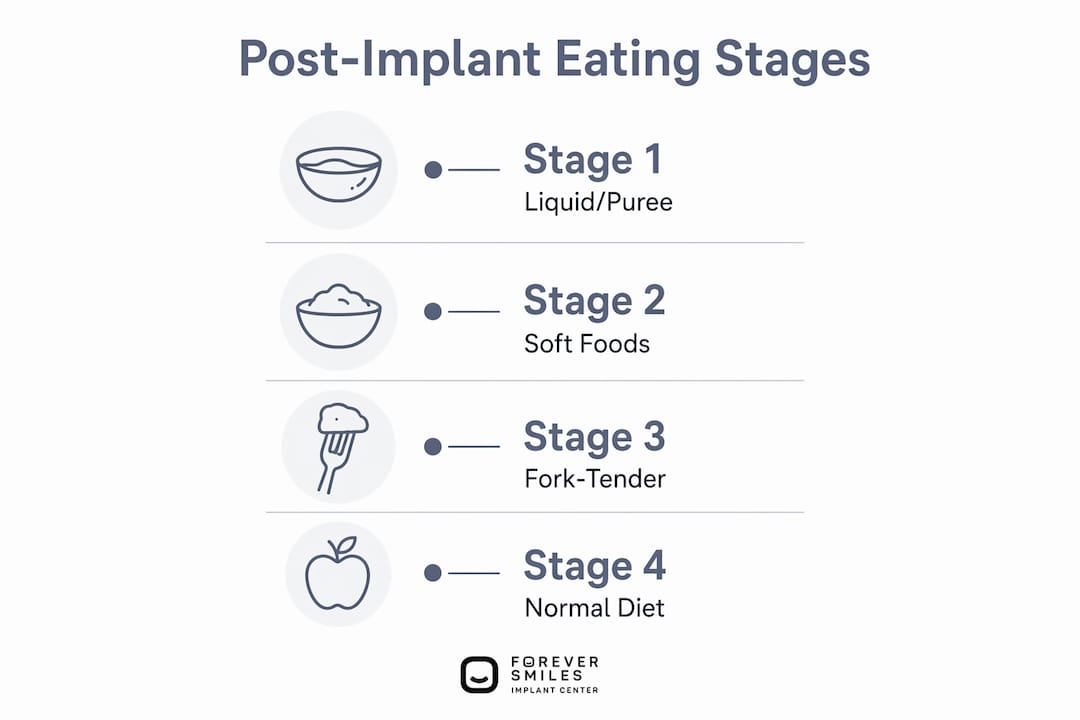
| Stage | Timeframe | Goal | Sample Foods |
|---|---|---|---|
| Liquid/puree | First few days | Protect clot, reduce swelling | Broth, smoothies, applesauce, blended soups |
| Soft/mashable | Days 3–7 | Support tissue repair, avoid micromotion | Scrambled eggs, mashed potatoes, yogurt, oatmeal |
| Fork-tender solids | Weeks 2–4 | Gradual loading as surface heals | Soft fish, ground turkey, well-cooked pasta, steamed vegetables |
| Normal diet | After integration + clearance | Full osseointegration achieved | Most foods, with a few long-term exceptions |
The clinical rationale is straightforward. In the first 72 hours, the surgical site is forming a clot and beginning early tissue repair. Any chewing force, even light pressure, creates micromotion at the implant-bone interface. That micromotion is the enemy of osseointegration. Once the surface closes and swelling subsides, the body can tolerate progressively more load, which is why the diet expands in steps rather than all at once.
Individual factors extend the timeline. Bone grafting, sinus lifts, full-arch cases, and patients with lower bone density typically stay in the soft-food phase longer, sometimes 6–12 weeks. Follow your surgeon's specific clearance, not a generic calendar.
Pro Tip: If you had a bone graft or sinus lift alongside your implants, add at least two to four weeks to each stage. Ask Dr. Young at your first follow-up exactly when your case clears for the next texture level.
What to eat at each stage of your recovery
Getting through the soft-food phase is much easier when you have actual meal ideas, not just a list of textures to avoid.
First 24–72 hours: Think zero chewing. Cool, smooth options protect the surgical site and reduce swelling. Good choices include:
- Blended vegetable or bone broth soups (lukewarm, not hot)
- Plain Greek yogurt or smooth cottage cheese
- Applesauce and mashed banana
- Protein shakes at room temperature, consumed with a spoon
- Smoothies made with soft fruit (no seeds, no straw)
Days 3–7: Soft, nutrient-dense foods that provide protein for tissue repair without requiring real bite force. Scrambled eggs, flaked fish, well-sauced ground meats, pureed soups, and mashed sweet potatoes all work well here. Aim to consume sufficient protein daily during the early recovery to support tissue repair. Three soft protein-forward meals plus a Greek yogurt or protein shake as a snack gets you there.
Weeks 2–4: Fork-tender proteins become your main event. Soft-cooked salmon, ground turkey in sauce, meatballs in marinara, risotto, and tender stews with small-cut vegetables are all fair game. Cut everything into small pieces and chew on the side away from the surgical site.

Preparation notes: Keep food lukewarm, not hot. Hot temperatures increase blood flow to the area and can worsen swelling in the first week. Avoid seeds, hard bits, or anything that could lodge in the healing tissue.
Practical tips for eating safely while you retrain your bite
The mechanics of eating change after you move from dentures to implants, and that adjustment takes conscious effort at first.
Pro Tip: Cut food into pieces no larger than a thumbnail for the first two weeks. Smaller bites mean less force per chew, which protects the implant site and builds confidence at the same time.
- Chew slowly and deliberately. Your implants can handle the load eventually, but early on, slow chewing reduces peak force on healing tissue.
- Alternate sides. Once both sides are cleared for gentle chewing, alternating distributes wear evenly and prevents one-sided compensation habits that are hard to break later.
- No straws for the first week. Suction from a straw can dislodge the healing clot and risk a painful complication. Drink from a cup; use a spoon for smoothies.
- Skip carbonated drinks early. The fizz creates mild pressure in the mouth that can irritate fresh surgical sites.
- Avoid biting with front teeth initially. Front implants are especially vulnerable to direct bite force in the early weeks. Tear or cut food instead.
- Rebuild confidence gradually. Start with soft versions of foods you already enjoy, then add slightly firmer textures each week. Patients who spent years compensating with dentures often underestimate how much psychological retraining is involved. That's normal. Structured, stepwise practice is what rebuilds trust in your bite.
Long-term foods and habits to protect your implants
A few restrictions apply even after full healing, and they're worth knowing upfront.
Foods to avoid or moderate long-term:
- Very sticky foods: caramel, taffy, gummy candy, beef jerky
- Extremely hard items: ice, hard candy, raw bones, unpopped popcorn kernels
- Using teeth as tools: opening packages, biting bottle caps, ripping tags
Daily care checklist for implant restorations:
- Brush twice daily with a soft-bristle toothbrush
- Use a water flosser or interdental brushes around implant posts
- Rinse with an alcohol-free antibacterial mouthwash
- If you have a removable implant-supported prosthesis, clean it daily per your clinic's instructions
Maintenance schedule:
- Professional hygiene visits every 3–4 months for the first year
- Annual prosthesis check-up with your implant team
- Imaging as recommended to monitor bone levels
- Night guard fitting if you grind, since grinding forces can fracture restorations over time
Avoid single-side chewing as a long-term habit. It accelerates uneven bone loss and stresses the restoration on the working side. Fixed implant bridges can approach 70–90% of natural bite force, which means you have the capacity to chew evenly. Use it.
When to call your implant team
Most discomfort in the first week is expected. These signs are not:
- Uncontrolled bleeding that doesn't slow with gentle pressure after 20 minutes
- Severe pain that worsens after the first 48–72 hours instead of improving
- Visible movement of an implant or prosthesis
- Persistent fever above 101°F or spreading facial swelling
- Pus or foul taste near the surgical site
- Sudden loosening of the restoration
If you notice any of these, stop eating on that side immediately and call your surgeon's office. For fever, spreading swelling, or difficulty breathing or swallowing, go to the emergency room. For everything else, the clinic will typically triage by phone, schedule an urgent appointment, and order imaging if needed. Don't wait to see if it resolves on its own.
How Forever Smiles Implant Center supports your return to normal eating
"The patients who do best aren't the ones with the easiest cases. They're the ones who follow the staged plan, stay in contact with our team, and trust the process. Compliance during the soft-food phase is one of the strongest predictors of a smooth outcome we see in practice." — Dr. Brian Young, Forever Smiles Implant Center
At Forever Smiles Implant Center, post-op dietary support is built into the process, not an afterthought. Dr. Brian Young is a residency-trained surgical specialist with over 20 years of experience and more than 28,000 implants placed. The practice includes an in-house dental lab and a board-certified MD anesthesiologist, which means adjustments to your prosthesis happen without referrals or delays.
- Staged post-op instructions tailored to your specific case (grafting, sinus lift, full-arch)
- Follow-up visits to monitor healing and clear each dietary stage
- Prosthesis adjustments handled in-house when fit affects comfort or chewing
- Guidance on when your case is ready for the next texture level
Patients who switch from palate-covering dentures to implant-supported restorations often notice improved taste and temperature sensitivity quickly, because the palate is no longer covered. That's one of the benefits patients rarely anticipate but consistently mention. Full-mouth implant treatment at Forever Smiles Implant Center starts from $19,000 per arch, which includes planning, surgery, same-day teeth, final zirconia restorations, and follow-up care.
Key takeaways
Following a staged diet and waiting for clinician clearance is the single most reliable path to eating normally after replacing dentures with implants.
| Point | Details |
|---|---|
| Staged diet timeline | Progress from liquids to soft foods to fork-tender solids before returning to a normal diet. |
| No straws in week one | Suction dislodges the healing clot; drink from a cup and use a spoon for smoothies. |
| Protein and hydration | Aim to consume sufficient protein daily during the early recovery to support tissue repair. |
| Long-term cautions | Avoid ice, hard candy, and sticky foods even after full healing to protect restorations. |
| Forever Smiles Implant Center | Dr. Brian Young's team provides staged post-op plans, in-house prosthesis adjustments, and clearance guidance throughout recovery. |
What patients usually don't expect about retraining how they eat
The physical timeline gets most of the attention. The psychological side gets almost none, and that's where patients often struggle.
After years of eating around a denture, compensating with one side, avoiding certain textures, or simply accepting that some foods were off the table, the brain has built deeply ingrained habits. When the implants are placed and healing is complete, the hardware is ready before the habits are. Patients sometimes feel hesitant to bite into foods they technically can eat, because the muscle memory says "that's not safe."
The fix is deliberate practice, not willpower. Start with soft versions of foods you genuinely enjoy. Add slightly firmer textures each week. The confidence comes from accumulated positive experiences, not from a single moment of deciding to trust your implants. Most patients who follow the staged plan and stay in contact with their team regain a wide range of foods and report fewer compensations than they had with dentures. The palate exposure alone, with improved taste and temperature sensitivity, makes eating genuinely enjoyable again for many people. That's worth the patience the soft-food phase requires.
Ready to get personalized support from a specialist?
Returning to normal eating after full-mouth implant surgery goes faster when you have a team that knows your case inside out. At Forever Smiles Implant Center, every patient gets a post-op plan built around their specific procedure, whether that's a standard full-arch case or a complex reconstruction involving zygomatic implants for patients with severe bone loss.
A consultation includes 3D imaging, smile design review, and a direct conversation about your dietary timeline and what to expect at each stage. Bring your questions about food progression, follow-up visits, and prosthesis care. To schedule with Dr. Brian Young and the Forever Smiles Implant Center team in Jacksonville, Florida, visit foreversmilesjax.com or call the clinic directly.
This article is general information, not a substitute for professional dental advice. Confirm your specific dietary timeline and clearance criteria with your surgeon or implant team.
Useful sources and further reading
- What to Eat After Dental Implant Surgery: The Complete Recovery Diet Guide — Staged phase-by-phase food guide with sample menus
- What to Eat After Dental Implant or Gum Surgery — Baroudi Perio — Early-phase diet rules and suction/straw guidance
- What to Eat After Dental Implant Surgery — PerioSynergy — Protein targets and hydration recommendations
- Eating with implant dentures: what to expect — Rank My Dentist — Long-term food cautions and prosthesis mechanical limits
- Implant Recovery Best Practices: Your 2026 Guide — Forever Smiles Implant Center — Clinical recovery advice and follow-up protocols
- Dental Implant Recovery: What Post-Surgery Healing Means — Forever Smiles Implant Center — Osseointegration milestones and clearance criteria
- Chewing Efficiency and Dental Implants — Forever Smiles Implant Center — Bite force expectations and chewing function after implants
- Dental implant clinical care — 0900dentist.com — International clinical perspective on implant restoration and post-op care