
Zygomatic implants carry real but generally manageable risks, including sinusitis, occasional failure of the implant to fuse with bone, infraorbital nerve irritation, and, rarely, orbital penetration. Systematic reviews report high long-term survival when the surgery is done by an experienced specialist. Most complications, when caught early, respond well to treatment, but this remains a complex procedure best reserved for severe bone loss cases where grafting is not an option.
TL;DR:
- Orbital penetration during surgery is rare but can cause permanent eye movement issues if not carefully avoided with proper planning and visualization.
- Sinusitis occurs in about 4.7% of cases and usually responds to antibiotics, but persistent cases may require surgery or implant removal.
- Infraorbital nerve numbness is common initially but generally improves within weeks to months, with permanent loss being uncommon.
- Long-term implant survival exceeds 95 percent when performed by experienced surgeons in appropriate settings, with early failures mostly within the first year.
- Surgeons should use 3D imaging, navigation tools, and tailored approaches based on individual anatomy to minimize intraoperative and postoperative risks.
Table of Contents
- A quick map of zygomatic implant risks
- Surgical and intraoperative risks: orbital penetration, hematoma, and emphysema
- Biological and sinus-related complications: sinusitis, infection, and nerve symptoms
- Prosthetic and mechanical risks: what can go wrong with the restoration
- What the research says about survival rates and complication frequency
- How surgeons reduce risk before, during, and after surgery
- What to ask your surgeon before consenting to zygomatic implants
- Recovery timeline and warning signs to watch for
- The surgeon behind the standards: experience and case management
- Why I only recommend zygomatic implants when there is no better option
- How Forever Smiles approaches zygomatic implant risk management
- Primary sources and guidance behind this article
- Sources
- FAQ
A quick map of zygomatic implant risks
Before getting into the details, it helps to see the full risk picture at once. Complications generally fall into five categories, each with its own likelihood and consequence.
- Surgical and intraoperative risks: rare but serious, including orbital penetration, hematoma, and surgical emphysema; these can cause lasting harm if not caught immediately.
- Biological and sinus-related risks: the most common category, led by sinusitis, and generally treatable with medication or minor revision surgery.
- Neurological risks: infraorbital nerve irritation causing numbness or tingling in the cheek; usually temporary but occasionally persistent.
- Prosthetic and mechanical risks: screw loosening, veneer chipping, or framework fracture; inconvenient but rarely dangerous and usually repairable.
- Long-term maintenance risks: peri-implant tissue problems tied to poor hygiene or prosthetic design, which can develop slowly over years.
The first two categories carry the highest stakes because they can affect vision, sinus function, or the survival of the implant itself. The last three are more about ongoing management than acute danger.
Surgical and intraoperative risks: orbital penetration, hematoma, and emphysema
Zygomatic implants are anchored in the cheekbone (the zygoma), a location that sits close to the orbit, the sinus cavity, and several blood vessels. That proximity is what makes the procedure technically demanding, and it explains most of the rare but serious complications that can happen during surgery.
Orbital penetration is the complication surgeons worry about most. It happens when the implant drill or the implant itself strays into the orbital floor instead of staying within the zygomatic bone. A systematic review of ophthalmologic complications found that while these events are uncommon, case reports document permanent ocular motility deficits when penetration occurs, sometimes requiring implant removal and additional surgery to correct. The review's authors point to careful trajectory planning and direct visualization during placement as the main defenses against this outcome.
Periorbital hematoma (bruising and swelling around the eye) and surgical emphysema (air trapped under the skin, causing puffiness that can crackle under light pressure) are less dangerous but more frequently reported. Both typically resolve within one to two weeks with observation, cold compresses, and reassurance rather than intervention. They tend to occur when the surgical approach requires extensive tissue elevation near the sinus or orbit.
The technique used matters here. An intra-sinus approach places the implant through the maxillary sinus cavity, which offers a well-established path but increases contact with sinus membrane. An extra-sinus (or "zygoma anatomy guided") approach keeps the implant body outside the sinus, which many surgeons believe reduces sinus membrane trauma and the risk of associated infection, though comparative data between techniques remains limited.
- Limited intraoperative visibility, atypical zygoma anatomy, and drill trajectory errors are the main technical causes of orbital and sinus complications.
- A hospital-grade surgical setting with anesthesia monitoring allows immediate recognition and management if bleeding or an unexpected anatomical finding occurs.
- Surgeon experience with zygomatic-specific anatomy, not just general implant placement, is the single largest modifiable factor in reducing intraoperative risk.
Pro Tip: Ask whether your surgeon uses 3D-guided planning or dynamic navigation during placement. It gives them a real-time map of your zygomatic bone and sinus anatomy, reducing the chance of drifting off the planned path.
Biological and sinus-related complications: sinusitis, infection, and nerve symptoms
The biological complications that follow zygomatic implant surgery are more common than the intraoperative ones, though generally less severe. Sinusitis leads this category by a wide margin.
Because zygomatic implants often pass near or through the maxillary sinus, some degree of sinus membrane irritation is expected. Most cases resolve with antibiotics, decongestants, and nasal saline rinses. When symptoms persist or an implant is clearly driving chronic sinus inflammation, surgical revision, including implant removal in severe cases, becomes necessary. The decision usually hinges on whether the sinusitis responds to medical management within a reasonable window, typically a few weeks.
Sinusitis remains the most frequently reported biological complication after zygomatic implant placement, with a pooled incidence around 4.7% in one meta-analysis, though some pooled estimates run higher with longer follow-up. That range reflects real differences in surgical technique, patient sinus anatomy, and how long studies followed patients after surgery.
Infraorbital nerve symptoms are the second most common concern. The infraorbital nerve runs close to the surgical field, and pressure or minor trauma during placement can cause numbness, tingling, or altered sensation in the cheek and upper lip. Case series data show this paresthesia is common in the days after surgery, and most cases resolve within weeks to a few months as swelling subsides and the nerve recovers. A smaller number of cases persist longer, though permanent sensory loss is less frequently documented.
Oroantral communication, an unintended opening between the mouth and sinus cavity, can develop if soft tissue does not heal properly around the implant or abutment. Left untreated, it can progress into a fistula, a persistent tract that allows fluid or air to pass between the mouth and sinus. Signs include fluid coming through the nose while drinking or a whistling sensation when speaking. Small communications often close on their own; larger or persistent ones require surgical closure with a tissue graft.
- Sinusitis: usually managed medically first, with surgical revision reserved for persistent or severe cases.
- Infraorbital paresthesia: typically improves over weeks to months as post-surgical swelling resolves.
- Oroantral fistula: caused by inadequate soft-tissue closure or chronic infection; repaired surgically if it does not close spontaneously.
Daily oral hygiene and regular professional maintenance visits reduce the odds of biological complications developing in the first place, since bacterial buildup around the implant abutment is a common trigger for sinus and soft-tissue problems.
Prosthetic and mechanical risks: what can go wrong with the restoration
The implants themselves are only half the equation. The fixed prosthesis attached on top, usually a zirconia bridge, carries its own set of mechanical risks that are separate from the biological ones discussed above.
Screw loosening and, less often, screw or abutment fracture are the most frequently reported mechanical issues. Porcelain or composite veneering material can chip under heavy bite forces, particularly in patients who grind their teeth. Pooled data from combined studies put overall prosthetic complication rates around 4.9%, a relatively low figure that reflects how far restorative materials and designs have improved.
These failures matter beyond the inconvenience of a repair visit. A prosthesis with poor emergence profile, meaning the shape where it meets the gum tissue is too bulky or hard to clean, traps plaque and food debris. Over time, that buildup can inflame the tissue around the implant and contribute to the same sinus and soft-tissue complications discussed earlier. A well-designed prosthesis that a patient can actually clean with a water flosser and interdental brushes is one of the more overlooked long-term risk factors.
- Screw loosening: usually caught at routine checkups and tightened chairside.
- Veneer chipping or fracture: repaired in the lab, often without removing the implant.
- Framework fracture: rare, but may require a full prosthesis remake.
Most mechanical problems are annoyances rather than emergencies, but ignoring them, especially a loose screw that allows movement and bacterial infiltration, can turn a simple fix into a biological complication.
What the research says about survival rates and complication frequency
The evidence base for zygomatic implants has grown substantially over the past decade, and the numbers are generally reassuring, with caveats about how the data was collected.
Long-term survival rates for zygomatic implants are commonly reported in the 95–98% range across multiple reviews. Early failures cluster within the first year after placement. Failure that happens early, before the bone has had a chance to integrate around the implant, is mechanically and biologically different from late failure, which tends to follow chronic infection or progressive bone loss around an implant that initially succeeded. One meta-analysis reported pooled zygomatic implant failure around 0.69% in selected datasets, a figure lower than the roughly 2.89% failure reported for conventional implants in the same analysis, though the review's authors caution that patient selection differences limit a direct comparison.
Complication incidence varies more widely between studies than survival rates do, and that variation is worth understanding rather than dismissing. Sinusitis estimates alone range from roughly 4.7% in some pooled analyses to considerably higher in others with longer follow-up periods. Three factors drive that spread: differences in surgical technique (intra-sinus versus extra-sinus approaches), inconsistent reporting standards across studies, and follow-up periods that range from a single year to over a decade. A study that follows patients for ten years will naturally catch more late-developing sinus issues than one that stops at twelve months.

This heterogeneity is exactly why the ITI consensus statement on zygomatic implants recommends the procedure only for complex cases where conventional bone grafting is not feasible, and only when performed by experienced surgeons in an appropriate surgical setting. The consensus reflects an agreement among global experts that outcomes depend heavily on operator skill and case selection, not just the implant hardware itself.
How surgeons reduce risk before, during, and after surgery
Complication rates are not fixed. They shift substantially based on how a case is planned and executed, which is why the preoperative workup matters as much as the surgery itself.
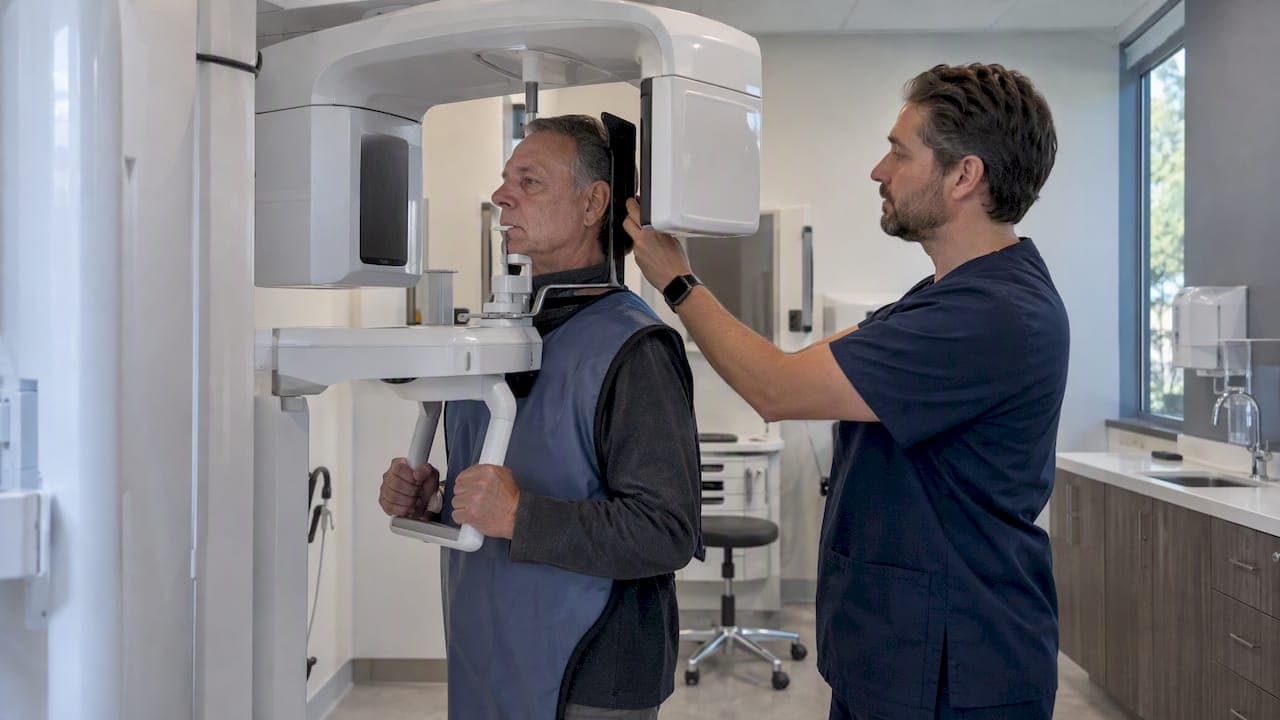
Cone-beam CT (CBCT) imaging lets a surgeon map the zygomatic bone, sinus cavity, and orbital floor in three dimensions before ever picking up a drill. This planning stage is also where candidacy gets assessed using objective bone-loss classifications, commonly the Cawood-Howell system, alongside a direct look at sinus anatomy to flag any structural irregularities that might raise risk.
Technique selection follows from that imaging. An extra-sinus approach, sometimes called a ZAGA-guided technique, keeps the implant body from crossing through the sinus cavity in patients whose anatomy allows it, which may lower sinus membrane trauma. Some surgeons use dynamic navigation systems that display the drill's real-time position relative to the planned path on a screen during surgery, functioning as a second set of eyes against drift toward the orbit.
Perioperative protocols round out the picture. Antibiotic prophylaxis before surgery, strict sterile technique, and continuous anesthetic monitoring in a properly equipped setting all reduce the chance of infection and allow immediate response if bleeding or an anatomical surprise occurs. After surgery, a structured follow-up plan, including sinus symptom checks in the early months and professional hygiene visits going forward, catches problems while they are still minor.
- Preoperative CBCT and case classification identify patients whose anatomy raises technical difficulty before surgery begins.
- Extra-sinus techniques and navigation tools are chosen based on individual anatomy to reduce specific, anticipated risks.
- Antibiotic protocols, sterile technique, and anesthetic monitoring reduce infection risk and allow rapid response to complications.
- Structured postoperative surveillance catches sinus and peri-implant problems early, when they are easiest to treat.
Pro Tip: If immediate loading (getting teeth the same day as surgery) is part of your plan, ask how your surgeon adjusts that protocol for zygomatic cases specifically, since the biomechanics differ from standard implants.
What to ask your surgeon before consenting to zygomatic implants
The questions you ask before surgery reveal more about your actual risk than any statistic in a research paper. Here is a starting list.
- How many zygomatic implant cases have you personally performed, and how does that compare to your general implant volume?
- Where will the surgery take place, and will an MD anesthesiologist or equivalent be present and monitoring throughout?
- Which surgical approach do you plan to use for my anatomy, and what did the CBCT scan show about my sinus and bone structure?
- What is your specific plan if you encounter unexpected bleeding, sinus involvement, or proximity to the orbit during surgery?
- What does my follow-up schedule look like in the first year, and what is included in the quoted price?
Getting clear, specific answers to these five questions, rather than general reassurance, is the most practical way to gauge whether a surgeon is prepared for the complexity involved.
Recovery timeline and warning signs to watch for
Recovery from zygomatic implant surgery follows a fairly predictable arc, though everyone heals at a slightly different pace. Most swelling and bruising peak in the first three days and subside substantially within two weeks. Infraorbital numbness, when present, typically improves over the following weeks to months as inflammation around the nerve resolves.
Certain symptoms warrant a call to your surgical team rather than waiting for a scheduled visit.
- Persistent or worsening sinus pain, congestion, or nasal discharge beyond the first couple of weeks.
- Numbness that is getting worse instead of better, or spreading beyond the original area.
- Swelling that increases after the first week instead of gradually decreasing.
- Pus, foul taste, or an unexpected opening between the mouth and nose.
- A prosthesis that suddenly feels loose or shifts under normal biting pressure.
Beyond the initial healing period, ongoing monitoring matters. Most clinics recommend closer review during the first year, then annual checkups with imaging as needed. Daily hygiene, using tools designed to clean around the wider emergence profile of a full-arch prosthesis, along with consistent professional maintenance, remains one of the most effective ways to keep both sinus and peri-implant tissue healthy for years to come.
The surgeon behind the standards: experience and case management
The lead surgeon is a residency-trained surgical specialist with long experience who performs full-arch implant surgery regularly and trains other dentists and surgeons nationally on full-arch technique, in addition to authoring clinical content and sitting on the editorial board of Implant Practice US.
Zygomatic cases are handled inside a hospital-style surgical center with an MD anesthesiologist monitoring procedures, alongside an in-house dental lab that allows same-day adjustments. That team-based model means preoperative planning, surgery, and follow-up all happen under one accountable team rather than being split across multiple offices, which reduces the coordination gaps where complications can otherwise slip through unnoticed.
Why I only recommend zygomatic implants when there is no better option
Zygomatic implants exist for one reason: patients whose bone loss is too severe for grafting to work. I only recommend them when conventional options genuinely will not do the job. Orbital penetration and severe sinus complications are rare, but they are real, and experience is what keeps them rare. If a surgeon cannot answer your questions about volume and protocol clearly, get a second opinion before you sign anything.
— Dr. Brian Young
How Forever Smiles approaches zygomatic implant risk management
Choosing a surgeon for a procedure this technically demanding comes down to experience, setting, and accountability, and that is where our model at Forever Smiles Implant Center is built differently from a general dental office offering implants part-time.
- Every zygomatic case is planned and performed by a residency-trained specialist who places full-arch implants regularly rather than occasionally.
- Surgery takes place in a hospital-grade surgical center with an MD anesthesiologist monitoring every patient throughout the procedure.
- An in-house dental lab means planning, surgery, and final zirconia restorations happen under one team without handoffs between separate offices.
A consultation includes a full review of your imaging, an honest candidacy assessment against your specific bone loss and sinus anatomy, and a direct conversation about the risks that apply to your case rather than a generic overview. We also fix implants that failed elsewhere, since a meaningful share of the complex cases we see are patients whose first attempt at bone grafting or implant placement did not hold up.
If you have been told grafting will not work for you, or you want a second opinion on a zygomatic implant recommendation, you can learn more about our zygomatic implant program or schedule a consultation through our full arch implants page to review your case directly with our team.
Primary sources and guidance behind this article
- Systematic review and meta-analysis of zygomatic implant complications: supports incidence figures for sinusitis, prosthetic complications, and overall failure rates.
- Systematic review of ophthalmologic complications: documents orbital penetration cases and their outcomes.
- ITI consensus statement on indications for zygomatic implants: global expert recommendations on patient selection and surgical setting.
- Clinical case reports on zygomatic implant complications: documents infraorbital paresthesia patterns and recovery timelines.
This article is general information, not a substitute for advice from a qualified doctor. Consult a qualified healthcare professional about your own circumstances before acting on anything here.
Sources
- Surgical complications in zygomatic implants: systematic review & meta-analysis (PMC8301194)
- Ophthalmologic complications of zygomatic implants (systematic review / PMC11416179)
- ITI consensus: indications for zygomatic implants (ITI Academy consensus database)
FAQ
How safe are zygomatic implants?
Zygomatic implants are considered a safe option for patients with severe bone loss when performed by an experienced surgeon in an appropriate surgical setting. Long-term survival rates commonly fall in the 95-98% range across multiple reviews, though the procedure carries more surgical complexity than conventional implants. Serious complications like orbital penetration are rare, and most other complications respond well to treatment.
What is the most common complication associated with zygomatic implants?
Sinusitis is the most frequently reported complication, with pooled incidence around 4.7% in one meta-analysis, though some studies with longer follow-up report higher rates. Most cases respond to antibiotics and nasal decongestants, with surgical revision reserved for persistent or severe symptoms.
What is the success rate of zygomatic implants?
Zygomatic implants commonly show long-term survival rates in the 95-98% range across systematic reviews, with one meta-analysis reporting pooled failure around 0.69% in selected datasets. Early failures cluster in the first year after surgery, while later failures tend to follow chronic infection or progressive bone changes.
What is the safest dental implant?
There is no single "safest" implant type, since the right choice depends on how much healthy jawbone a patient has to work with. Conventional implants are generally used first when enough bone is present, while zygomatic implants serve as a reconstructive option for severe bone loss where grafting is not feasible, each carrying its own risk profile rather than one being universally safer than the other.
How long does numbness last after zygomatic implant surgery?
Infraorbital numbness or tingling after zygomatic implant surgery typically improves over several weeks to a few months as post-surgical swelling around the nerve resolves. A smaller number of cases take longer to resolve, and persistent numbness beyond several months should be evaluated by your surgical team.