
No. Age alone does not disqualify you from getting dental implants. The ITI consensus statement reviewed seven prospective studies and concluded that advanced age, including patients 75 and older, is not a contraindication for implant therapy on its own. A long-term cohort study tracking 1,256 implants found a 92.9% survival rate in older patients, and clinics like Forever Smiles Implant Center in Jacksonville routinely treat patients in their 70s and 80s who were told elsewhere they had run out of options.
What actually determines candidacy has nothing to do with your birth certificate. Dentists and oral surgeons look at a specific set of health and anatomical markers instead:
-
Whether chronic conditions like diabetes or hypertension are medically controlled
-
The health of your gums and whether periodontal disease is active
-
How much jawbone volume and density remain at the implant site
-
Your ability (or a caregiver’s ability) to keep the implant area clean
-
Whether you’re taking medications, such as bisphosphonates, that affect bone healing
If those boxes check out, your age is close to irrelevant to the surgical decision.
Key Takeaways
Age alone never disqualifies a patient from dental implants; controlled health, adequate bone or a graftable site, and the ability to maintain hygiene are what actually determine candidacy.
| Point | Details |
|---|---|
| Age is not the barrier | The ITI consensus confirms advanced age alone is not a contraindication for implant therapy. |
| Health control matters most | Controlled diabetes, blood pressure, and medication management usually clear the way for treatment. |
| Bone loss is solvable | Grafting, sinus lifts, and zygomatic implants address low bone volume in most cases. |
| Survival rates hold up | Cohort data shows a 92.9% implant survival rate in older adult patients. |
| Specialized centers handle complex cases | Forever Smiles Implant Center in Jacksonville treats bone loss, prior failures, and multi-condition cases daily. |
Three questions worth bringing to your consult: What does my CBCT scan show about bone volume at each site? How do my current medications or conditions change the surgical plan? What’s the realistic timeline given my healing capacity?
Table of Contents
Is There an Age Limit for Dental Implants?
There’s no upper cutoff written into any clinical guideline. WebMD states plainly that no age ceiling exists for implant placement, and the deciding factors are the same ones a 45 year old would face: bone quality, gum condition, and overall health stability. What changes with age isn’t eligibility. It’s the thoroughness of the workup beforehand.
Dentists check a handful of things that matter far more than the number of candles on your last birthday cake.
Medical stability comes first. A controlled chronic condition rarely stops treatment. An uncontrolled one does, at least until it’s brought under control. A patient with A1C levels stable in a normal range is a very different case from one with unmanaged blood sugar swings, even if both are diabetic and both are 70.
Gum health gets scrutinized closely. Active periodontal disease has to be treated before implants go in, because placing an implant into infected tissue sets up failure from day one. This applies at any age, but it becomes more common to check for in older patients simply because periodontal disease accumulates over decades.
Bone assessment replaces guesswork. Instead of assuming an older jaw has less bone, clinicians order a CBCT (cone beam computed tomography) scan to measure the exact volume and density at each planned implant site. Bone loss is site-specific. Someone can have excellent bone in the lower jaw and insufficient bone in the upper jaw, regardless of age.
Function and support matter too. Can the patient physically brush and floss around the implant? If not, does a spouse, adult child, or caregiver help with daily hygiene? Cognitive status factors in here as well, since forgetting aftercare steps raises the risk of complications later.
Pro Tip: Ask your surgeon to describe your “biological age” for treatment purposes, not your chronological age. A healthy, active 78 year old with good bone density and stable health often has a more favorable profile than a 55 year old with unmanaged diabetes and heavy smoking history. Surgeons weigh healing capacity and tissue quality, not the calendar.
Related reading on the specifics clinics check before clearing complex cases: this candidacy checklist for complex implant cases walks through systemic conditions in more detail.
How Do Common Health Conditions Affect Implant Eligibility?
Most of the conditions seniors worry about turn out to be manageable rather than disqualifying. Here’s how the major ones actually play out in a treatment plan.
Diabetes. Well-controlled diabetes usually is not a disqualifier. Elevated blood sugar impairs healing, so surgeons want confirmation that glucose levels are stable before surgery. Uncontrolled diabetes raises infection risk and slows osseointegration, the process where bone fuses to the implant, so it typically means delaying surgery until levels improve rather than ruling it out permanently.
Osteoporosis. Osteoporosis alone doesn’t automatically disqualify a patient. Osteoporotic bone still heals and can support implants. The real caution flag is bisphosphonate medication, a class of drugs used to slow bone loss, because it carries a small risk of osteonecrosis of the jaw, a rare but serious bone complication. Surgeons coordinate with the prescribing physician before proceeding, particularly for patients on long-term or IV bisphosphonate therapy.
Blood thinners. Anticoagulant medications increase bleeding risk during surgery, but they rarely mean canceling treatment. Surgeons typically coordinate timing with the prescribing doctor rather than stopping the medication outright, since stopping a blood thinner carries its own risks.
Head and neck radiation. This is one of the more serious concerns. Radiation to the jaw can compromise blood supply to the bone and significantly raise the risk of complications. Recent radiation therapy in the implant area often means implants are delayed or approached with extreme caution, and some cases require additional specialist clearance first.
Smoking. Smoking slows healing and is consistently linked to higher implant failure rates. It doesn’t disqualify a patient outright, but most surgeons will push hard for cessation, or at least a reduction, before and after surgery.
Very few medical conditions are absolute disqualifiers for dental implants. Most simply require coordination between your surgeon and your physician, along with a realistic timeline that accounts for extra healing time or medication adjustments.
The pattern across nearly every condition is the same: controlled beats uncontrolled, and communication between your medical team and your surgical team beats guessing.
What Happens if You’ve Lost Jawbone Over Time?
Bone loss narrows your options, but it rarely closes the door entirely. What matters is the amount of bone at the specific implant site, not some general assumption that older jaws are automatically too thin or too brittle to work with.
Bone remodels itself throughout life, and it also resorbs faster in areas where teeth have been missing for years. That’s a mechanical, site-specific process, not an aging process tied to your birth year. A patient who lost a molar at 40 and never replaced it may have significantly less bone in that spot than a patient who lost a tooth last year at 75.
When bone volume falls short, several corrective techniques exist:
-
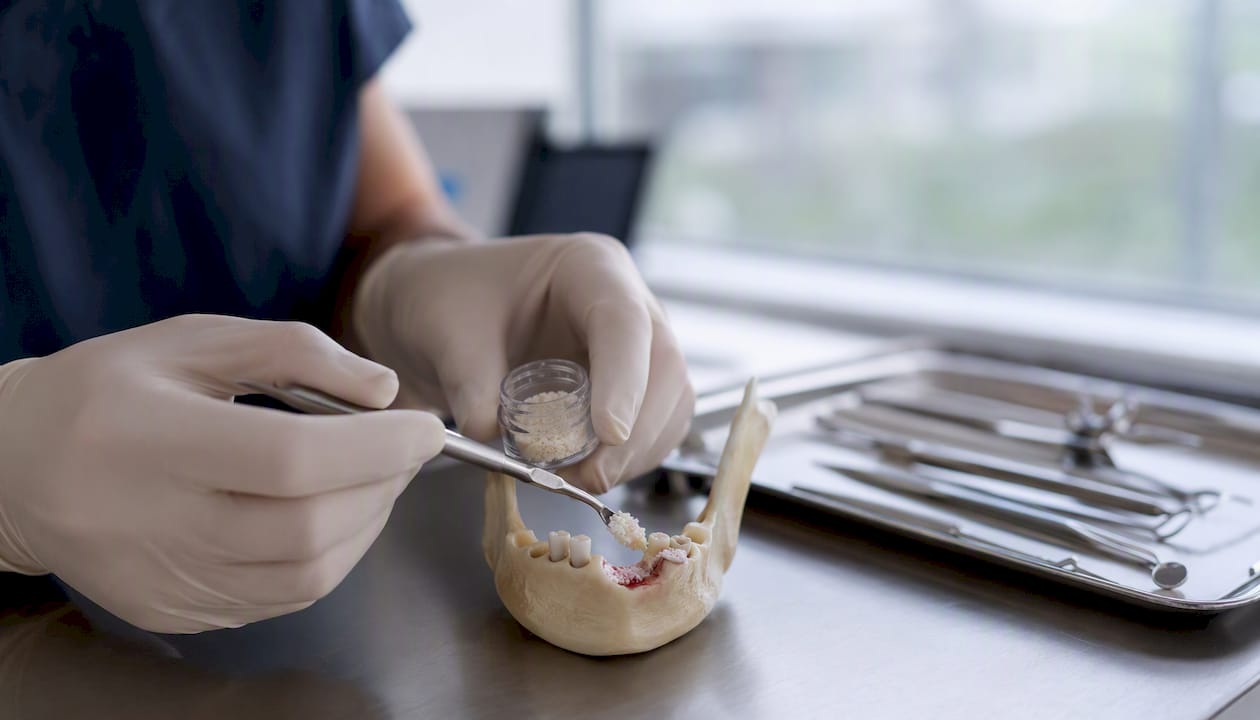
Bone grafting adds material to the deficient site, often using the patient’s own bone, donor bone, or synthetic substitutes, and typically requires 4 to 6 months of healing before implants can be placed.
-
Guided bone regeneration uses a barrier membrane to encourage new bone growth in a targeted area, often paired with grafting.
-
Sinus lifts raise the sinus floor to create room for implants in the upper back jaw, where bone is often thinnest, and generally add several months to the timeline.
-
Zygomatic implants anchor into the cheekbone instead of the jaw, bypassing the need for bone grafting entirely in cases of severe upper jaw bone loss. This approach is exactly the kind of complex case Forever Smiles Implant Center specializes in for patients turned away elsewhere.
-
Short implants and All-on-4 style angled placement work around limited bone without grafting, using the denser bone that remains near the front of the jaw.
Pro Tip: If a previous dentist told you that you don’t have enough bone for implants, get a second opinion from a surgeon who routinely handles grafting and zygomatic cases. “Not enough bone” is often a solvable problem, not a permanent verdict.
Grafting adds time and a second healing phase, but it rarely changes whether treatment is possible. It changes how long the full process takes. For more detail on options when bone loss is significant, this breakdown of options for patients with bone resorption covers the alternatives in depth.
What Should You Expect at an Implant Consultation?
A first consultation for an older adult usually runs longer and covers more ground than one for a younger patient, simply because there’s more medical history to review.
Here’s the general sequence:
-
Medical history review. The surgeon goes through chronic conditions, past surgeries, and current medications in detail.
-
Intraoral exam. A visual and physical check of gum tissue, remaining teeth, and denture fit if applicable.
-
Periodontal charting. Measuring gum pocket depth to rule out active disease.
-
CBCT or 3D imaging. A scan that maps bone volume and density at each potential implant site.
-
Treatment planning meeting. The surgeon presents options, timeline, and whether grafting or alternative anchorage is needed.
Bring a current medication list, recent lab results if you have them (especially A1C for diabetics or INR for those on blood thinners), and your denture history if you wear one. Questions worth asking include how your specific health conditions affect the plan, what the realistic timeline looks like, and what happens if healing runs slower than expected.
The overall timeline typically follows this pattern:
-
Weeks 1 to 2: Consultation, imaging, and treatment planning
-
Months 1 to 6 (if needed): Bone grafting or sinus lift and healing
-
Day of surgery: Implant placement, sometimes with same-day provisional teeth
-
Months 3 to 6: Osseointegration, the healing phase where bone fuses to the implant
-
Final weeks: Custom restoration placement and fit adjustments
Older adults sometimes experience slightly slower osseointegration, so surgeons often build in extra healing time rather than rushing to the restoration phase. For a walkthrough of what a full evaluation involves at Forever Smiles Implant Center, see am I a candidate for dental implants.
Do Dental Implants Actually Work Well for Older Adults?
Yes, and the data backs it up clearly. A review of long-term cohort data shows implant survival in seniors often matches or exceeds survival in younger patients once comorbidities are controlled and hygiene stays consistent.
The main causes of long-term failure in older patients aren’t age-related biology. They’re peri-implantitis (gum inflammation around the implant caused by plaque buildup), inconsistent oral hygiene, poorly managed systemic disease, and smoking. Every one of these is manageable with the right maintenance plan and follow-up schedule.
A 92.9% survival rate across 1,256 implants places implant success for older adults well within the range clinicians consider a strong long-term outcome, according to the same cohort study.
Interestingly, seniors are often more consistent than younger patients when it comes to sticking with aftercare routines and showing up for recall visits, which is part of why outcomes hold up so well. More on why that consistency pays off long term: why implants are a long-term investment.
When Are Implants Not the Right Choice Right Now?
Implants aren’t advisable for everyone at every moment, and honest surgeons will tell you when to wait or pivot. The scenarios where treatment usually gets paused or reconsidered include:
-
Uncontrolled systemic disease, such as diabetes with consistently high blood sugar or unmanaged heart conditions
-
Recent radiation therapy to the head or neck, which compromises bone healing and blood supply
-
Active, untreated periodontal disease anywhere in the mouth
-
An inability, without caregiver support, to maintain daily oral hygiene around the implant site
-
A terminal illness or very limited life expectancy where the surgical and healing burden outweighs the benefit
Caregivers matter here in a very practical sense. If a patient has cognitive decline or limited mobility, someone needs to be able to help with brushing, cleaning around the implant, and getting to follow-up visits. That support network is often the deciding factor, more than any lab value or scan result.
When any of these flags come up, the right move is a joint conversation between your surgeon and your primary care doctor before scheduling surgery, not a unilateral no from either side. For more on failure patterns and how to avoid them, see why dental implants fail and how to prevent it.
What Are the Alternatives If Implants Aren’t Right Yet?
If implants have to wait, or aren’t advisable given a patient’s current health, a few realistic alternatives exist, each with real tradeoffs in maintenance and function.
Removable dentures are the least invasive option and require no surgery, but they need daily removal for cleaning, tend to shift while eating, and accelerate bone loss underneath over time. Implant-retained overdentures anchor a removable denture onto two or four implants instead of relying on suction or adhesive, which dramatically improves stability while requiring less bone and lower cost than a full-arch fixed solution. Fixed bridges replace one or a few missing teeth by anchoring to adjacent natural teeth, but they put extra load on those teeth and don’t stop bone loss in the gap itself.
| Option | Invasiveness | Daily Maintenance | Bone Requirement |
|---|---|---|---|
| Removable dentures | None (no surgery) | Daily removal and cleaning | Minimal |
| Implant-retained overdentures | Moderate (2 to 4 implants) | Snap in/out cleaning routine | Lower than full-arch implants |
| Fixed bridge | Low (uses adjacent teeth) | Standard brushing and flossing | None at gap site |
| Full-arch fixed implants | Higher (multiple implants) | Standard brushing and flossing | Requires adequate bone or grafting |
Overdentures make a particularly good middle step for patients with limited bone or medical constraints that rule out full-arch implants for now. If your current dentures are already causing problems, this list of signs your dentures need replacing is worth a look, and a direct comparison of daily function lives in implants versus dentures.
What Do Implants Cost, and Does Insurance Help?
Original Medicare, Parts A and B, generally does not cover dental implants, according to Medical News Today’s summary of Medicare coverage. Private dental insurance coverage varies widely, and many plans cap annual benefits well below what a single implant costs, let alone full-arch reconstruction. A single implant can run up to roughly $6,000, and that figure climbs with complexity, grafting, or full-arch cases.
That means most seniors plan for implants as an out-of-pocket investment, with financing or payment plans as the practical bridge.
Caregiving factors into the budget conversation too. If a patient needs help getting to appointments or maintaining hygiene at home, that support should be part of planning before surgery, not an afterthought discovered during recovery. A short caregiver checklist covers the basics:
-
Confirm someone can assist with brushing and cleaning around new implants during the healing phase
-
Schedule and track recall visits, typically every 6 months for maintenance cleanings
-
Watch for signs of gum inflammation or looseness and report them promptly
-
Keep a running medication list updated for the surgical and dental team
Out-of-pocket costs are the norm, not the exception, for implant treatment in seniors. Discussing financing options and the full scope of care at your first consultation avoids surprises later.
What Does the Clinical Evidence and Specialist Guidance Actually Say?
The ITI consensus statement, built from seven prospective studies, is the clearest professional word on this question: advanced age alone, even at 75 and older, is not a contraindication for implant therapy. The consensus calls for individualized risk assessment instead, weighing functional dependency and hygiene capability over chronological age.
The FDA’s guidance on dental implants reinforces this from a regulatory angle, treating implants as medical devices that require informed consent and a clear discussion of risks and benefits between patient and surgeon, regardless of the patient’s age.
Advanced age alone should never be the reason a patient is turned away from implant therapy. The decision belongs to an individualized risk assessment, not a birthday.
A 92.9% survival rate across more than 1,200 implants in an older cohort gives that consensus real weight, according to the same cohort data cited above.
At the clinic level, this is exactly the philosophy behind Forever Smiles Implant Center’s practice. Dr. Brian Young, the center’s founder and lead surgeon, is a residency-trained surgical specialist with more than 20 years of experience and over 28,000 implants placed, and he trains other surgeons nationally on full-arch technique. For seniors with complex cases, bone loss, or a history of failed implants elsewhere, that level of specialization is worth seeking out specifically, rather than defaulting to a general dental office.
A Surgeon’s Take: Biological Readiness, Not Birth Year
The mistake I see most often isn’t a patient asking whether they’re too old. It’s a dentist somewhere else giving up on a case too early because the patient’s chart lists a birth year that sounds intimidating. Biological readiness tells you far more than chronological age ever will. A 78 year old with stable health, decent bone, and a family member helping with follow-up care is often a better candidate than someone half their age with uncontrolled diabetes and no support system.
What I want every senior patient to walk into a consultation with is simple: your current medication list, your last set of relevant lab results if you have them, and honest answers about who can help you with aftercare if you need it. That information tells us more in twenty minutes than a decade of birthdays ever could.
Complex cases, prior implant failures, severe bone loss, patients other offices turned away, are the ones I find most worth taking on, because they’re usually solvable with the right planning and the right anchorage technique. If you’ve been told no somewhere else, it’s worth getting a second opinion built around an actual CBCT scan and a real medical review, not an assumption based on age.
Ready for a Specialized Evaluation? Here’s What to Expect
Complex senior cases, bone loss, prior implant failures, multiple chronic conditions, are exactly what Forever Smiles Implant Center handles daily, not as an exception but as the core of the practice. Where a general dentist might hesitate or refer out, this team plans, grafts, and restores in one place, with one accountable surgical team from consultation through final teeth.
The center’s scope covers what complex older-adult cases actually need:
-
Full-arch reconstruction with same-day provisional teeth
-
Bone grafting and sinus lifts for patients with insufficient jaw volume
-
Zygomatic implants for severe upper-jaw bone loss, bypassing traditional grafting
-
An in-house dental lab for custom zirconia final restorations
-
A board-certified MD anesthesiologist for patients needing advanced anesthesia support during complex or lengthy procedures
Bring your medication list, recent medical records, and denture history to your consultation, and the team coordinates directly with your physician when medical clearance is needed before surgery. Full-mouth treatment starts from $19,000 per arch, covering planning, surgery, temporary teeth the same day, final restorations, and follow-up care. If you’ve been told you’re not a candidate elsewhere, review the full-mouth dental implants program or check the dental implants FAQ page to see what a real evaluation involves before ruling anything out.
Sources
This article is general information, not a substitute for advice from a qualified doctor. Consult a qualified healthcare professional about your own circumstances before acting on anything here.